The Ashley X story is hitting prime time and I have found myself embroiled in this controversy. Back on November 6, 2006 I published the article, Helping Families Care for the Helpless, in which I defended the actions of Ashley's parents.
This story has caused a media sensation now because the girl's parents recently published a lengthy and very well articulated argument in their defense. My article was one of several others cited in their blog post. As it is turning out, a public outcry is emerging against the actions of the parents; my supportive voice has come to represent the minority opinion. In the past 12 hours I have been overwhelmed with interview requests, including those by the Guardian and the BBC. James Hughes, my colleague at the Institute for Ethics and Emerging Technologies, has also been kept busy with interviews.
I stand behind my article and wish to re-iterate my stance that Ashley's parents have taken the most humane course of action possible.
Quite understandably, this issue invokes a highly emotional response. It is easy to be turned off by the seemingly radical nature of the interventions. When one looks deeper into the situation, however, a clearer picture emerges -- one in which the proper context can be established.
Lost in this conversation is the acknowledgment of the severity of Ashley's impairment. She suffers from an extreme form of cerebral palsy called static encephalopathy. This condition has permanently limited her cognitive capacity to that of a 3-month old infant. There is no hope for recovery and no amount of therapy as it currently exists will ever change this. Consequently, the notion that Ashley's parents are "keeping her a child forever" is utterly unfair; Ashley was doomed to a life of perpetual 'infanthood' from the very beginning.
What has changed, however, is that her body will now remain that of a child's. Ashley's parents have cogently described their rationale for each measure taken, so I won't reproduce them here. What I will say is that the quality of life for Ashley has improved because of these steps taken. Gone is the threat of institutionalization and third-party caregivers. Gone is the danger of injury to parent and Ashley caused by the heavy lifting of her adult body. And gone is the threat of sexual abuse and the onset of bedsores. The intent was to create a body and environment in which Ashley will experience the least amount of suffering given her extreme situation. I believe this has been achieved.
Ashley's parents have made the ultimate commitment and sacrifice. It is through these therapies that they will be able to continue to care for her well into the future and enjoy their 'pillow angel.' This was not a parental cop-out nor a desire for convenience.
I wish to clarify one thing. I have been quoted as saying, "If the concern has something to do with the girl’s dignity being violated, then I have to protest by arguing that the girl lacks the cognitive capacity to experience any sense of indignity." Yes, this is what I wrote, but it is not the entire quote. I go on to say that, "Nor do I believe this is somehow demeaning or undignified to humanity in general; the treatments will endow her with a body that more closely matches her cognitive state – both in terms of her physical size and bodily functioning. The estrogen treatment is not what is grotesque here. Rather, it is the prospect of having a full-grown and fertile woman endowed with the mind of a baby."
Where there might be some confusion or upset is in the suggestion that it is somehow acceptable to violate someone's dignity if they are not capable of experiencing it. This is not exactly what I am saying.
Rather, the concept of "human dignity" must be coupled with cognitive capacity if it is to have any meaning at all. Clearly this girl has dignity of some kind, but it does not diminish her dignity for decisions to be made on her behalf and for her to be denied the possibility of becoming a grown woman. She will never regret those decisions, and her quality of life will be much better because of the decision of her parents.
This entire episode is an excellent case study for what is meant by dignity and its relation to humane and merciful practices. If dignity means prohibiting those interventions that alleviate suffering, then clearly there is something profoundly wrong with what we mean by human dignity.

January 4, 2007


January 3, 2007
My appearance on The Hour to air tonight or tomorrow

January 2, 2007
New audiocast posted
 My latest audiocast has been posted here. You can subscribe to this feed.
In this episode I discuss Time Magazine's Person of the Year for 2006, the separation of church and bioethics, cheating versus enhancement in chess and why quantum mechanics forbids a single history.
December 31, 2006
Congratulations to me for being Time's person of the year
 A couple of weeks ago Time Magazine announced its 'Person of the Year' for 2006. Much to everyone's surprise, they awarded you as person of the year. Yes, you. And me. And anyone else who contributed to the ever growing Internet based infosphere.
If I assessed the reaction to this announcement correctly, most people thought this was the silliest idea they'd ever heard. The vast majority of opinions that I encountered came down hard on Time for this decision. Personally, I think most people missed the boat on this one.
You may not feel that you deserve this award, but I certainly do. I worked freakin' hard all year producing content for which I did not receive one single penny. I produced hundreds of original blog entries, created over a dozen podcasts, uploaded a number of pictures to Flickr, edited Wikipedia entries, uploaded some videos to YouTube, added comments to innumerable posts, Dugg user-posted articles, and much, much more.
Moreover, I'm contributing to the ever increasing diversification of media and alternative reporting. I don't have to answer to anyone except myself. All my content comes from me and is not driven by typical Big Media agendas and conventions. Self-published content for all the world to see is a monumental victory for freedom of speech -- a fact that Time, a magazine under threat from this type of content, is undoubtedly aware of.
Similarly, user-driven content is beginning to take on political influence. Sure, the macaca fiasco was small potatoes, but now politicians know The People are watching their every (often idiotic) moves. Sousveillance and the participatory panopticon are beginning to take shape.
More conceptually, like the democratization of media, the power of the masses are beginning to trump the power of the charismatic individual (whether these individual contributions are positive or negative). It's becoming increasingly difficult in the globalized and democratic digital age to award one single person as being the year's most influential. This is a good thing.
So, yes, I feel that we all deserve to be awarded as persons of the year. Kudos to Time Magazine!
Primitive UFOs
 This Far Side comic, which has the caption 'Primitive UFOs' beautifully encapsulates my opinion of UFOlogy -- just substitute ourselves and 1950s "flying saucer" future-tech to get my point.
Must know terms for today's intelligentsia
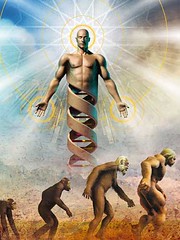 At the dawn of European humanism, Florentines believed that reading Dante while ignoring science was ridiculous. Similarly, Leonardo da Vinci and Michelangelo both recognized the great importance of understanding science, technology and engineering.
Despite these trail-blazers, not much has changed since then; a startling number of so-called 'intellectuals' remain grossly ignorant of pending technologies and the revealing sciences (the postmodernists immediately come to mind). Today's intelligentsia, in order to qualify for such a designation, must have the requisite vocabulary with which to address valid social concerns and effectively assess the future.
Here is a list of must-know terms (there are many, many more, but these are IMO the most critical and fundamental):
Please let me know if you feel I have left something out, or if you believe something does not belong on this list. For example, I wanted to mention advanced weapons, but that seems awfully vague. In particular, I'm thinking of autonomous robotic soldiers, neuro-weapons, advanced non-lethal weapons, and non-human decision making on the battlefield. Also, I would have liked to mention something about how consciousness is still a hard problem in science, but I'm not sure how I could encapsulate that in a simple term.accelerating change artificial general intelligence augmented reality automation cosmological eschatology existential risks Fermi Paradox friendly AI human enhancement human exceptionalism (aka human racism) information theoretic death memetic engineering mind transfer (aka 'uploading') molecular assembler engineered negligible senescence non-anthropocentric personhood neural interface device open source participatory panopticon political globalization post-scarcity economy postbiological organism posthuman quantum computation radical Luddism remedial ecology self-improving and autopotent intelligence self-replicating device substrate chauvinism Simulation Argument Singularity superintelligence ubiquitous surveillance uplift virtual reality
December 29, 2006
"Quantum mechanics forbids a single history"
 Earlier this year cosmologist Stephen Hawking and his colleague Thomas Hertog of the European Laboratory for Particle Physics at CERN in Geneva, Switzerland, published a paper claiming that the Universe has no singular or unique beginning. Rather, it began in just about every way imaginable.
The vast majority of these proposed universes disappeared without a trace; only a minuscule fraction of them blended to make the current Universe. Hawking and Hertog insist that if we are to take quantum physics seriously, we must conclude that there is no single history. We should picture the Universe in the first instants of the Big Bang, they say, as a superposition of all cosmological possibilities.
Excerpt from Nature:
He and Hawking call their theory 'top-down' cosmology, because instead of looking for some fundamental set of initial physical laws under which our Universe unfolded, it starts 'at the top', with what we see today, and works backwards to see what the initial set of possibilities might have been. In effect, says Hertog, the present 'selects' the past.What's fascinating about this theory is that, by extension, it may be transferable to individual observers. By applying a stronger variant of the anthropic principle, one could argue that the cosmos has structured itself around your very own existence.
Within just a few seconds after the Big Bang, a single history had already come to dominate the Universe, he explains. So from the 'classical' viewpoint of big objects such as stars and galaxies, things happened only one way after that point. Other 'histories', say, one in which the Earth formed only 4,000 years ago, have made no significant contribution to this cosmic evolution.
But in the first instants of the Big Bang, there existed a superposition of ever more different versions of the Universe, instead of a unique history. And most crucially, Hertog says that "our current Universe has features frozen in from this early quantum mixture".
In other words, some of these alternative histories have left their imprint behind. This is why Hertog and Hawking insist that their 'top-down' cosmology is testable. Hertog says that the theory predicts the pattern of the variations in intensity of microwave background radiation, the afterglow of the Big Bang now imprinted on the sky, which reveal fluctuations in the fireball of the nascent Universe. These variations are minute, but space-based detectors have measured them ever more accurately over the past several years.
Controversial, to be sure!
Read more here.
Buddha Break 2006.12.29

The Dalai Lama would like to see the formation of an International Buddhist Zone. Tom Armstrong discusses the goal of Buddhist practice: "...the realization of a state of well-being that is not contingent on the presence of pleasurable stimuli, either external or internal. According to Buddhism, this movement toward well-being is a fundamental part of being human." Thich Nhat Hanh on aimlessness. Jeff Wilson analyzes the recent brouhaha about protests over Buddhist charms. Meditation alone is not enough. Yoga may help people face their fear and uncertainty over cancer.
Animal Welfare Notes 2006.12.29
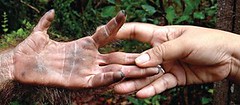
"Suppose an anthropoid were taken into a typical human family at the day of birth and reared as a child. Suppose he were fed upon a bottle, clothed, washed, bathed, fondled, and given a characteristically human environment; that he were spoken to like the human infant from the moment of parturition; that he had an adopted human mother and an adopted human father . . . . The experimental situation par excellence should indeed be attained if this technique were refined one step farther by adopting such a baby ape into a human family with one child of approximately the ape's age."The real value of animal experiments was recently put into question by a team of senior scientists who found that many are flawed and do not predict how well a prototype medicine will work in humans. A U.S. federal effort to quickly pinpoint and contain outbreaks of disease among livestock is coming under attack. The plan for animal tracking is meeting with some tough farmer resistance. Peter Singer sets the record straight: "I have never said that no experiment on an animal can ever be justified." Watch an alpha female mother display her power in a troupe of bonobo apes. Conservationist and ape welfare activist Kerry Bowman: "When my eyes caught his eyes, I just felt nothing different than as if I was coming across a human." The moment inspired him. The Ape and The Child: A Comparative Study of the Environmental Influence Upon Early Behavior, by W. N. & K. A. Kellogg (1933):

Canadian Context 2006.12.29

Canadian researchers say they've cured diabetes in mice. A new report says Canada spends more than most industrialized countries on health care, but Canadians continue to endure long waiting times and face limited access to medical technology. And in Ontario, hospitals in big cities struggle to reduce the wait for surgeries while those in smaller communities say the province urges them to rent underused operating rooms for for-profit procedures. Only the Globe and Mail could put out an article titled, "The false assumption that doctors ooze wealth," and still show that family doctors earn, on average, $202,481 a year, while other medical and surgical specialists earn an average of $278,656. Sperm stocks in Canada are significantly down since the federal government made it illegal to pay men for the donations, and the supply of sperm imported from the U.S. will eventually be cut off. Ottawa wants to map out pollutants in body for the first time. StatsCan wants to test 5,000 people for toxins. Canadian consumers won't be buying meat and milk from cloned animals anytime soon, says Health Canada. Looks like they want to examine the data on cloned food. A recent poll has found high stress levels among Canadians. Life expectancy in Canada is now 80+. W00t! While young Canadian women tend to experience depression and thoughts of suicide more than men, the men are more likely to act.
Cheating vs. enhancement in chess
 Like any sport, chess is not and will not be immune to the advent of human enhancement. And like other sports, there will be an awkward adjustment period as organizers learn to cope with the new reality. In the meantime, there will be a fine line that separates legitimate enhancement from outright cheating.
Take the recent 10-year suspension of Umakant Sharma who was caught with a blue tooth device hidden in his cap when random checking was conducted during the seventh round of the Air Marshal Subroto Mukerjee Memorial All India Open FIDE Rating Chess Tournament. Sharma, who was playing black, was the top seed with an ELO of 2384.
Ouch. In my opinion a 10-year suspension is rather harsh. It would appear that an example is being made; chess organizers are implementing a zero tolerance policy when it comes to players cheating with computers.
Indeed, computers have so revolutionized the game that it is a hard temptation to avoid. But while the use of computers to assist in chess is fairly easy to detect, more physically intrinsic advantages, such as cognitive enhancement, will be harder to both assess and enforce.
What will happen when the first genetically modified competitors emerge? Will there be a stratification of competitions, ones featuring unaugmented players and ones featuring those with genetic mods? Thinking more philosophically, what is the qualitative difference between an unmodified player who was born with a genetic advantage versus a player who had that advantage given to them via assistive reprotech? Or is it the work ethic and committment to the game that is being rewarded? A strong case can be made that the furtherance of and excellence in sport is in the outcome, and not what goes on in the background (so long as the rules are being followed and the 'spirit' of the game is maintained).
In the case of chess, as I have already argued, if humans want to continue to have meaningful involvement in chess as it is played at the highest level, they will have no choice but to use computers as assistive devices and/or augment their brains so that they can keep up with supercomputers.
When I was following the recent Kramnk-Deep Fritz tournament, the play-by-play commentator (a grandmaster level player) noted how he hoped a strong cup of coffee would help him better analyze the match. This was a very telling moment for me. Chess players are already quite aware of which stimulants can assist in their play. As the Sharma incident has shown, they will undoubtedly seek out any opportunity to get an edge.
More to the point, however, as the human species changes so too must our competitive activities. The rules of sport, whether these sports require mental or physical skill, will have to bend in the face of the biotech wind.
5,000 years of religious encroachment in 90 seconds
There's an excellent map on Maps of War that shows the spread of the major religions over the past 5,000 years. This map makes me wonder,
[found on Arbitrary Remarks]in which ways are these religious conquests the result of viral memes and in which ways the organic consequence of imperialist expansion? in which way is this map misleading by showing geographical spread rather than population spread? What other format could more accurately convey this? in the case of memetic spread, what makes one religion more successful than others? given that we are now in the age of memetic globalization, how is religion spreading today? how could this map be adjusted to show the internal and minority religious influences, including atheism?
December 28, 2006
Latest audiocast posted
My latest audiocast has been posted here. You can subscribe to this feed.In this episode I discuss unidentified flying idiots, the false promise of pseudoscience, and why scientific ignorance dooms democracy.
December 27, 2006
Canadian hockey dominance
 I love this time of year, and it's not because of all the eggnog and drunken office parties. 'Tis the season for junior hockey -- the IIHF Junior Hockey World Championships to be exact. Sweden is the host country for this year's tournament.
This annual championship brings together the world's best hockey prospects (age 16 to 20) to compete for the gold. Many of these guys are first round draft picks and are only a year or two removed from the NHL. This is high caliber hockey.
But unlike hockey fans in most other countries, Canadians take this tournament very seriously. This is not only indicative of the Canadian passion for hockey, but also of the national commitment to developing talent and supporting the minor leagues. And as for the tournament players themselves, it has to be very motivating and encouraging to know that the entire country is watching back home.
Consequently, Canada has owned this tournament since 1990, winning 9 gold, 4 silver and 2 bronze medals over that time. Going into this year's tournament, Canada has won the previous two and have not lost a round-robin game over their past eight matches. The team recently established a new defensive record by not allowing a goal over a span of 234 minutes and an even strength goal over 345 minutes (one game is 60 minutes).
Canada has opened this year's championship going 2-0 and appear to be on their way to yet another gold. Canada produces the world's best players and it appears that they will continue to lead international hockey for some time to come.
Hussein is more dangerous dead than alive
 News came down yesterday that Saddam Hussein will be executed in less than 30 days. Time will prove this to be a mistake.
Hussein, who is undoubtedly a wretched excuse for a human being, should instead be thrown into a dark jail cell to live out his remaining years. The alternative, his execution, will only fuel an already highly incendiary situation.
Take his exiled Baath party, for example, who today threatened to retaliate and strike at U.S. targets should Hussein be executed. Baath claims that if the execution takes place, it would be impossible for them to "take part in any prospective negotiations with U.S. and Iraqi officials to reduce the violence in Iraq."
In all fairness, Baath is a radical group who is working to overthrow what they see as a puppet regime. They will work to undermine the current Iraqi government regardless of Hussein's situation. But should he be executed, resentment towards the U.S. and the Iraqi government will be significantly heightened; Hussein will be made into a martyr, quite possibly leading to greater fanatical loyalty and radical action.
There's also the risk of further alienating Sunni Arabs, many of whom are members of the Baath Party and who have made up the minority that has formed the Iraqi insurgency after Hussein was toppled in 2003. Sectarian violence between Shiite and Sunni groups and the escalating threat of civil war will hardly wane after Hussein is executed.
With each passing day, Hussein becomes less and less relevant to the situation in Iraq and the Middle East -- and this despite his high-profile trial and tirades; it has been proven that Hussein's ongoing existence in this world has little bearing on the political situation in Iraq.
What is unknown, however, is what will happen after he is executed.
December 26, 2006
Lots going on
In addition to my recent CBC interview, I've got a couple of other things on the go.
I was recently contacted by the Gale Group who asked to re-publish an old article of mine for an undergraduate ethics text. The column is "The Separation of Church and Bioethics," in which I call for the secularization of bioethics and describe how Christian bioethics can be problematic.
Also, Beliefnet asked me to offer an opposing viewpoint to their interview of bioconservative Nigel Cameron. I asked for the same Q&A format and I am now finalizing the final version. Here are the questions I was asked:
I am very pleased with my answers and am looking forward to seeing this published. I'll post a link once it's posted on Beliefnet.What advantages or benefits do you see coming from nanotechnology in the future? What problems, crimes, or disadvantages do you foresee? How would you answer critics concerned about a surveillance society—constant monitoring and tracking? How can society minimize crimes committed via nanotechnology? How do you envision people might be able to “upgrade” their brains by using chips, etc.? There are concerns that “cosmetic neurology” and related things will make us less than human. How do you respond? How do you react to fears that nano-enhanced humans will become supercomputing brains with powerful machine-enhanced bodies, lording it over the plebes who can’t afford chips? Will art really be art if the artist’s brain is enhanced by technology? For example, a painter or musician? Some people feel that certain types of suffering or “malfunctioning,” while unpleasant, can make us more human and more empathetic: for example, living with mild memory loss. Will we be less human if everything about us—our minds, our memories, our bodies—is “fixed”?
December 21, 2006
Top 20 Albums of 2006
It's time again for my top 20 albums of the year. I've listened to an absolute ton of music during the past 12 months, but for every CD I sampled there were an umpteen number of others I didn't get a chance to hear. Consequently, I tried to be as selective as possible.
2006 was a particularly strong year for music. Choosing a top 20 was not easy, and because there were so many good albums I decided to create an 'honourable mention' category. These are solid albums, each a special gem worthy of consideration and respect -- but not quite the cream-of-the-crop. I've also listed several disappointments and/or overrated albums from the past year.
Your feedback is welcomed. Please let me know where you agree or disagree and if I missed something! Here are my lists:
TOP 20 ALBUMS OF 2006:
 1. Neko Case: Fox Confessor Brings the Flood
While coming up with a top 20 was not easy, selecting the #1 album of the year was a no-brainer: Neko Case's Fox Confessor Brings the Flood was by far the most spectacular release of 2006. With this album, Case has established herself as a world-class song writer, producer and vocalist.
Every track shines on this album; Case's confidence and talent as an artist has never been more obvious. Her performances are emotional, personal and powerful. The songs are sad, revealing and honest. And adding to this perfection-of-craft is her newfound willingness to step outside familiar genres, styles and conventional song structures.
The first three tracks are absolute stunners -- the kind of 1-2-3 punch you would expect on a Best Of album (Margaret vs. Pauline, Star Witness, and Hold on, Hold On). These are quintessential Neko tracks that are the best examples of music that is distinctly her own -- not quite alt-country, not quite adult alternative and not quite pop.
From these opening tracks she ventures into new territory, drawing from diverse musical styles. There's a sloppy 50s era highschool dance number, a pagan rite, and a foot stomping gospel track. At no times, however, does Fox Confessor feel disjointed or inconsistent; it's a Neko Case album from start to finish.
A beautiful album. Way to go, Neko!
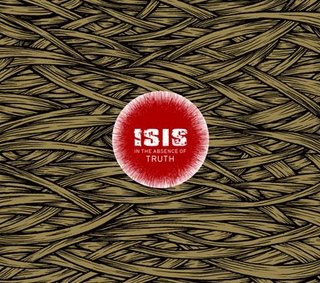 2. Isis: In the Absence of Truth
The best progressive metal album of 2006 and my #2 CD of the year goes to Isis's In the Absence of Truth. These brooding post-metal experimentalists from Los Angeles keep pushing the envelope of what it means to be heavy. They're kind of a Mogwai meets Neurosis and Tool (who they toured with in 2006).
Absence's tracks are sonically dynamic, slow-paced with long and drawn out builds that often deliver crushing finales. Isis's arrangements thrive on repetition and evolution of structure; hidden melodies reveal themselves with each passing listen. Instruments work in counterpoint with circular rhythms.
Aaron Turner's minimalist vocals, sometimes deathy, sometimes half-sung, are placed back in the mix along with the other instruments. And the drumming, performed by Aaron Harris, is nothing less than spectacular. He relentlessly works the toms and delivers brilliant hi-hat fills.
With this, their fourth studio release, they have firmly defined the post-metal/sludge-metal sound for the early 21st century. Isis is now the most important metal band coming out of the United States.
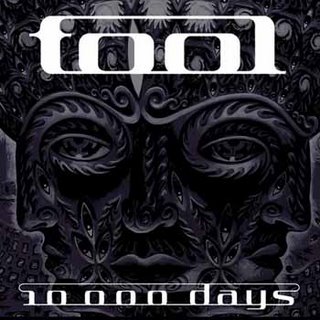 3. Tool: 10,000 Days
Five agonizingly long years after the release of Lateralus comes Tool's fourth studio release, 10,000 Days. While quite possibly their weakest effort to date, this is still the kind of album that most bands can only dream about releasing. I was initially unsure about this CD and it wasn't until I starting contrasting it with other similar artists that its strengths were revealed. Make no mistake: 10,000 Days is a great album.
As always, each track is an epic journey. Maynard, still mourning the death of his mother, offers some of his most touching and personal lyrics. On Jambi, he credits his mother for showing him the way out of his darkness: "The devil and his had me down/in love with the dark side, I found/Dabblin' all the way down/Up to my neck; Soon to drown/But you, changed that all for me, lifted me up, turned me 'round." And on the title track, in awe of his mother's unswerving religious faith after a life lived in misery, he brazenly demands that God let her into the Kingdom: "Fetch me the spirit, the son and the father/Tell them their pillar of faith has ascended/It's time now!/My time now!/Give me my/Give me my wings!" It's hard not to get goosebumps when you're listening to this stuff.
Musically, Tool has not strayed too far from the sound they established on Lateralus. The album can be frustratingly derivative of their previous work, but they make up for it by offering great tracks and doing what they do best. The Pot is undoubtedly the best song of 2006 and will go down as a hard rock classic. Vicarious is their best radio single since Aenima, and Rosetta Stoned -- a song sung from the perspective of an alien abductee -- has quickly become a fan favourite: Goddamn, shit the bed.
As usual, all performances are virtuosic and the production is dynamic and creative. They take their times building tracks, not afraid to take it down for extended lengths of time (take Lost Keys for example, where 2 oscillating guitar notes are held and repeated for nearly two minutes). Their arrangements include tablas, native American vocals, and a solo performed on a talkbox. While Danny Carey, Justin Chancellor and Adam Jones rock on this album, this is clearly Maynard's tour de force.
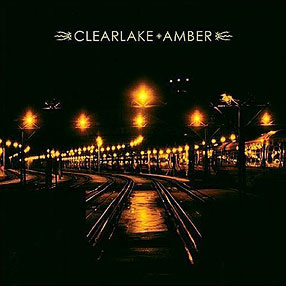 4. Clearlake: Amber
I have a real soft-spot for British rock, which is why it pains me to watch a great band like Coldplay degenerate into sappy and institutionalized irrelevancy. Thankfully there's still a lot of great material coming out of the UK -- the best this year coming from Clearlake and their wonderful CD, Amber.
This album is simple, confident and great.
Clearlake, influenced by bands like Talk Talk, My Bloody Valentine, Doves and the Beta Band, have nailed it with their third release. Amber features solid and diverse tracks, wonderful melodies and driving rock numbers. Track highlights include the beautiful You Can't Have Me, Neon and Amber.
A very underrated band.
 5. Built to Spill: You In Reverse
When I heard that Built To Spill was releasing an album this year it never occurred to me that it would end up on my top 20 list (let alone my top 5). It had been five years since their last album, and with this being their 7th, I got to thinking that their best years were behind them.
You In Reverse caught me completely by surprise. This is such a good album -- it has everything that Built To Spill fans have come to love about this band.
Firstly, as a guitar album, You In Reverse kicks. They still sound like they're an indie band that gets carried away with extended jam sessions in the garage. The album opener, Going Against Your Mind, rocks out for several minutes before the track actually comes together; the entire track clocks at nearly 9 minutes.
Second, the songs are simply great. Liar, The Wait and Wherever You Go are brand new tracks that instantly sound like familiar BTS classics. This album also contains several mid-tempo ballads delivered with the expected emotion and skill.
This is a solid album from a classic and classy band that has now re-established itself as one of the world's best groups.
Okay, now that I've listed the top 5, I'm just going to quickly run-down the rest of my top 20:
6. Jenny Lewis and the Watson Twins: Rabbit Fur Coat
7. Comets on Fire: Avatar
8. M. Ward: Post War
9. Dresden Dolls: Yes, Virginia...
10. Boris: Pink
11. The Mars Volta: Amputechture
12. Deftones: Saturday Night Wrist
13. High on Fire: Blessed Black Wings
14. Joanna Newsom: Ys
15. Thom Yorke: The Eraser
16. Mastodon: Blood Mountain
17. Mogwai: Mr. Beast
18. The Gathering: Home
19. Voivod: Katorz
20. Audioslave: Revelations
Honourable mention (listed alphabetically):
Beck: Information
Bob Dylan: Modern Times
Fiery Furnaces: Bitter Tea
Ghostface Killah: Fishscale
Graham Coxon: Love Travels at Illegal Speeds
Lacuna Coil: Karmacode
Matmos: The Rose Has Teeth in the Mouth of the Beast
Muse: Black Holes and Revelations
Prince: 3121
Pure Reason Revolution: The Dark Third
Red Hot Chili Peppers: Stadium Arcadium
She Wants Revenge: She Wants Revenge
Slayer: Christ Illusion
The Dears: Gang of Losers
The Raconteurs: Broken Boy Soliders
The Twilight Singers: Powder Burns
Disappointments and over-rated albums:
Beatles: Love
Gnarls Barkley: St. Elsewhere
The Decemberists: The Crane Wife
2006 was a particularly strong year for music. Choosing a top 20 was not easy, and because there were so many good albums I decided to create an 'honourable mention' category. These are solid albums, each a special gem worthy of consideration and respect -- but not quite the cream-of-the-crop. I've also listed several disappointments and/or overrated albums from the past year.
Your feedback is welcomed. Please let me know where you agree or disagree and if I missed something! Here are my lists:
TOP 20 ALBUMS OF 2006:
1. Neko Case: Fox Confessor Brings the FloodWhile coming up with a top 20 was not easy, selecting the #1 album of the year was a no-brainer: Neko Case's Fox Confessor Brings the Flood was by far the most spectacular release of 2006. With this album, Case has established herself as a world-class song writer, producer and vocalist.
Every track shines on this album; Case's confidence and talent as an artist has never been more obvious. Her performances are emotional, personal and powerful. The songs are sad, revealing and honest. And adding to this perfection-of-craft is her newfound willingness to step outside familiar genres, styles and conventional song structures.
The first three tracks are absolute stunners -- the kind of 1-2-3 punch you would expect on a Best Of album (Margaret vs. Pauline, Star Witness, and Hold on, Hold On). These are quintessential Neko tracks that are the best examples of music that is distinctly her own -- not quite alt-country, not quite adult alternative and not quite pop.
From these opening tracks she ventures into new territory, drawing from diverse musical styles. There's a sloppy 50s era highschool dance number, a pagan rite, and a foot stomping gospel track. At no times, however, does Fox Confessor feel disjointed or inconsistent; it's a Neko Case album from start to finish.
A beautiful album. Way to go, Neko!
 2. Isis: In the Absence of Truth
The best progressive metal album of 2006 and my #2 CD of the year goes to Isis's In the Absence of Truth. These brooding post-metal experimentalists from Los Angeles keep pushing the envelope of what it means to be heavy. They're kind of a Mogwai meets Neurosis and Tool (who they toured with in 2006).
Absence's tracks are sonically dynamic, slow-paced with long and drawn out builds that often deliver crushing finales. Isis's arrangements thrive on repetition and evolution of structure; hidden melodies reveal themselves with each passing listen. Instruments work in counterpoint with circular rhythms.
Aaron Turner's minimalist vocals, sometimes deathy, sometimes half-sung, are placed back in the mix along with the other instruments. And the drumming, performed by Aaron Harris, is nothing less than spectacular. He relentlessly works the toms and delivers brilliant hi-hat fills.
With this, their fourth studio release, they have firmly defined the post-metal/sludge-metal sound for the early 21st century. Isis is now the most important metal band coming out of the United States.
 3. Tool: 10,000 Days
Five agonizingly long years after the release of Lateralus comes Tool's fourth studio release, 10,000 Days. While quite possibly their weakest effort to date, this is still the kind of album that most bands can only dream about releasing. I was initially unsure about this CD and it wasn't until I starting contrasting it with other similar artists that its strengths were revealed. Make no mistake: 10,000 Days is a great album.
As always, each track is an epic journey. Maynard, still mourning the death of his mother, offers some of his most touching and personal lyrics. On Jambi, he credits his mother for showing him the way out of his darkness: "The devil and his had me down/in love with the dark side, I found/Dabblin' all the way down/Up to my neck; Soon to drown/But you, changed that all for me, lifted me up, turned me 'round." And on the title track, in awe of his mother's unswerving religious faith after a life lived in misery, he brazenly demands that God let her into the Kingdom: "Fetch me the spirit, the son and the father/Tell them their pillar of faith has ascended/It's time now!/My time now!/Give me my/Give me my wings!" It's hard not to get goosebumps when you're listening to this stuff.
Musically, Tool has not strayed too far from the sound they established on Lateralus. The album can be frustratingly derivative of their previous work, but they make up for it by offering great tracks and doing what they do best. The Pot is undoubtedly the best song of 2006 and will go down as a hard rock classic. Vicarious is their best radio single since Aenima, and Rosetta Stoned -- a song sung from the perspective of an alien abductee -- has quickly become a fan favourite: Goddamn, shit the bed.
As usual, all performances are virtuosic and the production is dynamic and creative. They take their times building tracks, not afraid to take it down for extended lengths of time (take Lost Keys for example, where 2 oscillating guitar notes are held and repeated for nearly two minutes). Their arrangements include tablas, native American vocals, and a solo performed on a talkbox. While Danny Carey, Justin Chancellor and Adam Jones rock on this album, this is clearly Maynard's tour de force.
 4. Clearlake: Amber
I have a real soft-spot for British rock, which is why it pains me to watch a great band like Coldplay degenerate into sappy and institutionalized irrelevancy. Thankfully there's still a lot of great material coming out of the UK -- the best this year coming from Clearlake and their wonderful CD, Amber.
This album is simple, confident and great.
Clearlake, influenced by bands like Talk Talk, My Bloody Valentine, Doves and the Beta Band, have nailed it with their third release. Amber features solid and diverse tracks, wonderful melodies and driving rock numbers. Track highlights include the beautiful You Can't Have Me, Neon and Amber.
A very underrated band.
 5. Built to Spill: You In Reverse
When I heard that Built To Spill was releasing an album this year it never occurred to me that it would end up on my top 20 list (let alone my top 5). It had been five years since their last album, and with this being their 7th, I got to thinking that their best years were behind them.
You In Reverse caught me completely by surprise. This is such a good album -- it has everything that Built To Spill fans have come to love about this band.
Firstly, as a guitar album, You In Reverse kicks. They still sound like they're an indie band that gets carried away with extended jam sessions in the garage. The album opener, Going Against Your Mind, rocks out for several minutes before the track actually comes together; the entire track clocks at nearly 9 minutes.
Second, the songs are simply great. Liar, The Wait and Wherever You Go are brand new tracks that instantly sound like familiar BTS classics. This album also contains several mid-tempo ballads delivered with the expected emotion and skill.
This is a solid album from a classic and classy band that has now re-established itself as one of the world's best groups.
Okay, now that I've listed the top 5, I'm just going to quickly run-down the rest of my top 20:
6. Jenny Lewis and the Watson Twins: Rabbit Fur Coat
7. Comets on Fire: Avatar
8. M. Ward: Post War
9. Dresden Dolls: Yes, Virginia...
10. Boris: Pink
11. The Mars Volta: Amputechture
12. Deftones: Saturday Night Wrist
13. High on Fire: Blessed Black Wings
14. Joanna Newsom: Ys
15. Thom Yorke: The Eraser
16. Mastodon: Blood Mountain
17. Mogwai: Mr. Beast
18. The Gathering: Home
19. Voivod: Katorz
20. Audioslave: Revelations
Honourable mention (listed alphabetically):
Disappointments and over-rated albums:
December 20, 2006
Today's CBC taping
Today was taping day at the CBC building in Toronto. I am being interviewed for a segment on 'The Hour' about the future of humanity.
It was a very professional operation. The film crew was completely set up and ready for me when I arrived. I sat on a chair in front of a green-screen with scorching hot pot lights blazing down on me. Of course, I was wearing a sweater and I quickly began worrying if I could last for an hour. Thankfully it never got too unbearable.
I was interviewed by the producer while a camera operator moved around taking dynamic shots while another worked a still camera. We talked about a host of things: transhumanism, time-lines, human reproduction, human cloning, exosomatic wombs, stem-cells, nanotechnology, grey goo, cybernetics, memory enhancement, radical life extension and consciousness uploading.
I am happy with my responses and my performance, although I wasn't as articulate as I knew I could be. I asked for several re-takes and the producer was happy to oblige. I hope the editors will weave their magic and make me look like I can actually speak English. Working without a script and improvising answers takes a lot of energy and concentration.
The green-screen was a neat experience. I will be superimposed in front of a while background with some blue water-colour images fading in and out. The show should air during the first week of January. For those in Canada, I'll post the exact date and time of the airing once I know it.
Oh, interesting side-note: Canadian sci-fi novelist Robert Sawyer was interviewed before me about the future of transportation.
10th anniversary of Carl Sagan's passing
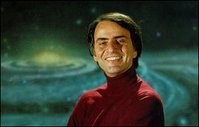 Carl Sagan died 10 years ago today on December 20, 1996. More than anyone, he greatly influenced my intellectual life-course when I was a young adolescent. A billion thank you's go out to Carl!

Subscribe to:
Posts (Atom)