December 11, 2008

Methuselah Foundation launches new website

Dear George,
We are very excited to announce a new chapter in the future of the Methuselah Foundation, and in our collective efforts to fight aging. Today we launched a new website, Mfoundation.org, that will serve as a platform for the groundbreaking research and ideas generated from the Methuselah Foundation. Visitors to MFoundation.org will be able to interact with the Foundation's pioneering researchers, and learn about the work they are doing to better understand and reduce the degenerative effects of aging.
In other Methuselah Foundation news, we are announcing the creation of the 300 Monument, a monument dedicated to our visionary donors who are supporting, and who will continue to support the Methuselah Foundation's fight for longer, healthier human lifespans. For $1,000 a year, for 25 years, which amounts to $85 a month or $2.75 a day, committed donors will be immortalized on the monument.

We are at a critical juncture in our fundraising efforts. We thank you for your continued support, and encourage you to explore our dynamic new website and our vision for the 300 Monument.

You can also find us on facebook.

Be a part of the solution at www.MFoundation.org

Yours,
The Methuselah Foundation Team

December 10, 2008

Islamic fascism? - A SentDev Classic

This article was originally published on August 12, 2006.


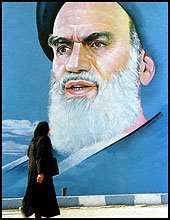
George W. Bush has caused quite a row with his recent ‘Islamic fascism’ remark. The neo-cons are quite obviously establishing the ideological parameters within which they are continuing their propaganda campaign and maintaining the American public’s high level of agitation and fear. In the process, Bush has grossly over-simplified both the nature of current geopolitics and the religion of Islam itself. Quite justifiably, a number of Muslims are quite upset with Bush’s rather sweeping and inconsiderate remarks.

That said, there are some underlying truths to the characterization of radical Islam as a fascistic ideology (again, I take great pains to distinguish between Islamic fundamentalism and the more commonly recognized benign and mainstream variant of Islam). The rise of fanatical theocracies (Ahmadinejad’s Iran) and extremist non-state actors (al-Qaeda) have the indelible marks of far-right totalitarian politics.

And I’m hardly alone on this one. Earlier this year, for example, a number of prominent intellectuals published a statement in condemnation of what they regarded as the rise of Islamic totalitarianism. The list of thinkers who signed this statement included Salmon Rushdie, French philosopher Bernard Henri-Levy and exiled Bangladeshi writer Taslima Nasreen. In the statement, they wrote that "After having overcome fascism, Nazism and Stalinism, the world now faces a new global threat: Islamism…We, writers, journalists, intellectuals, call for resistance to religious totalitarianism and for the promotion of freedom, equal opportunity and secular values for all."

Rushdie et al are correct in their assertion that radical Islam has the characteristics of a totalitarian ideology, but I believe they have understated its fascistic elements.

Many people have the idea that fascism is the monopoly of white supremacist types. This is not the case. At its core, fascism describes the rise of a self-identified group that has grossly exaggerated its historical and societal significance. This self-identity, which typically manifests as a sense of superiority or shared destiny, can encompass anything from race, nationhood, religion, and a shared cultural heritage.

As historian Allan Cassels noted in his book, Fascism, virtually every nation has what is referred to a pre-fascist culture. For the early 20th century Germans, they identified with their race, the volk, and their mythical 'glorious' past. At the same time, many other European nations experimented with fascism, including Italy, Spain, England and even the United States.

Today, this pre-fascist culture is weak in liberal society, but it is rearing its ugly head in some of the Islamic nations. Al-Qaeda, for example, is a paramilitary organization with the stated task of reducing the outside influence of Islamic affairs. This is very much an example of cultural xenophobia and an overstated sense of social mission. Like the fascists of 20th century Europe who feared the specter of Bolshevik globalization, many Muslims today fear the encroachment of American and Jewish values. The result is a far-right, exclusionary, militaristic, and hyper-sensitive counter-reaction in the form of fascism.

Which leads to the next indelible characteristic of fascism: a common enemy. The racist Nazis rallied the nation to deal with what they considered to be the Jewish problem. The Jews were an identifiable enemy who could be blamed for all the problems of the state. They also targeted the Bolsheviks, whose extreme left position polarized and radicalized the right even further. Today, the Jews have once again been targeted by a far-right group, this time in the Mid East—but now they have been joined by the Americans (whose capitalist imperialism and social liberalism has taken the place of communism).

Other characteristics of fascism include a charismatic and populist leader, which Iran quite clearly has in President Mahmoud Ahmadinejad. What’s particularly frightening is that Ahmadinejad clearly believes his own hype. He is not so much a dictator as he is an ideologue.

By hype I mean ideology--or in this case, theological ideology. And in this sense Islamic totalitarianism is distinguished from the more secular or socialistic forms of totalitarianism. Where Marxism and fascism had ideologies informed by political, philosophical, and even (pseudo)scientific texts, radical Islam is a theocratic framework that draws its authority from religious sources.

It’s a fine point, but it’s worth mentioning. Islamic totalitarianism, while arguably far-right, is an ideological horse of a different colour. What it shares with more traditional notions of totalitarianism, however, is that is that the source of authority does not come from one individual or group of individuals (i.e. authoritarianism), but instead emanates from a monopolistic ideological framework that is enforced as the only true law of the land.

Indeed, democracy, due process and other elements of social justice as we know it in liberal democracies are absent in countries like Iran and the former Taliban Afghanistan. The goal of these theocracies is to embed religious ideology across the land and to maintain a monopoly on all ideas and institutions; radical Islam, like any totalitarian ideology, is enforced as the alpha and omega of personal existence (the state regulates nearly every aspect of public and private behavior). In this sense the revolution that is Islamic totalitarianism is comparable to the Stalinization of the Soviet Union and the work of the Nazis in 1930’s Germany. The Soviets tried to create a worker's utopia and the New Man, while the Nazis worked to ensure racial purity and create a 1,000 year Reich; Islamic fundamentalists want to create a heaven on earth – a phenomenon comparable to the quasi-totalitarian and theocratic efforts of the Calvinists in 16th century Geneva.

As for the Islamic revolution, one example that will forever stand out in my mind is when the Taliban destroyed Afghanistan’s Buddhist statues. This was an explicitly revolutionary act against those ideas and institutions that potentially rivaled the tenants of the ruling ideology; all revolutions seek to destroy the past, and this one is no different. Another example of zero tolerance toward opposing viewpoints was the recent row over the caricatures of the Prophet Mohammed in the Danish daily newspaper Jyllands-Posten. Western notions of free expression and the free press are lost on the theologues.

So, while Bush and the neo-cons wage their obverse Christian crusade against the ‘Islamic fascists’, they have (likely unintentionally) revealed a disturbing aspect of extremist politics in the Middle East. And as each side continues to antagonize each other, modern politics migrates further and further into the extreme fringes.

Tags: , , , , , .

Ignatieff and Obama: Intellectuals on the rise

Left-wing intellectual icon Michael Ignatieff has taken the helm of the federal Liberal party in Canada. Given the current political crisis in Canada, and given that the Liberals have now solved their leadership problem, Ignatieff is poised to become the country's next Prime Minister -- something that could happen as early as January should Parliament go ahead with a non-confidence motion.

Though he could hardly be called Canada's Obama, the parallels between the two men and the two countries are interesting. Currently, both Canada and the United States are governed by heads-of-state who are ultra-conservative and populist and who allow their religious views to influence public policy. Both Stephen Harper and George W. Bush have caused great divisiveness in their respective countries and gone out of their way to alienate entire swaths of the citizenry. And neither Harper or Bush have instilled any real sense of confidence about their ability to govern; these are administrations in which inaction reigns and where egg-heads are strictly forbidden.

In Canada, Harper's work of late has been particularly infuriating. He recently appointed the conservative populist Preston Manning, a Creationist and member of the Christian and Missionary Alliance, to his scientific advisory board. Harper continues to govern in utter denial of the current climate crisis, contributing to Canada's track record as one of the world's worst polluters and green house gas emitters. And most recently, in an attempt to save himself and his party, he reopened the national unity debate by accusing the Coalition of going to bed with the "separatist" Bloc Quebecois -- this after Harper depended on the Bloc to prop him up during the last 3 years of minority rule.

Consequently, it's reassuring to see both Canada and the U.S. poised to bring in leaders with roots in academia -- incoming leaders who are engaged in public discourse and who have the requisite qualifications to lead their countries. In the case of the U.S. it's a done deal; as for Canadians it's still within the realm of wishful thinking.

Obama and Ignatieff certainly have the creds. Both leaders have ties to Harvard University: Obama is a graduate of its law school and Ignatieff the former director of Harvard's Carr Center for Human Rights Policy (it's also where he earned his PhD in history). Ignatieff also spent time at Oxford and the University of Toronto where he was a visiting professor and senior fellow of the Munk Centre for International Studies.

In his teaching and writing, Ignatieff has addressed such topics as Canadian culture and human rights (on moral issues he maintains that Canadian law is secular and liberal, approximating European standards more closely than American ones), international affairs (he was very critical of the limited-risk approach practiced by NATO in conflicts like the Kosovo War and the Rwandan Genocide), and the so-called 'lesser evil' approach in which he has argued that Western democracies may have to resort to indefinite detention of suspects, coercive interrogations, targeted assassinations, and pre-emptive wars in order to combat the greater evil of terrorism (Ignatieff has since toned down his position, likely out of political necessity).

I don't imagine that all Canadians will agree with his positions (myself included), or that they'll even care that he is an internationally recognized intellectual. But there's no denying that in Ignatieff the Liberals have found a unique leader who is poised to give the party a significant boost.

Not to mention the distinction he would return to the position of Prime Minister should he get there.

December 9, 2008

Best albums of 2008

The year is almost over, which means it's time for my annual ranking of the year's top albums. As usual, I do my best to sample music from a wide number of genres, including alternative rock, pop, indie-rock, folk, dance, electronic, metal, industrial, post-rock, post-metal, and so on. In total I sampled music from over 175 albums this year.

Like last year, I used a scale that ranks albums out of 10*:
  • 9.0-10: Brilliant in every way, a soon-to-be classic album
  • 8.0-8.9: Very good, not to be missed
  • 7.0-7.9: Good and worth listening to, but nothing to write home about
  • 6.0-6.9: Meh
*Note: When it came to ties I simply ranked the albums alphabetically, making the score more indicative of the album's quality than its placement in the list.

Overall it was a good year for music, but 2008 didn't produce an obvious choice for top spot, nor did any album make it into my 90th percentile. This isn't typical, as there's usually one album that stands out from the rest. As a result, there is a tie for first place this year; and in all, 25 albums qualified for a spot in my 8.6 to 8.9 slot.

So, without further ado, here are the best albums of 2008:


1. Meshuggah
ObZen (8.9)
Well into their second decade, these Swedish prog-metal thrashers have yet to disappoint. This album has everything metal fans could want and expect: powerful riffs, extreme aggression and mind-boggling technical precision. And more than ever, Meshuggah has brought these elements together to create a flowing and organic-sounding album that drives and pushes limits. ObZen is relentless and full of rage. It opens with the blistering "Combustion," a showcase for the power and fury that Meshuggah is famous for. And with "Bleed," they have not only introduced a soon-to-be metal classic, but an impossible standard for prog-metal drummers everywhere; Jens Kidman's kick-pedal work is as incomparable as the band itself. Vocalist Tomas Haake's growls have never sounded more tense and angst-ridden. Other track highlights include "Pravus" and "Pineal Gland Optics." This is an album that's not to be missed.

2. Portishead
Third (8.9)
Portishead's first album in 11 years is an absolute stunner, making this the comeback album of the year (with all due respect to The Black Crowes at #5). Third is spooky, mysterious and unsettling. It's also a brilliant artistic achievement that's cerebral and challenging. Each track is an epic worthy of exploration in it's own right: "Machine Gun" is full of drama and tension -- and oddly reminiscent of The Terminator soundtrack; "Small" starts off hypnotic and then beautifully transitions to a loungey organ and ride cymbal trip that lightly touches upon Pink Floyd; "Plastic" has an inexplicably Jefferson Airplane quality to it; "The Rip" is eerie and beautiful (the sustained vocal note slays me every time). This is an album that will speak differently to you with every listen. Simply fantastic.

3. The Helio Sequence
Keep Your Eyes Ahead (8.8)
A duo from Portland, Oregon, The Helio Sequence combine American country-folk with atmospheric Brit-pop; Keep Your Eyes Ahead sounds like what you'd get if John Denver jammed with Travis. And it works. The album is blessed with a host of memorable and melodic songs, poignant lyrics and all sprinkled with hints of psychedelia and dream pop. Track highlights include "Lately," "Shed Your Love," Keep Your Eyes Ahead," and "Hallelujah."

4. Wolf Parade
At Mount Zoomer (8.8)
No sophomore jinx here; Montreal's Wolf Parade have now come into their own, forever shedding comparisons to Arcade Fire and Broken Social Scene. But like those bands, Wolf Parade has created a sound that's distinctly their own. At Mount Zoomer's sparse use of guitar is offset by swirls of synth, harpischord and piano. The album has a definite Doors-like quality to it, but it's never obvious. At Mount Zoomer has its share of fantastic moments, like the dreamy synth break-down in "Soldier's Grin," the crescendoed ending to "California Dreaming," and the epic "Kissing the Beehive" with its gorgeous melodic phrasing and repeated cries of, "Fire in the hole!" The Canadian music scene is as strong as ever.

5. The Black Crowes
Warpaint (8.7)
With Warpaint, The Black Crowes have released one of the finest blues albums in recent memory. And most people, I dare say, completely missed it. The Black Crowes, after some exceptionally hard times and even a temporary break-up, have returned with a magnificent album that features Chris Robinson's finest work as a vocalist to date. Warpaint showcases a band that has rediscovered itself and discovered God in the process; there's a definite gospel-like quality to this album that gives it its soul and focus. Track highlights include "Evergreen," "Goodbye Daughters of the Revolution," "Locust Street," "Oh Josephine," and "Movin' on Down the Line."

6. Destroyer
Trouble in Dreams (8.7)
There's no question that the New Pornographers are a bona fide supergroup; how many bands can boast the likes of Neko Case, Carl Newman and Destroyer's Dan Bejar? Each is a successful artist in their own right. And what makes the New Pornographers so great is that each of them bring their unique style to the band. In the case of Dan Bejar, it's his distinctive vocal delivery and quirky musical sensibility. Indeed, after the first few listens through Trouble in Dreams one is left scratching their heads -- it's a true curiosity. But familiarity brings illumination. Trouble in Dreams is rich in detail and charm. Bejar's tracks are strong, complex, and written with lyrics that would make Bob Dylan proud. Another stellar Canadian release for 2008. Track highlights include "Blue Flower/Blue Flame," "My Favourite Year," and "Libby's First Sunrise."

7. Mogwai
The Hawk is Howling (8.7)
The best post-rock album of the year goes to one of the most influential bands in the genre, Mogwai. With The Hawk is Howling, these Scots have dipped into their past and re-introduced the sonic intensity and sophistication that they're known for. In some ways, though, The Hawk is Howling sounds like a rebirth. Unlike their previous effort, Mr. Beast, the tracks are massive, dark and full of complex emotion. Track highlights include "Batcat," "Scotland's Shame," and "Danphe and the Brain." Mogwai remain among the elite.

8. No Age
Nouns (8.7)
No Age, a lo-fi duo from California, perform minimalistic noise-rock that's not for everyone. While they may be an acquired taste, their no compromise attitude has earned them a loyal following and critical acclaim. No Age continues to craft strangely beautiful and complex songs out of noisy guitar and drum parts. Buried beneath all the fuzz and drone is a remarkably listenable and engaging album that, when all is said and done, is actually quite accessible. Track highlights include "Teen Creeps," "Things I Did When I Was Dead," and "Sleeper Hold."

9. Vampire Weekend
Vampire Weekend (8.7)
Vampire Weekend's debut album is more fun than anyone should be allowed to have; it's an instant mood enhancer (I swear the track "M79" is better than Prozac). The band incorporates African and Caribbean music with a pepped up form of chamber pop; the album has hints of early Police and Graceland era Paul Simon. Vampire Weekend is filled with lyrics that are smart, quirky and irreverent. Track highlights include "Oxford Comma" "A-Punk," and "One (Blake's Got a New Face)."

10. Kings of Leon
Only By the Night (8.8)
Firmly established as one of America's most respected acts in mainstream rock, Kings of Leon released Only By the Night a mere one year after Because of the Times. But this year's album is more than just a continuation of their new 'big sound,' it's also a refinement. These guys can write incredible songs. And given their new commitment to a larger, fuller sound, their tracks shine more than ever. Track highlights include "Crawl," "Manhattan," and "Sex on Fire."

11. Thee Silver Mt. Zion Memorial Orchestra & Tra-La-La Band
13 Blues for Thirteen Moons (8.6)
Formerly known as A Silver Mt. Zion, these Montrealers are the post-rocker spin-offs of Godspeed You! Black Emperor. But despite the odd name re-adjustment, the band remains as bleak and angry as ever. Within the first few moments of the opening track we hear Efrim Menuck cry out, "Your band is bland! Your band is bland ambition!" Indeed, ASMZ could never be accused of pandering to mainstream sensibilities and predictability. That said, the tracks on 13 Blues for Thirteen Moons are tighter and more focused than their previous efforts. It's a touch less experimental than what their fans may be used to, but it's still got all the ASMZ hallmarks: orchestral arrangements, string plucks, massively heavy riffs, and lots and lots of room to breathe. Track highlights include "One Million Died to Make This Sound" and "Blindblindblind."

12. Cut Copy
In Ghost Colours (8.6)
Third time's the charm for this Australian electronic trio. Drawing influences from 70's disco, 80's pop (I keep hearing Culture Club), and the IDM of the past 15 years, Cut Copy have put together a highly listenable and enjoyable album that offers much more than the disposable dance music that's characteristic of the genre. In Ghost Colours is filled with gorgeous tracks, catchy hooks and the sweetest ear candy. Track highlights: "Feel the Love," "Hearts on Fire," "So Haunted," and "Strangers in the Wind."

13. Fleet Foxes
Fleet Foxes (8.6)
Coming off the heels of the shockingly beautiful Sun Giant EP, Fleet Foxes have answered the impossibly high expectations with a stellar and mature debut album. Fans of My Morning Jacket and Great Lake Swimmers will be at home with Fleet Foxes, a Seattle-based band with roots in folk, country and classic rock. Fleet Foxes, with its stunning melodies, warm harmonies and wistful lyrics, will take you places and give you goosebumps. Track highlights: "Blue Ridge Mountains," "Tiger Mountain Peasant Song," and "White Winter Hymnal."

14. M83
Saturdays = Youth (8.6)
Anthony Gonzalez and Nicolas Fromageau, the duo that make-up M83, have come a long way since their classic indie-electronic CD, Dead Cities, Red Seas & Lost Ghosts. The harshness of the clicks, beeps and zaps have been replaced with soundscapes of shimmering beauty and dreaminess. This is very much a fantasy pop album with the band generously dipping into the 1980's well. But it's the incredible production and sound design that makes Saturdays = Youth such a stand-out album. Track highlights include "Kim & Jessie, "Coleurs," "Graveyard Girl," and "Midnight Souls Still Remain."

15. MGMT
Oracular Spectacular (8.6)
My introduction to MGMT came late last year when I saw them open for Fiery Furnaces. I remember them looking like a bunch of rag-tag and over-confident kids straight out of high school. What was more shocking, however, was how freakin' good they were; I watched them alongside only a dozen other audience members, but I realized that they were not going to play empty houses for much longer. Indeed, with their debut album, Oracular Spectacular, MGMT have quickly found themselves alongside Vampire Weekend as the darlings of new American music. And it's hard to not like this band. Their music contains bits of David Bowie, the Rolling Stones and even some Supergrass. Track highlights include "Time to Pretend, "Weekend Wars," and "Electric Feel." Believe the hype.

16. Nick Cave
Dig Lazerus Dig (8.6)
Hey, it's Nick Cave -- what the hell else do I need to say? Track highlights include "Midnight Man" and "Jesus of the Moon." Favorite lyric, "'Cause people often talk about being scared of change, But for me I'm more afraid of things staying the same, 'Cause the game is never won, By standing in any one place for too long."

17. Opeth
Watershed (8.6)
One of the most respected acts in metal today, 2008 finds Sweden's Opeth releasing their ninth studio album, Watershed. While it may not be a watershed in terms of exploring new musical territory (save for the organ solo on the stunningly beautiful "Burden"), the band is found at their absolute best. Their ability to intertwine crushing brutality with the tenderest and sweetest moments is truly their hallmark and one that they've worked to refine on Watershed. Flavors on this album include the usual gothic touches, traces of Swedish folk and 70's classic rock (think Deep Purple). Track highlights include "Heir Apparent," "The Lotus Eater" and "Hessian Peel."

18. Papercuts
Can't Go Back (8.6)
This album caught me by complete surprise this year, resulting in a seriously high number of repeated listenings. Led by Jason Quever, Papercuts play a style of indie-rock that's gentle, intimate and at times whimsical. Though the inclination is to consider them as a kind of classic-rock wannabe, the Papercuts sound goes beyond that. Yes, there are hints of Bob Dylan, Led Zeppelin and and even Enrico Morricone, but there's a timelessness to their sound that's a part of their distinctive charm. And Quever is one hell of a song writer; there isn't a single throw-away track on Can't Go Back. Highlights include the whole goddamn album from start to finish.

19. Foals
Antidotes (8.6)
Antidotes is the eagerly awaited debut album from Oxford, England's Foals. These guys have a high-energy and frenetic sound that brings together a diverse set of influences, including indie-rock, math-rock, post-rock and even some new-wave. Fans of Interpol, Bloc Party and Battles would likely find a place for Antidotes in their CD collection -- which is saying something given how different those bands are. What makes this album particularly special is Foals' ability to bring in prog aspects like pattern-based melodies and rhythms, put them in an atmospheric space, and still come out sounding like an alt-rock band. Track highlights include "French Open" and "Big Love (Fig. 1)."

20. Raconteurs
Consolers of the Lonely (8.6)
Best band in rock 'n roll today? Hard to argue. And why wouldn't they be? This band has more talent than the 1927 Yankees: Ranconteurs is comprised of Jack White, Brendan Benson, Patrick Keeler and Jack Lawrence. In addition to being able to churn out quality tracks they have one of the best stage shows in the business; Raconteurs is better live than in the studio. Track highlights include "Consoler of the Lonely, "Many Shades of Black, "The Switch and the Spur."

21. The Roots
Rising Down (8.6)
The Roots have largely avoided mainstream attention and commercial success, but they continue to put out some of the best beats and rhymes in the business. With their latest effort, Rising Down, they have produced by far and away the best rap album of 2008. The Roots intermesh social commentary with cool beats and dynamic arrangements ("You don't see that something's wrong, Earth's spinnin' outta control, Hello hello hello hello, Everything's for sale, even souls, Someone get God on the phone..."). It's a diverse album with a hard edge and a flurry of innovative touches. Track highlights, "I Will Not Apologize," "Rising Down," and "75 Bars."

22. Russian Circles
Station (8.6)
Chicago's Russian Circles have taken a slight turn from devastatingly heavy post-metal to a more nuanced sound that touches upon some of the more delicate areas offered by the post-rock genre. As a result, Station is a complex and challenging album that finds the band exploring some new sonic and rhythmic spaces. While some listeners may be frustrated with the minimalism and drawn-out expanses, it's within these areas that the real beauty and intricacy of the album can be found. Like so many of the great albums on this list, Station yields its true bounty after repeated listens. And despite the post-rock touches, Russian Circles is still capable of some extreme heaviness, as witnessed in the chug-chugging "Youngblood." Other track highlights include "Harper Lewis" and "Station."

23. Silver Jews
Lookout Mountain, Lookout Sea (8.6)
The Silver Jews put out a campy, tongue-in-cheek version of country with surprising musicality and lyricism. In other words, they put out great albums that are an awful lot of fun and with lyrics that'll either make you spit out your milk or scratch your head in utter bewilderment (I'm still trying to figure out what the hell "Aloysius Bluegrass Drummer" is all about). Lookout Mountain, Lookout Sea is an absolutely wonderful album with highly memorable and want-to-sing-along tracks. Its musical touches are often reminiscent of Johnny Cash and the B52's. But again, it's the lyrics that'll keep you coming back for more: "He came at me with some fist cuisine..."; "She had become a vocal martyr in the vegan press..." Track highlights: "What Is Not But Could Be If," "San Fransisco BC," and "Strange Victory, Strange Defeat."

24. The Walkmen
You and Me (8.6)
The Walkmen are one of New York's finest gems. They've got that characteristic NYC sound, but they're a band that would never be mistaken for anyone else. On You and Me, The Walkmen sound more yearning and distraught than ever. Their instruments are awash in reverb, while Hamilton Leithauser's vocals are distant but never detached -- there's an eerie intimacy to his delivery which gives him his great power and presence. Track highlights include "In the New Year," "Canadian Girl," "Red Moon" and "Postcards From Tiny Islands."

25. Dungen
4 (8.6)
Sweden's Dungen brings together neo-psychedelia, free jazz and the prog-rock sound of the 1970s. With their latest release, 4, Dungen take their sound even further afield, exploring folk, alt-rock (I swear these guys are listening to Doves) and 1960's style easy-listening. Flute, violin, piano, and xylophone are regular fixtures on 4. The album also features some outstanding production and sound design; they've created an acoustic space that's from a different time and place altogether. Track highlights include "Mina Damer Och Fasaner," Fredag," and "Sätt Att Se."

The rest:
(8.0 to 8.5)

26. Beach House: Devotion (8.5)
27. Cult of Luna: Eternal Kingdom (8.5)
28. Deerhoof: Offend Maggie (8.5)
29. Deerhunter: Microcastle (8.5)
30. Earth: The Bees Made Honey in the Lion's Skull (8.5)
31. Elbow: The Seldom Seen Kid (8.5)
32. Evpatoria Report: Maar (8.5)
33. Genghis Tron: Board Up the House (8.5)
34. Grails: Take Refuge in Clean Living (EP) (8.5)
35. Kelley Stoltz: Circular Sounds (8.5)
36. Made Out of Babies: The Ruiner (8.5)
37. Nik Freitas: Sun Down (8.5)
38. The Dodos: Visiter (8.5)
39. The Raveonettes: Lust Lust Lust (8.5)
40. Tapes 'N Tapes: Walk it Off (8.5)
41. The Whigs: Mission Control (8.5)
---
42. Breeders, The: Mountain Battles (8.4)
43. Girl Talk: Feed the Animals (8.4)
44. Gnarls Barkley: The Odd Couple (8.4)
45. Stam1na: Raja (8.4)
46. The Duke Spirit: Neptune (8.4)
47. Tim Fite: Fair Ain't Fair (8.4)
---
48. 3: The End is Begun (8.3)
49. Atlas Sound: Let the Blind Lead Those Who Can See but Cannot Feel (8.3)
50. British Sea Power: Do You Like Rock Music? (8.3)
51. Death Cab for Cutie: Narrow Stairs (8.3)
52. Firewater: The Golden Hour (8.3)
53. The Mars Volta: The Bedlam in Goliath (8.3)
54. Okkervil River: The Stand Ins (8.3)
55. Red Sparowes: Aphorisms (8.3)
56. Sigur Ros: Med Sud I Eyrum Vid Spilum Endalaust (8.3)
---
57. Black Keys: Attack and Release (8.2)
58. Born Ruffians: Red, Yellow & Blue (8.2)
59. The Bug: London Zoo (8.2)
60. Drive-by Truckers: Brighter Than Creation's Dark (8.2)
61. Fate: Vultures (8.2)
62. Have a Nice Life: Deathconsciousness (8.2)
63. Jim White: Transnormal Skiperoo (8.2)
64. Matmos: The Supreme Balloon (8.2)
65. Robyn: Robyn [or The Album] (8.2)
66. RZA (as Bobby Digital): Digi Snacks (8.2)
67. Shogu Tokumaru: Exit (8.2)
68. Stephen Malkmus & the Jicks: Real Emotional Trash (8.2)
---
69. Coldplay: Viva La Vida (8.1)
70. Ef: I Am Responsible (EP) (8.1)
71. Frightened Rabbit: Midnight Organ Fight (8.1)
72. Paul Weller: 22 Dreams (8.1)
73. The Last Shadow Puppets: The Age of the Understatement (8.1)
74. The Magnetic Fields: Distortion (8.1)
---
75. Calexico: Carried to Dust (8)
76. Datura: Reverie (8)
77. Joan of Arc: Boo! Human (8)
78. Kayo Dot: Blue Lambency Downward (8)
79. Neon Neon: Stainless Style (8)
80. Puscifer: V Is for Viagra: The Remixes (8)
81. Shearwater: Rook (8)
82. Trivium: Shogun (8)
83. TV on the Radio: Dear Science (8)

(7.0 to 7.9)

84. 65daysofstatic: The Distant and Mechanised Glow of Eastern European Dance Parties (EP) (7.9)
85. Bury Your Dead: Bury Your Dead (7.9)
86. GZA : Pro Tools (7.9)
87. Hercules and Love Affair: Hercules and Love Affair (7.9)
88. My Morning Jacket: Evil Urges (7.9)
89. Protest the Hero: Fortress (7.9)
90. Sun Kil Moon: April (7.9)
91. The Dears: Missiles (7.9)
92. The Orb: The Dream (7.9)
---
93. Autechre: Quaristice (7.8)
94. Constantines: Kensington Heights (7.8)
95. Epicurean: A Consequence of Design (7.8)
96. The Gutter Twins: Saturnalia (7.8)
97. Hot Chip: Made in the Dark (7.8)
98. k.d. lang: Watershed (7.8)
99. Kathleen Edwards: Asking for Flowers (7.8)
100. Mercury Rev: Snowflake Midnight (7.8)
101. Oasis: Dig Out Your Soul (7.8)
102. Ray LaMontagne: Gossip in the Grain (7.8)
103. Slipknot: All Hope is Gone (7.8)
104. The Dresden Dolls: No, Virginia (7.8)
105. Why?: Alopecia (7.8)
---
106. Alejandro Escovedo: Real Animal (7.7)
107. Clinic: Do it! (7.7)
108. Gloria Morti: Eryx (7.7)
109. The Teenagers: Reality Check (7.7)
110. UFOmammut: Idolum (7.7)
---
111. Cat Power: Jukebox (7.6)
112. Duffy: Rockferry (7.6)
113. The Plastic Constellations: We Appreciate You (7.6)
---
114. Front 242: Moments... (7.5)
115. Origin: Antithesis (7.5)
116. Stereolab: Chemical Chords (7.5)
---
117. Blood Red Shoes: Box of Secrets (7.4)
118. Crystal Castles: Crystal Castles (7.4)
119. Liam Finn: I'll Be Lightning (7.4)
120. Los Campesinos!: Hold On Now, Youngster (7.4)
121. She & Him: Volume I (7.4)
122. The Duhks: Fast Paced World (7.4)
---
123. Aimee Mann: @#%&*! Smilers (7.3)
124. Black Mountain: The Future (7.3)
125. Cold War Kids: Loyalty to Loyalty (7.3)
126. Juliana Hatfield: How To Walk Away (7.3)
127. Kaiser Chiefs: Off With Their Heads (7.3)
128. Nada Surf: Lucky (7.3)
129. Supergrass: Diamond Hoo Ha (7.3)
---
130. Adele: 19 (7.2)
131. Audrey: The Fierce and the Longing (7.2)
132. Boris: Smile (7.2)
133. Cloud Cult: Feel Good Ghosts (7.2)
134. Teddy Thompson: A Piece of What You Need (7.2)
135. The Mountain Goats: Heretic Pride (7.2)
---
136. Bob Mould: District Line (7.1)
137. DeVotchKa: A Mad and Faithful Telling (7.1)
138. Lambchop: OH (7.1)
139. The Dirtbombs: We Have You Surrounded (7.1)
---
140. Joan As Policewoman: To Survive (7)
141. North Mississippi Allstars: Hernando (7)
142. Primary 5: High Five (7)

(6.0 to 6.9)

143. Okay: Huggable Dust (6.9)
144. The Hold Steady: Stay Positive (6.9)
145. Tricky: Knowle West Boy (6.9)
---
146. James: Hey Ma (6.8)
147. Jason Collett: Here's to Being Here (6.8)
148. Ministry: Cover Up (6.8)
149. Nine Inch Nails: The Slip (6.8)
150. Of Montreal: Skeletal Lamping (6.8)
151. Porcupine Tree: We Lost the Skyline (6.8)
152. REM: Accelerate (6.8)
153. Sloan: Parallel Play (6.8)
154. The Killers: Day & Age (6.8)
155. Tom Morello/The Nightwatchman: The Fabled City (6.8)
---
156. Forward, Russia!: Life Processes (6.7)
157. Jenny Lewis: Acid Tongue (6.7)
158. Sheryl Crow: Detours (6.7)
159. The Stills: Oceans Will Rise (6.7)
---
160. Headlights: Some Racing, Some Stopping (6.6)
161. Motorhead: Motorizer (6.6)
162. Reckless Kelly: Bulletproof (6.6)
---
163. Heaven Shall Burn: Iconoclast (Part 1: The Final Resistance) (6.5)
164. We Are Scientists: Brain Thrust Mastery (6.5)
---
165. Goldfrapp: Seventh Tree (6.4)
166. Islands: Arms Way (6.4)
167. Jim Boggia: Misadventures in Stereo (6.4)
168. Mudhoney: The Lucky Ones (6.4)
169. Shinedown: The Sound of Madness (6.4)
---
170. Cavalera Conspiracy : Inflikted (6.3)
171. Jakob Dylan: Seeing Thing (6.3)
172. Man Man: Rabbit Habits (6.3)
173. Mates of State: Re-Arrange Us (6.3)
---
174. Colour Revolt: Plunder, Beg and Curse (6.2)
175. Ferras: Aliens & Rainbows (6.2)
176. Metallica: Death Magnetic (6.2)
---
177. No-Man: Schoolyard Ghosts (6.0)

Comments welcome!

December 8, 2008

NYT: Hidden Travels of the Atomic Bomb

The New York Times takes a look at two new books about the history and future of nuclear weapons proliferation: "The Nuclear Express: A Political History of the Bomb and its Proliferation" by Thomas C. Reed and Danny B. Stillman, and "The Bomb: A New History" by Stephen M. Younger.

According to these insiders, the weapon was invented just once and its secrets were quickly spread around the globe:
All paths stem from the United States, directly or indirectly. One began with Russian spies that deeply penetrated the Manhattan Project. Stalin was so enamored of the intelligence haul, Mr. Reed and Mr. Stillman note, that his first atom bomb was an exact replica of the weapon the United States had dropped on Nagasaki.

Moscow freely shared its atomic thefts with Mao Zedong, China’s leader. The book says that Klaus Fuchs, a Soviet spy in the Manhattan Project who was eventually caught and, in 1959, released from jail, did likewise. Upon gaining his freedom, the authors say, Fuchs gave the mastermind of Mao’s weapons program a detailed tutorial on the Nagasaki bomb. A half-decade later, China surprised the world with its first blast.

The book, in a main disclosure, discusses how China in 1982 made a policy decision to flood the developing world with atomic know-how. Its identified clients include Algeria, Pakistan and North Korea.

Alarmingly, the authors say one of China’s bombs was created as an “export design” that nearly “anybody could build.” The blueprint for the simple plan has traveled from Pakistan to Libya and, the authors say, Iran. That path is widely assumed among intelligence officials, but Tehran has repeatedly denied the charge.

The book sees a quiet repercussion of China’s proliferation policy in the Algerian desert. Built in secrecy, the reactor there now makes enough plutonium each year to fuel one atom bomb and is ringed by antiaircraft missiles, the book says.

China’s deck also held a wild card: its aid to Pakistan helped A.Q. Khan, a rogue Pakistani metallurgist who sold nuclear gear on the global black market. The authors compare Dr. Khan to “a used-car dealer” happy to sell his complex machinery to suckers who had no idea how hard it was to make fuel for a bomb.

Why did Beijing spread its atomic knowledge so freely? The authors speculate that it either wanted to strengthen the enemies of China’s enemies (for instance, Pakistan as a counterweight to India) or, more chillingly, to encourage nuclear wars or terror in foreign lands from which Beijing would emerge as the “last man standing.”
Importantly, the authors go on to offer prescriptions for preventing the further spread of nuclear weapons. At the dawn of the nanotech weapons arms race, we need to be paying attention -- particularly given how quickly and how easily The Bomb got around.

Should drugs be used to enhance memory and concentration?

Technology Review wonders if we should use brain boosters. Their article is in reaction to a recent Nature commentary, "Towards responsible use of cognitive-enhancing drugs by the healthy." The position statement was written by a group of ethicists, psychologists, and cognitive neuroscientists who are making the case that "cognitive enhancement, unlike enhancement for sports competitions, could lead to substantive improvements in the world."

Michael Gazzaniga, director of the Sage Center for the Study of Mind at the University of California, Santa Barbara, and one of the authors of the commentary, provides this great quote:
"All new technologies are at first resisted, even the typewriter. When changing mental states, people get antsy, especially when it appears to enhance capacity. There is somehow a sense one is cheating the system. Well, so is chemotherapy. When all of these new technologies are used in moderation and the right social context, they are a good."
Entire article.

December 4, 2008

Future Korean city


A proposed city in South Korea, Gwanggyo, will feature hill-shaped buildings, with hedges planted on the terraces and roofs, to improve ventilation and reduce energy use.

The design will be one of two centres envisioned for the future new town, a self sufficient city of 77,000 inhabitants located 35 km south of Seoul.
[Via io9]

December 2, 2008

Commission warns of nuclear or biological weapons attack by 2013

A U.S. bi-partisan commission is warning that the world will "more likely than not" face a terrorist attack using nuclear or biological weapons by 2013 if governments fail to undertake major security and prevention measures.

The report, titled World at Risk, recommends that the Obama administration appoint a national security aide devoted exclusively to coordinating U.S. intelligence, military and political efforts to curb weapons proliferation.

Other recommendations include:
  • better safeguards for uranium and plutonium stockpiles and step up measures against nuclear smuggling rings
  • toughen the nuclear Non-Proliferation Treaty
  • ensure access to nuclear fuel for countries committed to developing only peaceful atomic technology
  • prevent new countries, including Iran and North Korea, from possessing uranium enrichment or plutonium reprocessing capabilities
  • urgently tighten security in domestic bio-sphere institutes and laboratories
  • call for an international conference of countries with major biotechnology industries
  • secure nuclear and biological materials in Pakistan
  • constrain a growing Asian arms race
  • agree with Russia on extending essential monitoring provisions of the Strategic Arms Reduction Treaty due to expire in 2009
  • create a White House advisory post on weapons of mass destruction proliferation
The report also went on to describe Pakistan as the weakest link in world security, and it noted that terrorists are more likely to be able to obtain biological than nuclear weapons, with anthrax being a particular concern.

These threats are "evolving faster than our multi-layered response," says the commission, "our margin of safety is shrinking, not growing."

Coalition governments in Canada: The new normal?

What do you get when you put a federalist, a socialist and a separatist in the same room?

Well, if you're in Canada you get a ruling coalition government.

By this time next week it is expected that the minority Conservative government will be overthrown by an alliance comprised of the Liberals, NDP and Parti Quebecois (although technically speaking the PQ will prop up the government and not be a part of the coalition).

Much to the surprise of many Canadians, this is a completely constitutional course of action. And it's happened before; the Liberals and NDP toppled Joe Clark's PC government in 1979.

If all goes according to plan, the newly formed coalition will put forth a vote of non-confidence next week and a new government will take its place (unless the Governor General calls for an election, but that is highly unlikely given that the last election was only 6 weeks ago and that the economy is in a sorry condition).

Canadians are not used to this sort of parliamentary political maneuvering. And for those who support the Conservatives, this is beyond the pale. Even those wary of the Liberal Party are concerned, noting that 74% of Canadians voted against them during the last election. For many, the whole situation seems fishy and a tad extreme. As one of my readers recently noted, “This is a coup if I ever saw one.”

Part of the concern stems from the feeling that the vote of non-confidence is unwarranted. Critics feel that this is nothing more than sour grapes and opportunistic power-grabbing. On this point I'll disagree for reasons elucidated in my previous post; the Harper regime is a mess of contradictions and a band of phonies who have chosen to rule with arrogance and indifference during a time of economic crisis.

But further to the point of parliamentary coalitions, what many Canadians have failed to realize is that this has been fairly inevitable: The face of Canadian politics is changing and coalitions may become a regular fixture of parliament.

There was a time when there were only three players in town, the Progressive Conservatives, the Liberals and the New Democratic Party. Today there are 5 viable parties, including the addition of the startlingly influential Parti Quebecois and the up-and-coming Green Party. This has caused the left to fracture, a turn of events that has greatly benefited the only true right-wing party in Canada, the Tories.

We've also been somewhat immune to the reality of coalitions here in Canada. In Europe it’s par for the course. Take Italy, for example, in which there are typically no less than a dozen parties that can comprise a government. Indeed, this can often make for strange bedfellows, but such is the nature of parliamentary democracies.

And in such systems, voters may get to choose who goes to parliament – but it's the parliament that gets to choose the government.

December 1, 2008

Federal Tories architects of their own demise

Last week’s economic status report from the federal Conservatives was too good to be true.

Now, that’s not to suggest that the Tories presented an overly-ambitious strategy for rescuing the slumping Canadian economy or that they unveiled an over-the-top stimulus package.

Rather, it was too good to be true because the Tories have now set the stage for their own demise. And for the 63% of Canadians who voted against the Conservative Party just 6 weeks ago, this is good news; the anemic Tories are about to be thrown out into the cold Canadian winter.

Indeed, the Conservative Party’s shocking inability to demonstrate to Canadians that they’re willing to do something, anything, to address the recession may prove to be the final straw. A parliamentary vote of non-confidence is now all but assured.

The Conservative response to the recession, or lack thereof, is certainly surprising given recent events south of the border. President-Elect Barack Obama assembled a 17-member economic advisory board just days after his election to help him piece together a recovery strategy -- a team that includes Warren Buffet and Eric Schmidt. And this on the heels of a hotly contested election in which the ravaged economy arguably tilted the results in Obama’s favour.

But here in Canada, our minority government (which acts and thinks like a majority government) has chosen to ignore the public's concerns and at their own peril; Canadians are getting increasingly worried as the manufacturing sector continues to collapse at a frightening rate. Even a hint of hope would be appreciated at this time.

But perception doesn't seem to matter to this government. Prime Minister Stephen Harper would rather play power-politics than draw inspiration from the United States. With millions of Canadians expecting at least something in the report, it came as a complete shock to get something even worse than nothing: in addition to more do-nothingism, Finance Minister Jim Flaherty unveiled a plan to curb party funding and ban public sector workers from striking.

Say what!?

This is the response to the worst economic crisis in modern memory? By attacking the other parties and protecting its own ass from potential union unrest?

Talk about a cry for help. This government is acting as if it wants to be put out of its misery.

Well, if all goes according to plan, a coalition government made up of the Liberals and NDP (and propped up by the Parti Quebecois) will remove the Conservatives as early as next week. And further to this end, the coalition has already hinted at a team of economic advisors that may include former deputy prime minister John Manley and former New Brunswick premier Frank McKenna.

This coalition may not prove to be the most effective government in our history, but it’s already step ahead -- even if only on paper.

[photo credit: The Globe and Mail]

Did you know?

November 30, 2008

Fukuyama: Is America Ready for a Post-American World?

For a guy who declared the 'end of history' nearly 20 years ago, political scientist Francis Fukuyama has a lot to say about the rapidly changing geopolitical landscape. In a recent NPQ article, Fukuyama describes the decline in U.S. hegemonic power and the rise of the 'weak-state world.' He writes,
This weak-state world has a lot of implications for American power. We need to consider this very perplexing fact: The US spends as much on its military as virtually the entire rest of the world combined. And yet it is now five years and counting since the US invaded and occupied Iraq, and to this day we have not succeeded in pacifying it fully. That is because of the changing nature of power itself. We are trying to use an instrument—hard military power—that we used in the 20th century world of Great Powers and centralized states in a weak-state world. You cannot use hard power to create legitimate institutions, to build nations, to consolidate politics and all of the other things that are necessary for political stability in this part of the world.
Fukuyama comes up with three prescriptions to deal with declining U.S. influence: 1) address the diminishing capacity of the U.S. public sector, 2) overcome the complacency on the part of Americans about understanding the world from a perspective other than that of the U.S., and 3) rejig the polarized political system that is "incapable of even discussing solutions to these problems."

Fukuyama writes,
After Sputnik in the late 1950s, the US responded to the Soviet challenge by making massive investments in basic science and technology. This proved to be a very successful set of investments that reaffirmed American technological leadership. After 9/11, we could have reacted in a similar way, by making large investments in our ability to understand complex parts of the world that we did not understand very well, like the Middle East. It is a scandal that in this monstrous new embassy we’ve created in Baghdad, we only have a handful of fluent Arabic speakers.
So interesting to watch Fukuyama remove himself further and further away from the hawkish neoconservative bulwark he helped to construct under the Reagan, Clinton and George W. Bush presidencies.

Now if he'd only retract his rather over-stated claim that transhumanism is the world's most dangerous idea...

November 29, 2008

Alex Grey's "Obama"

"After hearing Barack Obama's speech in Berlin, and noting the degree of excitement and hope that he generated throughout many countries besides the US, I started to see him as one of the first true "world leaders." This may be partly because of his extraordinary childhood and political life that has bridged many cultures. Obama's restraint and intelligence, exhibited as foes were bating him throughout the campaign, his heartful clarity coming through in his talks are all qualities of a highly evolved person.

We need to consider our planetary citizenship, because solving the world's ecological and economic problems, and creating a culture of peace and reconciliation will require the co-operation of all nations.

Perhaps you can use this symbol of Barack Obama to send him a prayer of support, to send all the loving hopeful healing and creative energy that we can focus on him so that he can perform the task of leadership in the most effective and powerful way for the greatest good, for the greatest number." -- Alex Grey

November 28, 2008

Open thread

First ever open thread on Sentient Developments. You know what to do; go ahead and comment on anything you like. What are your current thoughts? Any questions or disagreements? Suggestions?

James Hughes: Transhumanism and Religion

Earlier this year, James Hughes, executive director of the Institute for Ethics and Emerging Technologies (IEET), spoke in Tempe Arizona at a seminar on “Transhumanism and the Concept of Human Nature,” which is part of a four year exploration of Transhumanism and Religion that is being funded by the Templeton Foundation.

Hughes has significantly expanded the paper and it's now available in booklet form: “The Compatibility of Religious and Transhumanist Views of Metaphysics, Suffering, Virtue and Transcendence in an Enhanced Future” (PDF). It is being published by the Global Spiral, the Metanexus Institute journal.

Here's the abstract:
Transhumanism – the proposition that human beings should use technology to transcend the limitations of the body and brain – is a product of the Enlightenment humanist tradition. As a consequence most avowed transhumanists are secular, and many religious are skeptical or hostile towards the transhumanist project. However there are also many religious transhumanists who find the project of human enhancement at least consistent with, and sometimes a fulfillment of, their metaphysics, soteriologies and eschatologies. Transhumanism appears to be especially compatible with religious traditions that emphasize human agency and evolution to a transcendent state, such as Buddhism, or that have incorporated Enlightenment values, such as liberal Christianity. But elements of the transhumanist worldview and enhancement technologies are compatible with one element or another of most world faiths, even the most fundamentalist. We can thus expect that human enhancement technologies will be adopted creatively into the theologies of groups within all the world’s faiths, producing many flavors of “trans-spirituality.”

Download the PDF Slides Talk

Saletan: How Pakistan learned to stop worrying and love the killing machines

William Saletan of Slate has been covering the progress of the drone war in Pakistan. He notes, "Pakistan has become the world's first mechanical proxy war, with unmanned aerial vehicles hunting and killing bad guys so U.S. troops don't have to." In his most recent article Saletan describes how the drones are winning:
And now for the best news: the payoff. I'm not talking about the kills: We've already proved we can kill lots of people the old-fashioned way. I'm talking about the people we don't kill: civilians. We've talked before about hover time: the drones' superior ability to stay in the air, without fatigue or risk of death, allowing them to watch the ground and identify and track targets. If that level of persistence and precision improves our ability to distinguish the bad guys from everybody else, then the bottom line isn't just kills. It is, in Clapper's words, fewer "collateral casualties." If you look back at reports from the ground, that's exactly what stands out about the recent drone attacks: We've been hitting an impressively high ratio of bad guys, especially senior bad guys, to innocents. Yes, some innocents have died. But no counterinsurgent air war has ever been this precise.
Saletan concludes by suggesting that these tactics may solve the problem of terrorist insurgency...or maybe it will create something worse.

Entire article.

Jesse Brown: Canada risks becoming a 'digital ghetto'

The CBC's Jesse Brown points out that there are three things that suck about being Canadian right now:
  1. Last week the CRTC sided with Bell against a group of small Internet Service Providers who want to offer their customers unthrottled connections where what they download is their own business and not subject to interference.
  2. In last week’s throne speech the Conservative government renewed their intention to “modernize” Canadian copyright law. Their effort to do so last session was Bill C-61, a woefully unbalanced and retrograde piece of legislation that led to the greatest citizen backlash to any proposed bill in recent memory. Yet there has been no indication from new Industry Minister Tony Clement that a much-needed public consultation will take place. The best he has offered is the possibility of a “slightly different” version of the bill.
  3. Twitter has just announced that they are killing outbound SMS messaging in Canada due to exorbitant and constant rate hikes from Canadian cell providers (former Industry Minister Jim Prentice vowed to get tough on SMS price gouging, then backpeddled). Cell phone rates in Canada are among the highest in the world, and the result is that mobile penetration is pathetically low and that emerging new cultural platforms like Twitter are being hobbled.
Brown makes the case that these backward policies are creating a sense of digital isolation in Canada. As he notes, "Canadians can’t stream the videos Americans stream, download the files Americans download, remix the media Americans remix, or tweet the way Americans tweet." His fear is that Canada is turning into a 'digital ghetto.'

Thank goodness the Conservative government is set to fall sometime next week.

Book: The Anti-Intellectual Presidency

This book by Elvin T. Lim looks interesting: The Anti-Intellectual Presidency: The Decline of Presidential Rhetoric from George Washington to George W. Bush.

From the review by John McWhorter:
In our times, we are not surprised that in policy statements slogans will be valued over explanations and parsimony of words valued over complete accounts. For a defense of the war in Iraq, for example, we expect applause lines such as “When the Iraqis stand up, we’ll stand down.” For more serious policy engagement, we look to wonky policy journals, not to the president.

Most of us have come to accept this state of affairs, but not Elvin Lim. His recent book The Anti-Intellectual Presidency is not one more rant about the limited cognitive abilities of George W. Bush but a brisk, methodical deconstruction of “the relentless simplification of presidential rhetoric in the last two centuries and the increasing substitution of arguments with applause-rendering platitudes, partisan punch lines and emotional and human interest appeals.”

The problem is real. Analyzing all the presidential inaugural addresses, for example, Lim shows that the average sentence length has become ever shorter and the level of vocabulary ever lower. The rallyesque State of the Union address that is now typical—a sequence of punchy lines designed to elicit applause—was unheard of until the Nixon administration. At that time, the average media sound bite was forty-two seconds, which sounds almost Faulkneresque compared to a mere eight seconds in 2000.
Read the entire review.

November 27, 2008

The waste that is terrorism

Over 100 dead in Mumbai and the death toll is expected to rise. Terrorists have struck yet again -- and for what? What is it exactly that they hope to achieve with these tactics?

Actually, the answer is quite simple: they're working to create chaos. Ultimately, paramilitary groups are hoping to destabilize regimes to the point where they'll cave to their demands.

And given the fact that these organizations often lack the resources to launch an all-out assault and attack military targets, they do the only thing they can do: attack those who cannot defend themselves.

In the case of the recent attacks in Mumbai, the terrorists chose high profile sites and targeted tourists (particularly Westerners). By doing so they hoped to attract an international audience and draw attention to their cause. They're also trying to rattle some political cages; if this organization is indeed a Muslim paramilitary group, it may be working to increase tensions between India and Pakistan.

But what organizations like these fail to realize is that terrorism simply does not work. Terrorist groups very rarely achieve their political objectives. Blowing up buildings and killing innocent civilians does not result in the kinds of changes they're hoping for. If anything, it causes target governments to retrench and dig their heels even further.

Which makes complete sense. Government are supposed to represent and protect its civilians. Consequently, countries will never make policy concessions to these groups -- even when their own people are being targeted.

Terrorism is a tool for the desperate. It's for those who feel that they have to resort to violence in order to exert any kind of political will. In a way it's a sign of defeat; the message is loud and clear: We don't have the means to get what we want so we'll resort to nihilism.

In the end, terrorist groups who attack innocent civilians fail, while leaving a bloody trail behind them. And it doesn't matter who or what is being targeted or the scale.

Sadly, terrorists don't understand this, so they'll continue to target innocent people.

What a waste.

[photo credit: BBC]