
Showing posts with label facebook. Show all posts
Showing posts with label facebook. Show all posts
February 14, 2011
Rights of Non-Human Persons Facebook page
Please join and "Like" the newly created Facebook page for the IEET's Rights of Non-Human Persons program.


December 18, 2010
Globe and Mail on 'The utopian dream of total openness'

It's interesting to note that parliamentary debates were held in complete privacy 200 years ago. It was believed that public access to debates would damage national security. The Benthamites wanted it open, however, and their agenda was pushed by free-information radicals such as London mayor Brass Crosby, who helped publishers use illegal mass document leaks (in the form of then-illegal transcripts) to force parliamentary debates into the public. Their language, notes Saunders, is almost identical to words recently uttered by defenders of WikiLeaks and the Cablegate affair.
I find this fascinating; on the other side of the debate, today's governments are essentially arguing along the same lines as their 19th century forebears, that it's in the public's best interest to not know all the wheelings and dealings that go on behind closed doors. While a part of me realizes that classified documents need to remain classified for a reason—namely to prevent overt security risks—another part of me welcomes the peeling back of yet another privacy layer that enables the citizenry to keep a watchful eye on the government they elected to ensure that it remains accountable to them. The 'national security' excuse for confidentiality is likely a cop-out in 99% of the cases; it's a convenient way for governments to hide their activities from a questioning public and press.
Saunders also provides interesting commentary on changing perceptions of privacy and how Facebook and WikiLeaks are part of a broader trend. Both WikiLeaks and Facebook, argues Saunders, recognize that the individual leaks or postings aren't important—it doesn't matter whether profound secrets or ordinary banalities are revealed. "Rather," he writes, "it's the change in human behaviour produced by the possibility of exposure."
Saunders elaborates:
Bentham didn't just want privacy to break down between government and its citizens (or prisoners). He believed that ending privacy would actually make guards, police and many government agencies unnecessary, because citizens would do the observing.Entire article.
“The doors of all public establishments ought to be thrown wide open to the body of the curious at large – the great open committee of the tribunal of the world,” he wrote, noting that the breakdown of privacy would create not only moral behaviour among those observed, but entertainment for those doing the watching: “The scene [in a prison],” he wrote, “though a confined, would be a very various, and therefore, perhaps, not altogether an unamusing one.”
We are now living in the world Jeremy Bentham dreamed about. It's not just that our technologies, from GPS-equipped cellphones to social-media accounts to ubiquitous CCTV cameras to full-body scanners, give us the ability to see almost anything about anyone. A great many of us, maybe a majority, have come to believe that privacy is not so much a right or a luxury but a bad idea, a social evil.
...
But it is not as if open windows benefit only public employees – or, conversely, that government workers should be the only ones to endure the constant probability of surveillance.
If that weren't clear enough, another huge story of 2010 made it so. The mass rape of children by Roman Catholic priests, formerly thought to be a constellation of tragic instances in a handful of countries, crystallized this year into a terrible whole, encompassing hundreds of priests in scores of countries and overlooked by a tolerant Vatican.
What brought these crimes to widespread attention was a new-found belief in exposing private traumas to the wider world, in invading the privacy of a formerly holy occupation – in short, in thousands of people engaging in a new set of behaviours of which Facebook and WikiLeaks form only a small part.
Will this new transparency actually provoke us all to be better citizens? We know that Bentham's prisons didn't change behaviours. One of the largest-scale uses of Panopticon prisons was by Fidel Castro to imprison thousands of democrats after he seized power in 1959; there's no indication they changed their behaviour.
Have the Cablegate leaks changed government behaviour? It's too early to tell, though we do know that Parliament was unquestionably improved by Brass Crosby driving it into the public eye, and that the end of the Vietnam War was provoked by the very Cablegate-like Pentagon Papers. Constantly watched governments do seem to behave better.
What about the private sphere? Have the revelations of rape changed the behaviour of priests? We may not know for a generation. But we do know that the news of these abuses, spread across a million social-media outlets, has caused a great many people to abandon the church, which may be a larger good. They have found a new god, after all. And it is them.
August 2, 2010
Economist: The future is another country
 Interesting article in The Economist this week about Facebook and how it's starting to look and act like a sovereign state:
 In some ways, it might seem absurd to call Facebook a state and Mr Zuckerberg its governor. It has no land to defend; no police to enforce law and order; it does not have subjects, bound by a clear cluster of rights, obligations and cultural signals. Compared with citizenship of a country, membership is easy to acquire and renounce. Nor do Facebook’s boss and his executives depend directly on the assent of an “electorate” that can unseat them. Technically, the only people they report to are the shareholders.Link.
But many web-watchers do detect country-like features in Facebook. “[It] is a device that allows people to get together and control their own destiny, much like a nation-state,” says David Post, a law professor at Temple University. If that sounds like a flattering description of Facebook’s “groups” (often rallying people with whimsical fads and aversions), then it is worth recalling a classic definition of the modern nation-state. As Benedict Anderson, a political scientist, put it, such polities are “imagined communities” in which each person feels a bond with millions of anonymous fellow-citizens. In centuries past, people looked up to kings or bishops; but in an age of mass literacy and printing in vernacular languages, so Mr Anderson argued, horizontal ties matter more.
So if newspapers and tatty paperbacks can create new social and political units, for which people toil and die, perhaps the latest forms of communication can do likewise. In his 2006 book “Code: Version 2.0”, a legal scholar, Lawrence Lessig noted that online communities were transcending the limits of conventional states—and predicted that members of these communities would find it “difficult to stand neutral in this international space”.
To many, that forecast still smacks of cyber-fantasy. But the rise of Facebook at least gives pause for thought. If it were a physical nation, it would now be the third most populous on earth. Mr Zuckerberg is confident there will be a billion users in a few years. Facebook is unprecedented not only in its scale but also in its ability to blur boundaries between the real and virtual worlds. A few years ago, online communities evoked fantasy games played by small, geeky groups. But as technology made possible large virtual arenas like Second Life or World of Warcraft, an online game with millions of players, so the overlap between cyberspace and real human existence began to grow.
March 29, 2007
Facebook and the ongoing demise of anonymity
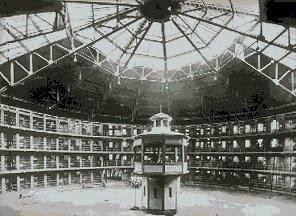
The recent upswell of interest in Facebook and other social networking sites has taken us one step closer to the all-knowing and all-seeing social panopticon.
Like everyone else (it seems), I'm on Facebook now and enjoying it tremendously. As Simon Smith recently noted, it has a killer UI and is far, far too much fun to use. Users can provide an endless barrage of information about themselves which in turn appears instantly on their friends' news feeds.
You are now tuned into the George News Network: All George, all the time:
George has joined a new group.
George has been tagged in a new photo.
George has edited his relationship status and religious affiliation.
George is brushing his teeth.
George should probably be using his time more productively....
Exciting stuff, to be sure. You're watching me and I'm watching you. It's a thrill a minute.
Personally, I'm getting to the point now where after I successfully add a new friend I can actually feel the release of dopamine in my brain. Mmmm, new friend.....that's the good stuff....
In addition to all the masturbatory self-affirmation that goes on in Facebook, however, there are some broader social issues to consider. I'm speaking specifically of the rapidly evaporating phenomenon of anonymity. You remember 'anonymity?' There was a time not too long ago when barely anyone knew who you were outside of your family and immediate group of friends.
Today, social networking sites allow users to post as much information about themselves as they want -- everything from who they're currently dating to their favorite book. This could eventually come back to haunt them on account of unscrupulous individuals or Big Brother.
Take, for example, the ability to tag photos; if your image is on the Web, chances are your visual anonymity has been lost forever. Facebook lets you upload images, drag a square cursor around your friend's face, and with a click of the mouse tie that person's image to his or her profile. Eventually, given one's visual prominence on the Web, these sites will use photo recognition software to automatically tag a photo with your name. In fact, Google is already using this technology on Picasa.
But when taking the Facebook phenomenon into consideration, and seeing how unabashed people are about sharing their personal information, this appears to be a non-issue. At least at this point in time anyway. Those who partake in social networking are a select group of individuals who, for the most part, don't care or don't realize that they're putting themselves 'out there.'
And I'm certainly a member of this group. I could avoid these sites and leak agonizingly little information about myself to the Web, or I can share the most trivial details of my life with others, form new friendships and connections, and have fun.
I'll gladly choose the latter.
Subscribe to:
Posts (Atom)