Who needs a digital avatar when you can...uh...have a real person be your avatar? I'm confused. Wondering what you might look like with a new face? Try Modiface. View the latest collection of accessories for augmented animals. Don't believe in accelerating change? Well, the U.S. issued a record number of patents last year. I'd like to read this study about procrastination, but I think I'll do it tomorrow.

January 13, 2007
Around the Web


Star Trek's 'Prime Directive' is stupid
 Fiction often reflects reality and nowhere is this more true than in Star Trek. The franchise is one giant phantasmagoric projection of human hopes and longings. It's also a glimpse into a our societal norms and commonly held inhibitions, fears and inconsistencies.
Take the Star Trek Prime Directive (PD) for example, a non-interference policy that applies to civilizations who have yet to develop the capacity for warp speed. The policy dictates that there be no interference with the natural development of any primitive society. No pre-warp culture can be given or exposed to any information regarding advanced technology or alien races, nor should the United Federation of Planets improve or change in any way the natural course of such a society, even if that change is well-intentioned and kept completely secret.
The Federation contends that great harm would be inflicted upon a civilization if first contact is made prematurely. It is my opinion, however, that if anything like a PD was put into practice it would introduce a slew of ethical problems.
The PD is a science fictional projection of the naturalistic fallacy and injunctions against playing God. It's also a disturbing application of social Darwinism. The underlying assumption of the PD is that a civilization must attain space faring capabilities and advanced technologies through their own means (civilizational uplift is not an option, I suppose). It's survival of the fittest as decreed by the Federation, and those who cannot progress to an advanced developmental stage or who destroy themselves first simply didn't deserve to be in the Federation in the first place.
The PD was the focus of many Star Trek episodes, but there's one in particular that stands out in my mind as a blatant example of how negligent and unfair the Prime Directive can be.
The episode in question comes from the first season of Star Trek: Enterprise called "Dear Doctor" in which the crew must decide where their morals lie about letting a species live or die from a pandemic. Technically speaking, the PD hadn't been implemented yet, but this episode was intended to show some of the events leading to its development.
In "Dear Doctor" the Enterprise crew encounters a pre-warp civilization that is being decimated by a pandemic -- over 12 million people were killed during the previous year. Needless to say these people are eager to find a cure and are hopeful that the Enterprise crew will be willing and able to help them with their advanced medical technology.
The crew soon discovers that that the alien society is comprised of two distinct species, the Valakians and Menks -- but for some unknown reason the Menks are completely immune to the disease.
Phlox, the ship's doctor, is asked to develop medication to ease the symptoms of the disease. In so doing he discovers that the illness has a genetic basis and has been ongoing for thousands of years, accelerating only in recent generations. Shockingly, Dr. Phlox projects that the Valakians will be extinct in less than 200 years.
The doctor eventually finds a cure but comes to the conclusion that it wouldn't be ethical to administer it for fears of interfering in an evolutionary process. Apparently, the Valakians are dying out and the Menks are undergoing an "awakening process". The "disease" the Valakians are suffering from isn't caused by any pathogen, but is because their gene pool has reached a "dead end."
The doctor convinces Captain Archer that they should not interfere, they pack their bags, and boldly return to space leaving the Valakians and Malks to fend for themselves.
It was at this point during the episode when I frantically reached for any and all objects I could find to throw at the television. I started foaming and frothing at the mouth while spewing profanities at the screen. Unbelievable. In the course of one single episode the Star Trek writers committed a slew of ethics sin and bought into a number of fallacies associated with evolutionary theory and genetics.
First of all, the 'natural course' of things, while certainly flowery and noble sounding, is another way of describing cruel, indifferent and unconscious processes. The entire thrust of secular humanism, to which Star Trek is supposedly partial to, is all about putting a stop to such things.
Second, it is sheer nonsense from an ethical perspective to favour one sentient species over another based solely on the quality of their genetic constitution and any fallacious preconception as to their evolutionary potential. Nor does it make any sense to allow a genetic disorder to "run its course." It would be like refusing to "interfere" with cystic fibrosis or spina bifida. A doctor's first and foremost directive, if I may use that term, is to treat his or her patient to the best of their abilities and do no harm. Phlox violated the Hippocratic Oath and acted with dangerous negligence.
I could go on and on about the problems in this episode but I am somewhat straying off course. This is one example of many in which the PD is used as an excuse for inaction. What's worse is that it's a reflection of many current prohibitions and taboos. Today, at the dawn of the genetics revolution, we are confronted with fear and apprehension. And as the world modernizes and globalizes, we are stunted by cultural relativism and social pandering.
In the Star Trek universe it is assumed that only Darwinian processes can enable a civilization to reach an advanced stage. It is likely that this is believed because of previous failures and a misguided reverence for evolutionary processes. Instead of giving up on uplift and helping a civilization integrate into advanced society, the Federation should keep trying to find an effective strategy. Leaving a primitive culture to their own devices could lead to their destruction -- a result that is quite obviously far worse than awkward socialization.
While the ethics of obligations is a very tricky thing, it is often through our inaction that we cause the most harm. Injunctions against playing God begs the question: if we don't play God, who will? It is through our good intentions and resultant actions that we are humane. Further, we have to get over our inferiority complex and our fear of making a bad situation worse. And if our actions do make things worse, then we have to refine our strategies and ourselves in hopes of eventually achieving success.
Humanity's Prime Directive should not be avoidance, but instead compassionate action.

Tags: star trek, bioethics, ethics, science fiction, cultural uplift, prime directive.
January 11, 2007
Must-know terms for the 21st Century intellectual: Redux
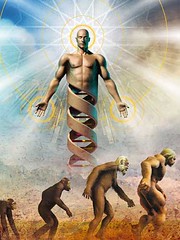 Blog posts can be strange and unpredictable things. There are times when I pour a ton of energy and creativity into a post only to have it largely ignored. Other times I quickly and haphazardly put something together and it ends up attracting thousands of hits. Such was the case with my recent post, Must-know terms for today's intelligentsia.
Owing to all the interest, feedback and requests, I've decided to revise the list and provide greater detail and links. I apologize for not providing this in the first place.
Before I get into the list, however, I'd like to clarify the purpose of this exercise.
First, I am trying to come up with a list of the most fundamental and crucial terms that are coming to define and will soon re-define the human condition, and that subsequently should be known by anyone who thinks of themselves as an intellectual. I admit that there's an elitist and even pompous aspect to this exercise, but the fact of the matter is that the zeitgeist is quickly changing. It's not enough anymore to be able to quote Dostoevsky, Freud and Darwin. This said, while my list of terms is 'required' knowledge, I am not suggesting that it is sufficient.
My definition of an 'intellectual' also requires explanation. To me an intellectual in this context is an expert generalist -- a polymath or jack-of-all-trades who sees and understands the Big Picture both past, present and future. While I value and respect the work of specialists, they can be frustratingly out of touch with other disciplines and some of the more broader applications of science, technology and philosophy. Given the obvious truism that nobody can know everything, there is still great value in having individuals understand a diverse set of key principles.
Also, I admit that my list is biased in favour of my own personal specialties and interests, but I have made a conscious effort to be as cross-disciplinary as possible. There are terms from computer science, cosmology, neuroscience, environmentalism, sociology, biotechnology, philosophy, astrobiology, political science, and many other fields.
Finally, I tried to be as generalized as possible and keep the number of terms down to a minimum; I made an effort to include other integral concepts in the descriptions.
With that lengthy preamble complete, here is my revised list:
Accelerating Change: That the pace of technological development is accelerating is now undeniable. The steady onslaught of Moore's Law and its eerie regularity is the most profound example. As thinkers like Ray Kurzweil and others have shown, the onslaught of accelerating change throws commonly held time-frames out the window. And that this rate of change is exponential implies radical social disruption around the mid-point of the 21st Century. Anthropic Principle: Once considered a philosophical lark, the anthropic principle has become an integral methodological tool with which to best analyze the extreme unarbitrariness of the Universe's parameters. The AP, which suggests that our Universe's qualities are unavoidable in consideration of the presence of observers, has helped cosmologists, astrobiologists and quantum physicists as they work with such related concepts as the fine-tuning hypothesis, string theory, and various multiverse theories. Artificial General Intelligence: This ain't your daddy's AI. Rather, AGI describes the kind of intelligence that you and I have -- the commonsense knowhow we have when we're put into unfamiliar situations. Once developed, artificial agents endowed with AGI will be non-specialized intelligent entities that will come to represent the bona fide synthetic equivalent to human intelligence, and then move beyond. Augmented Reality: AR describes the fusion of the real world with the virtual. By using eyetaps, eartaps and implants, individuals will be able to filter unwanted information from their sensory fields (such as annoying advertising and sounds). Alternately, users will have new information virtually inserted into their environment, including descriptions of landmarks, maps, or even an alert notification that a familiar person is approaching. Imagine the gaming possibilities... Bayesian Rationality: Bayesian rationality is a probabilistic approach to reasoning. Bayesian rationalists describe probability as the degree to which a person should believe a proposition. They also apply Bayes' theorem when inferring or updating their degree of belief when given new information. Some scientists and epistemologists hope to replace the Popperian view of proof with a Bayesian view. Cosmological Eschatology (aka physical eschatology): CE is the study of how the Universe develops, ages, and ultimately comes to an end. While hardly a new concept, what is new is the suggestion that advanced intelligence may play a role in the universe's life cycle. Given the radical potential for postbiological superintelligence, a number of thinkers have suggested that universe engineering is a likely activity for advanced civilizations. This has given rise to a number of theories, including the developmental singularity hypothesis and the selfish biocosm hypothesis. Engineered Negligible Senescence: Aging is increasingly coming to be regarded as a disease, and as such it is privy to treatment and therapies leading to outright eradication. Indefinite lifespans may be as little as 50 years away. Existential Risks: The development of nuclear weapons marked a disturbing turning point for the human species: we are increasingly coming into the possession of apocalyptic technologies. Soon to join the list are such problems as a malevolent superintelligence, deliberate or accidental misuse of nanotech, runaway global warming, a killer artificial virus, an antimatter holocaust, or a particle accelerator disaster. Read more here and here. Adding insult to injury is the Doomsday Argument. Extended Identity: Human activity is increasingly migrating to the digital realm. The rise in popularity of MMORPGs such as Second Life and World of Warcraft show that the self can, to a non-trivial degree, be transfered to an alternative medium. With the maturation of these technologies will come distributed personhood and new legal protections to guarantee safe and ubiquitous online activity. Fermi Paradox: The FP is the disturbing realization that, given the extreme age of the galaxy and the radical potential for post-Singularity intelligences (including their ability to disseminate Von Neumann replicators), our galaxy should be saturated with advanced civilizations and megaprojects by now. Yet, we see no signs of ETI's. Consequently, any predictions about the future of human intelligence must seek to reconcile this observation. Key theories to date include the Great Filter hypothesis, the migration hypothesis (pdf), and the transcension hypothesis (the idea of inward migration into increasingly sophisticated and complex MEST space (Matter, Energy, Space, and Time)). Friendly AI: If we are going to survive the Singularity and the onset of greater-than-human AI, it had better be friendly. And if it turns out to be friendly, it won't be by accident. Computer science theorists such as Eliezer Yudkowsky and Ben Goertzel are already working on what may ultimately prove to be an intractable problem. A poorly programmed, malevolent, or misguided SAI could destroy all of humanity with a mere thought. Asimov's Three Laws will do little against incomprehensibly powerful autopotent entities (a term coined by Nick Bostrom indicating total self-awareness and ability to self-modify). Human Enhancement: Humans are about to decommission natural selection in favour of guided evolution. Darwinian processes gave humanity a good start, but Homo sapiens can be improved. Owing to advances in genetics, cybernetics, nanotechnology, computer science, and cognitive science, humans are set to redefine the human condition. Future humans can look forward to longer lives, enhanced intelligence, memory, communication and physical skills, and improved emotional control. Humans may eventually cease to be biological and gendered organisms altogether, giving rise to the posthuman entity. Human enhancement will irrevocably alter social arrangements, interpersonal relationships, and society itself. And there's also the added potential for nonhuman enhancement. Human Exceptionalism (aka human racism): Not everyone is in favour of human enhancement and the prospect of greater-than-human intelligence. Nor is everyone in favour of extending personhood outside the human sphere. These 'human exceptionalists', a group that includes anti-transhumanist Wesley Smith, argue that being human is what matters, and that to give equal moral currency to non-humans is a violation of human dignity and worth. The opposing viewpoint to this is that of Non-Anthropocentric Personhood -- the notion that nonhumans, be they animals, robots, or uploaded minds, have the potential for personhood status, and by consequence, are worthy of moral consideration. Information Theoretic Death: New technologies will soon demand that we redefine what we mean by death. It is becoming increasingly unsatisfactory to declare death when the heart stops. As long as the information within the brain can be preserved and restored, a person should not be considered irrevocably dead. Given the potential for molecular nanotechnology and other future biotechnological advances, it is reasonable to suggest that most cognitive impairment will someday be repairable. Consequently, we will need to reconsider the status of persons frozen in cyronic stasis or hooked up to life support systems. Mass Automation: The robotic revolution has only just begun. Robots, AI and automated systems are poised to dramatically reduce the amount of manual labor performed by humans. For example, we are less than 10 years away from the advent of self-driving cars. What will that mean for taxi and bus drivers? Checkouts at grocery stores are already becoming automated as are a significant number of factory jobs. The good news is that a lot of demeaning, difficult and dangerous work is about to be eliminated, the bad news is that it will likely cause serious employment issues. Memetic Engineering: This is the radical and controversial idea that the propagation and quality of information should be monitored and managed. Memetic engineering is a term coined by Richard Dawkins, and has been elaborated upon by such thinkers as James Gardner, Robert Wright, Daniel Dennett (who calls for increased cultural health) and William Sims Bainbridge (to enhance group and societal outcomes). For example, advocates of ME would argue that some religious memes are viral and and need to curbed. I have also argued along these lines. On a related note, a burgeoning movement is afoot to help people overcome their biases. Mind Transfer (aka 'uploading'): Uploading is the theoretical prospect of transferring cognition and consciousness to a digital medium, namely supercomputers. Recent advances in neuroscience are increasingly coming to re-enforce functionalist interpretations of mind. Given the Church-Turing theory of universal computational compatibility, there is strong reason to suspect that the mind's processes can be duplicated in computers. This has led to speculation about massive societal uploads, entire civilizations living within massive supercomputers, extreme life extension, and entire lifespans lived in open-ended virtual reality environments and simulations. A number of thinkers, including roboticist Hans Moravec, have outlined various uploading techniques. Personally, I believe the jury is still out on whether or not we will be able to code an algorithm for consciousness. Molecular Assembler: If you're familiar with a Star Trek replicator you know about molecular assemblers. These devices could take a clump of matter and reconstitute it into anything we desire, so long we have the molecular schematics. The device would work in a similar manner to the way in which genes and ribosomes function to produce protein. Needless to say, the impacts of an assembler would be monumental. The humanitarian impact would be great, creating unprecedented material wealth and access to resources. At the same time however, it would be the most dangerous invention ever devised, capable of creating any kind of apocalyptic device and even self-replicating entities that could cause global ecophagy. Neurodiversity: Pending biotechnologies will create a multiplicity of psychological modes of being. Today, recreational drug users and the autistic rights community contend that the obsession with maintaining 'neurotypicality' is a form of oppression. In the future, technologies such as neuropharmaceuticals, cybernetics and other cognotech will offer individuals an unprecedented opportunity to experience alternative subjective mental states. Like anything, however, neuroenablement and cognitive liberty are rights that will have to be fought for. Neural Interface Device: An NID is any device that enables the brain to interface with a computer. Today, paraplegics use NID's to move computer cursors with their thoughts alone. Eventually this will lead to advanced prostheses, novel remote control concepts, and even the almighty brain-jack as portrayed in such sci-fi films as The Matrix. Noosphere (aka metaconsciousness): Human communication and interaction may eventually advance to the stage where even conscious thought may be globalized and massively shared. This will lead to the rise of the so-called noosphere. Open Source: This is a term that most people are familiar with, but it's worth re-stating. The open source revolution, where information is freely distributed and editable, is already reshaping a number of industries and upsetting traditional economic and intellectual property models. Wikipedia has very quickly become the world's largest repository of encyclopedic information. Linux and other open source software continue to rival the big players. And looking further down the line, there's the potential for open source science, culture, and the disturbing potential for open source warfare. Participatory Panopticon: An offshoot of David Brin's transparent society, Steve Mann's sousveillance, and Charlie Stross's panopticon Singularity, the Participatory Panopticon is a proposed strategy for dealing with the onset of ubiquitous surveillance. Coined by environmentalist and forward thinker Jamais Cascio, the PP is the suggestion that all citizens will soon have the tools with which they can watch each other and keep themselves accountable for their actions. Political Globalization: Though it lags behind economic and cultural globalization, political globalization and the thrust towards world federalism is happening nonetheless. While it may be a while before borders completely dissolve, nations and institutions are already developing co-operative and positive-sum arrangements. This process may unfold quicker than expected. It was only 60 years ago that Europe tore itself apart; today Europe forms the world's most powerful economic and political union. Post-Scarcity Economy: A post-scarcity economy is a hypothetical form of economy or society in which things such as goods, services and information are free, or practically free. Such a future could come about due to abundance of fundamental resources (think nano, AI, alternative energy, etc.), in conjunction with sophisticated automated systems capable of converting raw materials into finished goods (namely by molecular assemblers). In such a world, manufacturing would be as easy as duplicating software. Quantum Computation: Today's computers run on what's called a Von Neumann architecture. This basic idea has existed for decades, but there is a new concept under development -- an idea for computation in which bits (or qbits) are stolen from alternate universes. Seriously. The basic principle is that the quantum properties of particles can be used to represent and structure data, and that quantum mechanisms can be devised and built to perform operations with this data. The long-and-the-short of this means that future computers running on such a platform would be ludicrously powerful and fast. As an example, some modern simulations that are taking IBM's Blue Gene supercomputer years would take a quantum computer only a matter of seconds. The prospect of quantum computers throws projections of an upper bound on computation out the window. Thinkers like David Deutsch have suggested that our universe may be a kind of quantum computer, while Stuart Hameroff notes that brains may also be a type of quantum machine. Radical Luddism: Unabomber Theodore Kaczynski may have been the first of a new breed of radical anti-technology terrorists. In his manifesto, titled Industrial Society and Its Future, he argued that his actions were a necessary (although extreme) ruse by which to attract attention to what he believed were the dangers of modern technology. Given the extreme and disruptive potential for biotechnology, AI, nanotechnology and cybernetics, it is safe to assume that a fringe segment of society will take it upon themselves to prevent their development by any means necessary. Remedial Ecology: Humans have really messed up this planet, but that doesn't mean we can't fix what we've broke. Remedial ecology is the notion that with the right tools and knowhow we can repair the damage that's been done. By using bioremediative processes, for example, we can use genetically engineered microorganisms to remove toxic or unwanted chemicals from the environment, or break down hazardous substances into less toxic or nontoxic substances in soil, groundwater, sludge and sediment. And looking further into the future there's the added potential for not just repair but also redesign. Bruce Sterling's Viridian movement is a step in this direction. Simulation Argument: The SA, which suggests that we may be living inside a computer simulation, is important from metaphysical, cosmological, and philosophical perspectives in that it sweepingly upsets conventional notions of existence and our place in the Universe. It also gives us a potential glimpse into the activities of superintelligences. The SA, aside from its Cartesian epistemological implications, gives rise to a host of ethical issues, including the ethics of simulating conscious beings and their potential moral worth. This has already given rise to the reactionary concept of substrate chauvinism, which is the conviction that only biological matter can carry moral worth. Substrate chauvinism is also used to dismiss the idea that self-aware robots could ever be regarded as persons. Soft Paternalism (aka Libertarian Paternalism): States are increasingly working to protect their citizens from themselves. People have bad habits, are prone to ignorance, and are often capable of self-destruction. Instead of using coercion, however, states are softly encouraging their citizens to take better care of themselves and their affairs. For example, in such an "avuncular state" employees would be signed up for company pension schemes by default. Freedom of choice is maintained, but default policies protect the ignorant and lazy from the consequences of their mistakes. Technological Singularity: Accelerating change may lead to an existential paradigm shift for the human species. How this will look like and how it will come about is still a mystery, giving rise to a social event horizon known as the Technological Singularity. In all likelihood it will come about through the advent of superintelligence. It has also been referred to as a potential 'intelligence explosion,' or a time when the speed of technological development reaches maximal levels. Such an event could lead to human extinction or the advent of posthuman existence.
January 8, 2007
Latest audiocast posted
 My latest audiocast has been posted here. You can subscribe to this feed.
In this episode I discuss the Ashley Treatment, why the disabled will inherit the earth and whether there can be awareness in the vegetative state.
January 7, 2007
Double standards in male-female power relations
 There is a very strange television commercial running these days that very much highlights the double-standard that exists today in male-female relations. In this ad a couple is seen making-out in the front seat of a car. After a few seconds of this the woman leaves the car at which point it is revealed that she is a police officer who has pulled over this fellow for the purpose of making-out with him owing to his fabulous choice in automobiles.
Cute, eh?
Well, not if you consider what the commercial would be like if you swapped genders and had a male officer pull over a woman for the same reason. Could you imagine the outcry? But with a woman pulling over a man, this is somehow considered acceptable.
Why is that? Well, men have different sexual needs and expectations, right? Was this a sexual victory for the guy? The commercial certainly made it look that way as the last shot shows him smirking. I wonder, why wouldn't a woman perceive this is a victory of sorts? Or would she? Are women simply afraid to admit it? Or, would a woman be left absolutely mortified by such an incident?
Or, is it acceptable to show a woman dominating over a man because her power is merely illusory? Since men can still physically dominate a woman, her power is in her sexuality. I have to wonder about that gun of hers, though.
Perhaps this a genuine expression of female dominance and it appears acceptable because women have been subjugated for so long. We men have had this coming for some time now. This is the advertising media's manifestation of the male guilt complex.
Maybe men live in a matriarchal society, but we just haven't realized it yet....
Comments welcome.
January 5, 2007
Video clip of my segment on 'The Hour'
 For those of you who missed it, here is the video clip of my segment on The Hour with George Stroumboulopoulos in which I discuss the future of humans.
Defending Ashley's parents on the BBC
Check out this BBC video where I defend Ashley's parents. This was shot inside the CBC newsroom amid a flurry of activity. We were also racing against the clock in hopes of making the 10 o'clock news in England. We finished shooting with 30 minutes to spare. Very tense.
January 4, 2007
Ashley X story hitting prime time
The Ashley X story is hitting prime time and I have found myself embroiled in this controversy. Back on November 6, 2006 I published the article, Helping Families Care for the Helpless, in which I defended the actions of Ashley's parents.
This story has caused a media sensation now because the girl's parents recently published a lengthy and very well articulated argument in their defense. My article was one of several others cited in their blog post. As it is turning out, a public outcry is emerging against the actions of the parents; my supportive voice has come to represent the minority opinion. In the past 12 hours I have been overwhelmed with interview requests, including those by the Guardian and the BBC. James Hughes, my colleague at the Institute for Ethics and Emerging Technologies, has also been kept busy with interviews.
I stand behind my article and wish to re-iterate my stance that Ashley's parents have taken the most humane course of action possible.
Quite understandably, this issue invokes a highly emotional response. It is easy to be turned off by the seemingly radical nature of the interventions. When one looks deeper into the situation, however, a clearer picture emerges -- one in which the proper context can be established.
Lost in this conversation is the acknowledgment of the severity of Ashley's impairment. She suffers from an extreme form of cerebral palsy called static encephalopathy. This condition has permanently limited her cognitive capacity to that of a 3-month old infant. There is no hope for recovery and no amount of therapy as it currently exists will ever change this. Consequently, the notion that Ashley's parents are "keeping her a child forever" is utterly unfair; Ashley was doomed to a life of perpetual 'infanthood' from the very beginning.
What has changed, however, is that her body will now remain that of a child's. Ashley's parents have cogently described their rationale for each measure taken, so I won't reproduce them here. What I will say is that the quality of life for Ashley has improved because of these steps taken. Gone is the threat of institutionalization and third-party caregivers. Gone is the danger of injury to parent and Ashley caused by the heavy lifting of her adult body. And gone is the threat of sexual abuse and the onset of bedsores. The intent was to create a body and environment in which Ashley will experience the least amount of suffering given her extreme situation. I believe this has been achieved.
Ashley's parents have made the ultimate commitment and sacrifice. It is through these therapies that they will be able to continue to care for her well into the future and enjoy their 'pillow angel.' This was not a parental cop-out nor a desire for convenience.
I wish to clarify one thing. I have been quoted as saying, "If the concern has something to do with the girl’s dignity being violated, then I have to protest by arguing that the girl lacks the cognitive capacity to experience any sense of indignity." Yes, this is what I wrote, but it is not the entire quote. I go on to say that, "Nor do I believe this is somehow demeaning or undignified to humanity in general; the treatments will endow her with a body that more closely matches her cognitive state – both in terms of her physical size and bodily functioning. The estrogen treatment is not what is grotesque here. Rather, it is the prospect of having a full-grown and fertile woman endowed with the mind of a baby."
Where there might be some confusion or upset is in the suggestion that it is somehow acceptable to violate someone's dignity if they are not capable of experiencing it. This is not exactly what I am saying.
Rather, the concept of "human dignity" must be coupled with cognitive capacity if it is to have any meaning at all. Clearly this girl has dignity of some kind, but it does not diminish her dignity for decisions to be made on her behalf and for her to be denied the possibility of becoming a grown woman. She will never regret those decisions, and her quality of life will be much better because of the decision of her parents.
This entire episode is an excellent case study for what is meant by dignity and its relation to humane and merciful practices. If dignity means prohibiting those interventions that alleviate suffering, then clearly there is something profoundly wrong with what we mean by human dignity.
January 3, 2007
My appearance on The Hour to air tonight or tomorrow

January 2, 2007
New audiocast posted
My latest audiocast has been posted here. You can subscribe to this feed.In this episode I discuss Time Magazine's Person of the Year for 2006, the separation of church and bioethics, cheating versus enhancement in chess and why quantum mechanics forbids a single history.
December 31, 2006
Congratulations to me for being Time's person of the year
 A couple of weeks ago Time Magazine announced its 'Person of the Year' for 2006. Much to everyone's surprise, they awarded you as person of the year. Yes, you. And me. And anyone else who contributed to the ever growing Internet based infosphere.
If I assessed the reaction to this announcement correctly, most people thought this was the silliest idea they'd ever heard. The vast majority of opinions that I encountered came down hard on Time for this decision. Personally, I think most people missed the boat on this one.
You may not feel that you deserve this award, but I certainly do. I worked freakin' hard all year producing content for which I did not receive one single penny. I produced hundreds of original blog entries, created over a dozen podcasts, uploaded a number of pictures to Flickr, edited Wikipedia entries, uploaded some videos to YouTube, added comments to innumerable posts, Dugg user-posted articles, and much, much more.
Moreover, I'm contributing to the ever increasing diversification of media and alternative reporting. I don't have to answer to anyone except myself. All my content comes from me and is not driven by typical Big Media agendas and conventions. Self-published content for all the world to see is a monumental victory for freedom of speech -- a fact that Time, a magazine under threat from this type of content, is undoubtedly aware of.
Similarly, user-driven content is beginning to take on political influence. Sure, the macaca fiasco was small potatoes, but now politicians know The People are watching their every (often idiotic) moves. Sousveillance and the participatory panopticon are beginning to take shape.
More conceptually, like the democratization of media, the power of the masses are beginning to trump the power of the charismatic individual (whether these individual contributions are positive or negative). It's becoming increasingly difficult in the globalized and democratic digital age to award one single person as being the year's most influential. This is a good thing.
So, yes, I feel that we all deserve to be awarded as persons of the year. Kudos to Time Magazine!
Primitive UFOs
 This Far Side comic, which has the caption 'Primitive UFOs' beautifully encapsulates my opinion of UFOlogy -- just substitute ourselves and 1950s "flying saucer" future-tech to get my point.
Must know terms for today's intelligentsia
At the dawn of European humanism, Florentines believed that reading Dante while ignoring science was ridiculous. Similarly, Leonardo da Vinci and Michelangelo both recognized the great importance of understanding science, technology and engineering.Despite these trail-blazers, not much has changed since then; a startling number of so-called 'intellectuals' remain grossly ignorant of pending technologies and the revealing sciences (the postmodernists immediately come to mind). Today's intelligentsia, in order to qualify for such a designation, must have the requisite vocabulary with which to address valid social concerns and effectively assess the future.
Here is a list of must-know terms (there are many, many more, but these are IMO the most critical and fundamental):
Please let me know if you feel I have left something out, or if you believe something does not belong on this list. For example, I wanted to mention advanced weapons, but that seems awfully vague. In particular, I'm thinking of autonomous robotic soldiers, neuro-weapons, advanced non-lethal weapons, and non-human decision making on the battlefield. Also, I would have liked to mention something about how consciousness is still a hard problem in science, but I'm not sure how I could encapsulate that in a simple term.accelerating change artificial general intelligence augmented reality automation cosmological eschatology existential risks Fermi Paradox friendly AI human enhancement human exceptionalism (aka human racism) information theoretic death memetic engineering mind transfer (aka 'uploading') molecular assembler engineered negligible senescence non-anthropocentric personhood neural interface device open source participatory panopticon political globalization post-scarcity economy postbiological organism posthuman quantum computation radical Luddism remedial ecology self-improving and autopotent intelligence self-replicating device substrate chauvinism Simulation Argument Singularity superintelligence ubiquitous surveillance uplift virtual reality
December 29, 2006
"Quantum mechanics forbids a single history"
 Earlier this year cosmologist Stephen Hawking and his colleague Thomas Hertog of the European Laboratory for Particle Physics at CERN in Geneva, Switzerland, published a paper claiming that the Universe has no singular or unique beginning. Rather, it began in just about every way imaginable.
The vast majority of these proposed universes disappeared without a trace; only a minuscule fraction of them blended to make the current Universe. Hawking and Hertog insist that if we are to take quantum physics seriously, we must conclude that there is no single history. We should picture the Universe in the first instants of the Big Bang, they say, as a superposition of all cosmological possibilities.
Excerpt from Nature:
He and Hawking call their theory 'top-down' cosmology, because instead of looking for some fundamental set of initial physical laws under which our Universe unfolded, it starts 'at the top', with what we see today, and works backwards to see what the initial set of possibilities might have been. In effect, says Hertog, the present 'selects' the past.What's fascinating about this theory is that, by extension, it may be transferable to individual observers. By applying a stronger variant of the anthropic principle, one could argue that the cosmos has structured itself around your very own existence.
Within just a few seconds after the Big Bang, a single history had already come to dominate the Universe, he explains. So from the 'classical' viewpoint of big objects such as stars and galaxies, things happened only one way after that point. Other 'histories', say, one in which the Earth formed only 4,000 years ago, have made no significant contribution to this cosmic evolution.
But in the first instants of the Big Bang, there existed a superposition of ever more different versions of the Universe, instead of a unique history. And most crucially, Hertog says that "our current Universe has features frozen in from this early quantum mixture".
In other words, some of these alternative histories have left their imprint behind. This is why Hertog and Hawking insist that their 'top-down' cosmology is testable. Hertog says that the theory predicts the pattern of the variations in intensity of microwave background radiation, the afterglow of the Big Bang now imprinted on the sky, which reveal fluctuations in the fireball of the nascent Universe. These variations are minute, but space-based detectors have measured them ever more accurately over the past several years.
Controversial, to be sure!
Read more here.
Buddha Break 2006.12.29
The Dalai Lama would like to see the formation of an International Buddhist Zone. Tom Armstrong discusses the goal of Buddhist practice: "...the realization of a state of well-being that is not contingent on the presence of pleasurable stimuli, either external or internal. According to Buddhism, this movement toward well-being is a fundamental part of being human." Thich Nhat Hanh on aimlessness. Jeff Wilson analyzes the recent brouhaha about protests over Buddhist charms. Meditation alone is not enough. Yoga may help people face their fear and uncertainty over cancer.
Animal Welfare Notes 2006.12.29

"Suppose an anthropoid were taken into a typical human family at the day of birth and reared as a child. Suppose he were fed upon a bottle, clothed, washed, bathed, fondled, and given a characteristically human environment; that he were spoken to like the human infant from the moment of parturition; that he had an adopted human mother and an adopted human father . . . . The experimental situation par excellence should indeed be attained if this technique were refined one step farther by adopting such a baby ape into a human family with one child of approximately the ape's age."The real value of animal experiments was recently put into question by a team of senior scientists who found that many are flawed and do not predict how well a prototype medicine will work in humans. A U.S. federal effort to quickly pinpoint and contain outbreaks of disease among livestock is coming under attack. The plan for animal tracking is meeting with some tough farmer resistance. Peter Singer sets the record straight: "I have never said that no experiment on an animal can ever be justified." Watch an alpha female mother display her power in a troupe of bonobo apes. Conservationist and ape welfare activist Kerry Bowman: "When my eyes caught his eyes, I just felt nothing different than as if I was coming across a human." The moment inspired him. The Ape and The Child: A Comparative Study of the Environmental Influence Upon Early Behavior, by W. N. & K. A. Kellogg (1933):

Canadian Context 2006.12.29

Canadian researchers say they've cured diabetes in mice. A new report says Canada spends more than most industrialized countries on health care, but Canadians continue to endure long waiting times and face limited access to medical technology. And in Ontario, hospitals in big cities struggle to reduce the wait for surgeries while those in smaller communities say the province urges them to rent underused operating rooms for for-profit procedures. Only the Globe and Mail could put out an article titled, "The false assumption that doctors ooze wealth," and still show that family doctors earn, on average, $202,481 a year, while other medical and surgical specialists earn an average of $278,656. Sperm stocks in Canada are significantly down since the federal government made it illegal to pay men for the donations, and the supply of sperm imported from the U.S. will eventually be cut off. Ottawa wants to map out pollutants in body for the first time. StatsCan wants to test 5,000 people for toxins. Canadian consumers won't be buying meat and milk from cloned animals anytime soon, says Health Canada. Looks like they want to examine the data on cloned food. A recent poll has found high stress levels among Canadians. Life expectancy in Canada is now 80+. W00t! While young Canadian women tend to experience depression and thoughts of suicide more than men, the men are more likely to act.
Cheating vs. enhancement in chess
 Like any sport, chess is not and will not be immune to the advent of human enhancement. And like other sports, there will be an awkward adjustment period as organizers learn to cope with the new reality. In the meantime, there will be a fine line that separates legitimate enhancement from outright cheating.
Take the recent 10-year suspension of Umakant Sharma who was caught with a blue tooth device hidden in his cap when random checking was conducted during the seventh round of the Air Marshal Subroto Mukerjee Memorial All India Open FIDE Rating Chess Tournament. Sharma, who was playing black, was the top seed with an ELO of 2384.
Ouch. In my opinion a 10-year suspension is rather harsh. It would appear that an example is being made; chess organizers are implementing a zero tolerance policy when it comes to players cheating with computers.
Indeed, computers have so revolutionized the game that it is a hard temptation to avoid. But while the use of computers to assist in chess is fairly easy to detect, more physically intrinsic advantages, such as cognitive enhancement, will be harder to both assess and enforce.
What will happen when the first genetically modified competitors emerge? Will there be a stratification of competitions, ones featuring unaugmented players and ones featuring those with genetic mods? Thinking more philosophically, what is the qualitative difference between an unmodified player who was born with a genetic advantage versus a player who had that advantage given to them via assistive reprotech? Or is it the work ethic and committment to the game that is being rewarded? A strong case can be made that the furtherance of and excellence in sport is in the outcome, and not what goes on in the background (so long as the rules are being followed and the 'spirit' of the game is maintained).
In the case of chess, as I have already argued, if humans want to continue to have meaningful involvement in chess as it is played at the highest level, they will have no choice but to use computers as assistive devices and/or augment their brains so that they can keep up with supercomputers.
When I was following the recent Kramnk-Deep Fritz tournament, the play-by-play commentator (a grandmaster level player) noted how he hoped a strong cup of coffee would help him better analyze the match. This was a very telling moment for me. Chess players are already quite aware of which stimulants can assist in their play. As the Sharma incident has shown, they will undoubtedly seek out any opportunity to get an edge.
More to the point, however, as the human species changes so too must our competitive activities. The rules of sport, whether these sports require mental or physical skill, will have to bend in the face of the biotech wind.
5,000 years of religious encroachment in 90 seconds
There's an excellent map on Maps of War that shows the spread of the major religions over the past 5,000 years. This map makes me wonder,
[found on Arbitrary Remarks]in which ways are these religious conquests the result of viral memes and in which ways the organic consequence of imperialist expansion? in which way is this map misleading by showing geographical spread rather than population spread? What other format could more accurately convey this? in the case of memetic spread, what makes one religion more successful than others? given that we are now in the age of memetic globalization, how is religion spreading today? how could this map be adjusted to show the internal and minority religious influences, including atheism?
Subscribe to:
Posts (Atom)