Sir Martin Rees, Royal Society professor of astronomy at Cambridge University, agrees that it is now possible to conceive of computers so powerful that future societies may use them to build an entire virtual universe. In fact, like Nick Bostrom (who penned the first academic treatise on the subject), Rees wonders if we ourselves aren't the inhabitants of such a simulation.
These types of futuristic proclamations are nothing new for Rees, who has also argued that humans will eventually spawn machine intelligences and develop molecular assembling nanotechnology. It looks to me like he's keeping himself up to speed on all the transhumanist literature.
Now, on a related note, I'd like to take issue with a claim made by Jonathan Leek, the author of the Times Online article about Rees (which is really quite weak). In the article, "Top scientist asks: is life all just a dream?", Leek writes that René Descartes "famously came down in favour of existence, saying: 'I think, therefore I am.'" He uses this as possible evidence in favour of the argument that we are not in a simulation.
This is not an accurate interpretation of Descartes's assertion, nor does it disprove the Simulation Argument. In fact, Descartes's dictum opened the door to the possibility that existence as it is perceived may be a complete fabrication of some sort. Cartesian skepticism suggests that the only thing we can know for certain is that we can be aware of our own conscious, subjective self.
Further, a simulated reality would still constitute a bona fide 'existence' that could be experienced by a self-referential agent. I believe Leek is suggesting the contrary. A simulated existence is still an existence so long as it is perceived by a conscious observer and a high degree of modal realism is maintained.

November 1, 2006


October 31, 2006
Simon Funk's "After Life"
 Sci-Fi author Simon Funk has released an excellent short story that he has made available for free over the Internet. The story is called "After Life" and deals with the issue of consciousness uploads.
Excerpt:
I'm writing this now as I'm not sure what I'll remember tomorrow. Hell, I'm not even sure I'm writing this now. Yesterday when I woke up...
Well, let me back up a little. I don't know who will ever read this, so I should explain. I--we, the people I work with, study the brain. Right now we are working on something pretty neat, but also scary. We want to map a brain, functionally, down to the individual neuron. The trouble is, until now there's been no way to do this without killing the brain's owner.
But we've been able to do it--with a rat, and a cat. We don't really know if it worked with the cat, but we are currently running a simulation of the rat's brain and it appears to be exhibiting strikingly rat-like behavior. I.e. fucking amazing. Top secret. Even writing this down on something outside of company premises I'm sure violates a dozen clauses in my contract, but...let me move forward.
This is basically my project. I'm the one who's had the faith in it from the start, the drive to push it forward, and the ingenuity to make it work. But I feel I've been fighting bureaucracies the whole way, from trying to get money from people who could never understand what it's for to trying to get permission from people who could never understand why they should give it. We want to scan a monkey next. I think we'll be employing lawyers and public relations people for years to get that one to fly.
October 30, 2006
Is IBM's Blue Brain project a precursor to an AI project?
 If you want to understand how something works you should model it the best way you can.
This is precisely what IBM and the Brain and Mind Institute (BMI) are trying to do with the brain. Called Blue Brain, it is a project that was initiated in May 2005 with the lofty goal of modeling the mammalian brain. IBM and BMI claim that the aim is not the creation of AI, but a way to study how neurons in the brain interact with one another. Their intention is not to re-create the actual physical structure of the brain, but to simulate it using arrays of supercomputers.
I'm somewhat dubious of their claim that this is not an effort to develop AI. The construction of a simulated brain is awfully close to the development of AI. While this project may not be an immediate attempt to develop AI, I think it is at the very least a precursor to such a project. As the developers themselves admit, they are trying to model how information is formed in memories and how it is retrieved. Yes, it’s a different approach than trying to code for AI, but if it ends up looking like a duck and quacking like a duck…
As evidence that IBM and BMI are thinking about AI, the initial goal of the project is to simulate a neocortical column, which is the smallest functional unit of the neocortex. This is the part of the brain that is responsible for higher functions such as conscious thought. In humans, the neocortical column is 2mm tall, has a diameter of 0.5mm and contains 60,000 neurons. Project developers are initially working to replicate the neocortical column of a rat, which has only 10,000 neurons. It will take 2 years alone to construct a simulated column. Developers hope to model the human brain in about 10 years.
To model these components the developers will use a Blue Gene supercomputer that will run the MPI-based 'Neocortical Simulator' combined with 'NEURON' software. Blue Gene is a computer architecture project that will spawn several next-generation supercomputers -- computers that will reach operating speeds in the petaflops range, and are currently reaching speeds over 280 sustained teraflops! Its 8,000 processors will crunch away at 23 trillion operations per second.
The developers are hoping to use Blue Gene to create biologically realistic models of neurons. In fact, the results of the simulation will be experimentally tested against biological columns.
Once the neocortical column is developed, project developers will attempt to replicate the simulation at the molecular level (does this imply nanotech?) and work to simplify the column such that they will be able to run parallel simulations of large numbers of connected columns. You could say that running parallel simulations is important; the human brain consists of about 1 million cortical columns.
IBM has always thought big. Their dedication to the Deep Blue experiment and their existentially shocking success at defeating a grandmaster at chess shows that they have serious intentions. While Honda toils away on Asimo, IBM is trying to figure out a way to endow such a robot with brains.
Taking into consideration their dedication to these sorts of projects, and considering the resources and expertise at their disposal, I strongly suspect that IBM will be the first group to develop strong AI and possibly greater-than-human artificial intelligence. Blue Brain is certainly a step in this direction.
References:
Forbes: IBM Aims to Simulate a Brain
Blue Brain Project Homepage
Wikipedia
Simon the cryonaut
It's official: Simon Smith, the editor-in-chief of Betterhumans and my good friend, is now signed up with Alcor. I was present when he opened the envelope and put his bracelet on for the first time. He looked up at me and said with great seriousness, "Now I get frozen." Simon recently posted a blog entry about his decision to go with cryonics.
October 29, 2006
Buddha Break 2006.10.29
 I went to a meditation class today that was organized by my yoga instructor. The yogi who conducted the class had over 30 years experience and studied for a while under the Maharishi Mahesh Yogi. My own meditation practice is drawn from the vipassana tradition, so I was unknowingly venturing into uncharted territory.
The yogi began by telling us a bit about himself, including his upbringing as a Roman Catholic (why are so many R.C. expats drawn to Eastern philosophies and religion?) and a short stint with a fringe Christian sect. He noted his disillusionment with the Vietnam War and how he came to discover Eastern philosophies, including Transcendental Meditation (TM). He also noted how one of his mentors could levitate about 6 inches off the ground – a claim that immediately got my back up and made me feel very uncomfortable.
The lesson given by the yogi was a bit more reasonable and grounded in the standard fare: life is a buzz of activity; the mind is conditioned to go, go, go; it’s difficult to quiet the mind; we are not our thoughts.
But there were some lessons I was unaccustomed to. The yogi noted how we need to find our true 'essence' or true 'self' -- which I’m not so sure is a view shared by Buddhists who contend that there is no definable self or true essence. He said we should strive to perceive our lives through the perspective of this true essence, which is like the vantage point of an observer who is a witness to our life. This, I think, is a bit more in tune with Buddhism, which suggests detachment from the ego (“In the world, but not of it”).
As for the meditation, it was quite unconventional – and the yogi admitted as much. He had us do relaxation exercises and meditation while lying down. Normally meditation is done in a sitting position, but I think the yogi was trying to make it easy for the beginners and to impart the lesson that if you quiet the body you quiet the mind. The relaxation exercises were nice, and I was able to relax my sore shoulders (which were tense from being in an alien environment with unfamiliar people).
Once the meditation started we focused on the breath – a practice that I’m very familiar with. But after a few minutes of that he had us move ‘beyond’ a focus on the breath to a focus on the pure mind. This I could not understand nor accomplish. In fact, the idea of zoning-out like this is anathema to my own notions as to why we meditate and how we work to improve the practice of mindfulness. It might be my ignorance, but it seemed “unmindful” to try to attain a state of uber-relaxed ‘pure mind.’ I don’t even know what that means.
Moreover, I think it’s impossible. The whole vipassana practice is based around the idea that the mind can never be truly quiet – it can only be tamed (which is a great analogy for life and the Dharma). And it’s through the practice of mindful meditation that we can acquire the concentration and the mental discipline to remain rooted in the present and go about the business of the Dharma. In a way, I saw this quasi-TM type of meditation as a form of escapism.
 After the meditation I aksed the yogi if this was TM, which he said it wasn't. TM involves the use of a mantra that is repeated by the meditator. Yet despite this, I found it grating every time we were instructed to ‘transcend’ ourselves, our breath, or our thoughts – a word that was repeated far too many times for my liking. Perhaps its my Western upbringing, or my secular values, but I’m more interested in striving toward those things that are human attainable. And this is exactly what secular Buddhist Stephen Batchelor teaches. We run the risk of looking at the Buddha as some kind of demi-God or ‘transhuman’ as Batchelor puts it (not to be confused with the futurist transhuman). If we make this mistake, we undermine our own journey by failing to realize that Siddhartha was a regular schmuck just like you and me.
After the meditation I went to yoga class. I am really starting to make some progress. In addition to being able to hold poses for a bit longer and to stretch just a little bit further, I can now do an unassisted headstand. This is a huge deal for me; after the first time I did it I did a little dance around the room for joy.
Ah, there’s nothing like progress to keep you motivated.
Terasem, Ben Goertzel, etc.
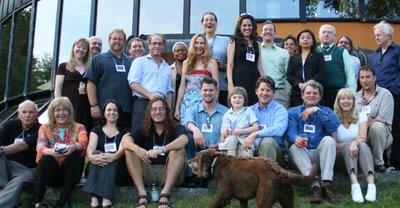 Bruce Klein of the Immortality Institute was kind enough to send me some links related to the Terasem Movement's 2nd Annual Workshop on Geoethical Nanotechnology which was held back in July of this year.
You can read more about Terasem here.
Check out this excellent photograph (click to see a larger version) taken at the Green Mountain Center Retreat in Lincoln, Vermont. Bruce is at bottom centre beside the dude with the long hair who happens to be Ben Goertzel of Novamente. Directly above Ben is Ray Kurzweil who is standing beside Wrye Sententia of the Center for Cognitive Liberty and Ethics (who had a baby girl last week! She and hubby Richard Glen Boire gave her the lovely name of Tesla. Congratulations!). And behind Wrye is Martine Rothblatt, the founder of Terasem.
Be sure to check out Ben's AGI talk. If you're interested in what he has to say, check out some more videos here and listen to his recent speech, "Artificial General Intelligence and the Singularity," as presented on Changesurfer Radio. In this speech Goerzel explains the problems that AI research has faced, its importance in changing human society, and the idea of an AI-driven historical discontinuity or “Singularity.”
As an aside, my animal uplift paper, "All Together Now," will be featured in Terasem's November journal.
October 28, 2006
Review of Darren Aronofsky’s "π" (1998)
 I finally got around to seeing Darren Aronofsky’s excellent metaphysical sci-fi flick, π (or "Pi"). Shot in grainy and over-exposed black-and-white, it’s the story of a brilliant mathematician, Max Cohen (played by Sean Gullette) who is driven by his conviction that higher math can be used to unlock secrets of the natural world. Using stock market figures as his data set, he tries to uncover patterns with the assistance of his homemade retrofuturist supercomputer, Euclid.
It is an eerie, noir and pessimistic film that addresses genius and how it can bring about irrational behaviour and even psychotic obsession. To a lesser degree it is about the fine line that divides science from pseudoscience, exploring such topics as platonic realism, numerology, religion and naturalism. Aronofsky doesn’t beat the audience over the head with any kind of grand judgment on the matter, leaving the viewers to decide for themselves.
Max’s story starts when he is six years old. Where Icarus flew too close to the sun, Max stared at it for too long and nearly blinded himself. He eventually regained his sight, but he also developed recurring headaches, and quite possibly his propensity for higher mathematics. This incident is later mirrored when Max cannot pull himself away from his mathematical obsession, one that is met with disastrous consequences.
His conviction that numbers and patterns can unlock the mysteries of the Universe parallels those of Ralph Nelson Elliott who studied the stock market back in the 1920's. Elliot developed the Elliot Wave Principle (EWP) that could, to a certain extent, predict broad trends in the stock market. In 1946 Elliot published his final major work, Nature's Law, in which he stated that the EWP was "the secret of the universe," and that "because man is subject to rhythmical procedure, calculations having to do with his activities can be projected far into the future with a justification and certainty heretofore unattainable." This is somewhat reminiscent of Leonardo DaVinci's Vitruvian Man in which he sought to show that geometric and mathematical consistencies could be found in the human form.
 The EWP is used to this day, and utilizes such mathematical principles as fractal geometry, Fibonacci sequences, and the Golden Ratio. These metaphysical curiosities are where Max’s obsessions are drawn from, and to which Max is hopelessly drawn.
Max’s genius causes him to see patterns in virtually everything. He even creates personal dictums about it. The fundamental assumptions that drive him are:
1. Mathematics is the language of natureBut due to his ability to see patterns in everything, and because he believes he can uncover deeper existential truths by analyzing sets, he ventures dangerously close to the realms of pseudomathematics – a journey that parallels his journey from sanity to insanity, rationality to irrationality. He becomes involved with a Hasidic cabalistic sect who is searching for the word of God in a code of 216 numbers. He becomes progressively obsessed and overly sure of himself. His paranoia and anti-social proclivities intensify as he feels himself getting close to some kind of revealing truth. At one point, his mentor, Sol Robeson (played by Mark Margolis), warns him that his rejection of scientific vigor has made him nothing less than a numerologist. Interestingly, Sol, whose name means "sun," abandoned a similar journey when trying to find some kind of code in the string of π.
2. Everything can be represented and understood by numbers
3. If you graph the numbers of any system, patterns emerge
Max's journey reminded me of the film portrayal of John Nash in the film, "A Beautiful Mind." Nash, a mathematical genius and cryptologist, suffered from schizophrenia and paranoia. Like Max, Nash could see patterns in nature; there's the apocryphal scene in the film where Nash sees arrangements in the configuration of the stars.
The theme of genius and mental illness is one that fascinates me. Some of the greatest human minds were plagued by serious psychological disorders. Kurt Gödel, for example, suffered terribly from paranoia. And mathematician Georg Cantor likely suffered from bi-polar disorder. There are many other examples, particularly among artistic geniuses.
Interestingly, the film also dealt with the issue of limits to human intelligence. Max, despite his abilities, is dependent on his computer to crunch the numbers. During one scene he sets the parameters on Euclid to process what may be the Ultimate Answer. Max procrastinates for what seems an eternity before he executes the command. He spirals around the room like the Golden Ratio before he has the courage to hit the enter button.
This is reflective of the work of modern mathematicians. A number of scientists are already using advanced computers to perform work they would otherwise be unable to accomplish. Mathematician Steven Strogatz, speculating on what the future holds for research on complex systems, notes that "we may end up as bystanders, unable to follow along with the machines we've built, flabbergasted by their startling conclusions."
[Warning : spoilers begin]
In π, however, it is Max's genius that is his final undoing, and he knows it. In the climatic moment of the movie he abandons his wild goose chase the only way he can: by trepanning himself with a drill. He has to bore out his mathematical gift which is screaming in his ears like a wailing siren.
In the final scene he sits on a park bench and looks up at the sky, but instead of seeing patterns, he sees clouds.
This is a damning conclusion when one contrasts Max’s journey with that of humanity’s. Like Max, human civilization has been endowed with a collective genius that it is using to uncover the hidden truths of the Universe and existence. Is Aronofsky suggesting that humanity’s journey of self-discovery will only result in madness and despair? Will we, like Max and Icarus, journey too close to the sun? Is our only recourse to abandon our search? Or is the madness in putting the drill to our collective skulls? Aronofsky may be suggesting that the human condition is untenable.
[Spoilers end]
π is a wonderful existential movie that had enough intellectual and philosophical material to keep me interested. The acting and screenplay was amateurish at times, indicative of director Aronofsky's lack of experience. It was his first film (at the age of 29) and made on a $60,000 budget.
Stylistically, however, it was excellent. I loved the grainy black-and-white, the quick-cuts, and the exaggerated use of contrast that added to the feelings of paranoia and claustrophobia. The film's score was coloured with electronica, a genre that is no stranger to the application of mathematics and patterns.
Definitely a film worth seeing. And it won't be much longer before we can watch Aronofsky's upcoming film, The Fountain which deals with the issue of immortality.
October 27, 2006
Mind matters
Grey matter from around the Web:
John Searle: "Minding The Brain"
Dilbert creator Scott Adams lost his voice 18 months ago to a rare condition called Spasmodic Dysphonia. Tired of the botox injections, Adams was convinced that it was mind over matter. He developed a number of novel exercises and techniques and has recently regained much of his voice. Adams explains how he re-mapped his brain.
John Searle: "Minding The Brain"
"After having been neglected for most of the twentieth century, the subject of consciousness has become fashionable. Amazon lists 3,865 books under "consciousness," a number of them new releases of the last year or two. What exactly is the problem of consciousness, and why exactly is it so difficult, if not impossible, for us to agree on a solution to it?" -- New York Review of Books articleJay Tolson: "Is There Room for the Soul?" New challenges to our most cherished beliefs about self and the human spirit. Don't let the title turn you off, here's why.
Dilbert creator Scott Adams lost his voice 18 months ago to a rare condition called Spasmodic Dysphonia. Tired of the botox injections, Adams was convinced that it was mind over matter. He developed a number of novel exercises and techniques and has recently regained much of his voice. Adams explains how he re-mapped his brain.
October 26, 2006
Does the brain tap into the future?
 [I’m writing this article at the risk of venturing awfully close to the world of parapsychology. I've included several links and references, which you, fine readers, can assess for yourselves in terms of determining legitimacy. Comments and criticisms are always welcomed.]
While researching my protopanpsychism article, I came across the work of Dean Radin and Dick Bierman whose research has yielded some very eerie results.
Before I get to this, however, I’d like you to conduct a short experiment. While looking at your feet, stomp on the ground. You will notice that your visual perception of your foot hitting the floor matches your sensation of touching it. This would be fine except for one thing: the speed of light is vastly faster than the conduction times and synaptic delays through the long nerves and spinal cord from your feet. As a result, you should be seeing the event before you feel it – and the delay should be noticeable.
But it’s not.
Benjamin Libet and his associates first documented this phenomenon in 1979, which is now referred to as the ‘delay-and-antedating hypothesis/paradox.’ A number of explanations have been posited to reconcile this strange observation.
Perhaps there is a lag in the visual information. If this is the case, then the visual cortex is set for a time delay such that it can keep up with the slow pulses from the extremities. This would be a rather bizarre revelation if true, meaning that we are constantly viewing the world with a small degree of latency. This is almost certainly not the case, as Darwinian selection would favour those animals that do not experience any kind of visual delay. Living in the past would be grossly disadvantageous out in the wild.
Another possible solution is that sight and feel are experienced at separate times, but are remembered as happening simultaneously. Problems with this hypothesis are similar to the previous one – a suggestion that we are not meaningfully rooted in the present and that our brain “edits” reality for us.
A third solution, one that seems ludicrous at first glance, is that the slow sensory information is referred backwards in time from the near future to match the fast information.
Impossible, right?
 Well, that’s where the work of Radin and Bierman come in. They have performed experiments in which it appears that the brain is reacting to stimuli before it is experienced. Radin and Bierman have conducted experiments in which subjects viewed random images flashing on a computer screen. Some of the images were rather neutral while others were meant to invoke a highly emotional response. The researchers discovered that the subjects responded strongly to the emotional images compared to the neutral ones, and that the response occurred between a fraction of a second to several seconds before the images appeared.
Bierman recently repeated these experiments using an fMRI brain scanner and documented emotional responses in brain activity up to 4 seconds before the stimuli. Other laboratories have made similar findings.
Assuming the data is being recorded and interpreted correctly, what's going on here? How is it possible that information can run backwards in time? Roger Penrose believes that quantum effects in the brain could explain backwards referral. He suggests that such effects may occur commonly and even routinely. “If in some manifestation of consciousness,” says Penrose, “classical reasoning about the temporal ordering of events leads us to a contradictory conclusion, then this is strong indication that quantum actions are indeed at work!" Neuroscientist Fred Alan Wolf has come to a similar conclusion and has offered his ‘Two-Time Observable Transactional Interpretation Model’ (TTOTIM) of consciousness.
Stuart Hameroff notes that quantum information can indeed run backwards, or be time indeterminate, citing the Aharonov formulation which suggests that each quantum state reduction has a dual vector, both forward and backwards in time.
What does this all mean? As Wolf notes, “we need to look toward altering our concept of time in some manner, not that this is an easy thing to do. Perhaps we should begin with the idea that a single event in time is really as meaningless as a single event in space or a single velocity. Meaningful relation arises as a correspondence, a relationship with some reference object.”
In addition, this not also adds further credence to the quantum consciousness hypothesis, but to panpsychist notions as well.
References:
Fred Alan Wolf: "A Quantum Physics Model of the Timing of Conscious Experience"
Stuart Hameroff: "Time Flies (Backwards?)"
October 25, 2006
Cognitively modified organisms
Jamais Cascio has just given birth to a new term, 'cognitively modified organisms,' or CMO's for short. It's exactly what it sounds like.
Here's how I reponded in Jamais's comments section:
While I've never heard the term 'cognitively modified organism' before, the idea has been around for a while and is already being discussed by some bioethicists, including Princeton's Peter Singer.
Singer and Jim Mason recently published a book titled, The Way We Eat: Why Our Food Choices Matter, in which they argue that farm animals should be neuroengineered to alter their instinctual tendencies and to alleviate suffering.
Personally, I am unsure about this idea. The suggestion that the psychologies of farm animals be adjusted to reduce their subjective sense of suffering is off putting, mostly because it would do nothing to improve our relationship with animals, nor would it result in more humane farming practices. While I can understand why Singer and Mason would push for such an 'improvement' (it's a real and hard fix, after all), and while I run the risk of posing a slippery slope argument, I think such a strategy could open a Pandora's Box of potential problems that could extend outward to other non-human animals and even humans themselves. Moreover, such a strategy would do nothing to alleviate the negative environmental impacts of factory farming.
As a short-term solution, perhaps this is a good idea to help reduce suffering, but I certainly don’t think this should be considered a permanent fixture of livestock.
On a related note, there is the transgenics issue and the development of the so-called chimera or sub-human. Like the farm animal issue, this is also an area for concern. As I noted in my recent animal uplift paper, "All Together Now":
Here's how I reponded in Jamais's comments section:
While I've never heard the term 'cognitively modified organism' before, the idea has been around for a while and is already being discussed by some bioethicists, including Princeton's Peter Singer.
Singer and Jim Mason recently published a book titled, The Way We Eat: Why Our Food Choices Matter, in which they argue that farm animals should be neuroengineered to alter their instinctual tendencies and to alleviate suffering.
Personally, I am unsure about this idea. The suggestion that the psychologies of farm animals be adjusted to reduce their subjective sense of suffering is off putting, mostly because it would do nothing to improve our relationship with animals, nor would it result in more humane farming practices. While I can understand why Singer and Mason would push for such an 'improvement' (it's a real and hard fix, after all), and while I run the risk of posing a slippery slope argument, I think such a strategy could open a Pandora's Box of potential problems that could extend outward to other non-human animals and even humans themselves. Moreover, such a strategy would do nothing to alleviate the negative environmental impacts of factory farming.
As a short-term solution, perhaps this is a good idea to help reduce suffering, but I certainly don’t think this should be considered a permanent fixture of livestock.
On a related note, there is the transgenics issue and the development of the so-called chimera or sub-human. Like the farm animal issue, this is also an area for concern. As I noted in my recent animal uplift paper, "All Together Now":
“Animals may also be engineered to have specialized physical or cognitive characteristics while lacking certain neurological faculties. Theoretically, such creatures could be designed for specific tasks, such as manual labour, dangerous work, or as sex trade workers--and at the same time be oblivious to the demeaning or hazardous nature of their work. For all intents and purposes these would be happy slaves.”
“This is a repugnant possibility and an affront to humanitarian values. Interventions designed to deliberately constrain a sentient organism such that it is incapable of empowered participation in the broader social community is grossly unethical and should be considered illegal. The ultimate goal of animal uplift is the creation of equal social partners and not a species to be subjugated.”
Protopanpsychism and the consciousness conundrum, or why we shouldn't assume uploads
 Despite grandiose and cocksure proclamations to the contrary, consciousness is still a hard problem in science. Aside from (currently) untestable theories and philosophical musings, how matter organizes itself such that it is capable of experiencing subjectivity and qualia is an utter mystery.
Compounding the problem is the widespread tendency to interchangbily use the terms intelligence and consciousness. While related, these terms describe two very different phenomena. My calculator and computer are examples of intelligence. My ability to use language and deductive reasoning to help me write this article are other examples of intelligence. But my ability to subjectively experience the phenomenon known as 'sweetness,' or to sense the colour red, or the feeling I get as time passes, are endowments brought about by my conscious awareness.
There are arguably two major philosophical approaches to the issue of consciousness -- they are 'philosophical' because we still don't possess the requisite scientific vernacular to address its true underpinnings. These proto-scientific approaches are known as dualism and emergence.
The first and most traditional argument is the idea of vitalism or dualism. This perspective suggests that the essence of consciousness lies outside the brain, perhaps as some ethereal soul or spirit. Consequently, its proponents suggest that consciousness lies outside knowable science.
Cartesian dualism fits within this category of thinking – the notion that the only thing that can truly be known is the presence of personal subjectivity and that everything external to that may be a fabrication or hallucination (see Descarte’s Meditations on First Philosophy and his ‘Evil Daemon’ argument). While existentially interesting (or is that disturbing?), Descartes’s argument violates Popperian notions of testability and smacks of Gnosticism and radical skepticism (these are fascinating topics in their own right that lie outside the scope of this discussion, and can include such conundrums as the brain-in-the-vat and simulation problems).
The other broad approach to the issue of consciousness is emergence theory, the idea that self-awareness and qualia can arise from complex computational dynamics in the brain. The critical assumption here is that mind’s architecture is largely computational, but that consciousness emerges through the concert of myriad neuronal interactions. In this sense, consciousness is an epiphenomenon or metaphenomenon of the brain's machinations.
This approach to cognition is clearly essential, but it is not sufficient. Indeed, the mind almost certainly utilizes its computational or functionalist aspects, most of which go completely unnoticed by the conscious agent at the top of the processing hierarchy. Today’s computers, which have inspired comparisons to the brain, crunch numbers but are in no way self-reflexive about their work; consequently, they can partly account for human intelligence, but make relatively poor models as approximations or metaphors for consciousness engines.
At the same time, it almost seems like a cop-out to suggest that increased complexity in such systems will result in consciousness, which is, qualitatively speaking, a horse of a different colour.
Now, I wouldn’t want to dismiss emergence theory outright. There’s something very satisfying about this idea, particularly considering how this might have come about through natural selection. It may very well turn out that that emergence does in fact account for consciousness.
That said about dualism and emergence, there is a third, albeit controversial, perspective that should be considered: panprotopsychism. This is the notion that essential features or precursors of consciousness are fundamental components of reality which are accessed by brain processes. In philosophy, panpsychism is the view that all parts of matter involve mind. Neuroscientist Stuart Hameroff, a proponent of this view, argues that consciousness is related to a fundamental, irreducible component of physical reality, akin to phenomenon like mass, spin or charge. According to this view, the basis of consciousness can be found in an additional fundamental force of nature not unlike gravity or electromagnetism. This would be something like an elementary (self)-sentience or awareness. As Hameroff notes, "these components just are."
Panpsychism has a long a varied history. Back during the time of the Greeks, philosophers like Democritus contended that a basic and fundamental form of consciousness was a quality of all matter – what they called 'atomism.' Later, Baruch Spinoza would argue along similar lines -- that atoms and their subatomic components have subjective, mental attributes.
 Relatedly, Buddhist atomists like Dharmakirti argued that the only thing that exists are Buddhist atoms (described as being point-sized, durationless, and made of energy) and states of consciousness. Similarly, Gottfried Leibniz and A. N. Whitehead believed that systems ordinarily considered to be physical were constructed in some sense from more basic mental entities – what are now referred to in process philosophy as 'Whitehead occasions.'
 Bertrand Russell put forth the idea of "neutral monism," which described a common underlying entity, neither physical nor mental, that gave rise to both. Bishop Berkeley suggested that consciousness creates reality and that consciousness is "all there is." Berkeley's famous dictum was "Esse est percipi" ("To be is to be perceived").
Theoretical physicist John A. Wheeler has suggested that information is fundamental to the physics of the universe, and David Chalmers has proposed a double-aspect theory in which information has both physical and experiential aspects.
While these ideas vary, they do explore the interplay between what is regarded as reality and consciousness. Whitehead in particular saw the universe not as being comprised of 'things' but of 'events.' In this sense reality is a kind of process where consciousness emerges from temporal chains of occasions.
If this sounds somewhat analogous to what quantum mechanics tells us, you’re not far off the mark. A number of thinkers have picked up on Whitehead’s idea as it relates to quantum physics, including Abner Shimony and Roger Penrose. This has lead to the development of what is known as quantum consciousness theory, which postulates the idea that consciousness is indelibly tied to quantum processes – that the brain is essentially a quantum computer utilized by an observer to “decohere” quantum superposition. Penrose and Stuart Hameroff have constructed a theory in which human consciousness is the result of quantum gravity effects in microtubules.
Penrose’s ideas have been met with much scorn, not least of which for his assertion that there are non-computational or non-algorithmic aspects to consciousness. This suggestion has lead thinkers like Hameroff and Penrose to conclude that mature AI as it is typically presumed (i.e. that it is also endowed with artificial consciousness) is a pipe-dream.
If they’re right, however, this poses a significant problem for those who believe that uploading (or mind transfer) awaits humanity in the future -- the opinion that consciousness is not substrate dependant, and that a fully sapient agent can exist as an uploaded being in a supercomputer. Many transhumanist expectations, from radical life extension to Jupiter Brains, are dependant on this assumption.
But what if consciousness is in fact substrate specific and can only be experienced in the analog arena? What if there is no digital or algorithmic equivalent to consciousness like Penrose suggests? Having consciousness arise in a classical Von Neumann architecture may be as impossible as splitting the atom in a virtual environment by using ones and zeros.
As possible consolation, however, the fact of the matter is that under the Penrose/Hameroff premise, the brain is a quantum computer – which if quantum theorists like David Deutsch have their way, will eventually come to fruition. If a quantum computer comprised of biological matter could arise through autonomous evolutionary processes, then I would have to think that intelligences like our own will eventually come to figure it out. If this is the case, then it may be possible to engineer subjectivity outside of our grey matter. Quantum computers could also be useful for running simulations of quantum mechanics, an idea that goes back to Richard Feynman; he observed that there is no known algorithm for simulating quantum systems on a classical computer and suggested to study the use of a quantum computer for this purpose. One has to wonder if the same logic applies to the potential for quantum computers to run consciousness simulations.
Given the extreme computational power and speed of quantum computers, I can’t even become to fathom what a conscious agent would do within such an architecture.
All bets are off once a conscious superintelligence starts to engage in selective decoherence.
References:
Stuart Hameroff: "Consciousness, Whitehead and quantum computation in the brain: Panprotopsychism meets the physics of fundamental spacetime geometry"
John Holbo: "Fragments of Parallax"
Wikipedia
Related Sentient Developments reading:
"Working the Conscious Canvas"
"Many Mangled Worlds?"
"Blindsight and our unconscious life"
"Dalai Lama 'craving a discourse'"
Buddha Break
Business Week has published a special report on what it calls 'Karma Capitalism.' As the caption reads, "Times have changed since Gordon Gekko quoted Sun Tzu in the 1987 movie Wall Street. Has the Bhagavad Gita replaced The Art of War as the hip new ancient Eastern management text?"My friend and fellow Buddhist Mike LaTorra had this to say about the article:
At the risk of prejudicing readers before they have even read this article, I feel compelled to offer my own comment up-front. The article points out that the formerly "hot" ancient book for business wisdom was Sun Tzu's ART OF WAR, but now it's the BHAGAVAD GITA. If one were being charitable, one might say that businessmen have turned from the one book to the very different other one because everything of value had already been learned from the first book. If one were more cynical (or perhaps, more realistic) one could say that businessmen are always looking for new sources of advice because they are under constant competitive threat and cannot afford to overlook any possible source of help, no matter how outlandish, and -- like a placebo -- nearly any "words of wisdom" can seem to help for awhile. But fairly soon this new source of wisdom will be replaced by another. And another.
October 24, 2006
Ruskies claim they can prevent asteroids from striking the Earth
The Russian Space Agency announced today that it can "repel" asteroids to save the Earth from devastating impacts. They didn't specify how they planned to repel NEO's, but I suspect it's something along these lines.
Vergano: Looking for aliens in all the wrong places
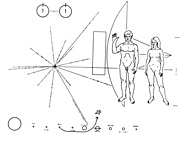 USA Todays's science correspondant Dan Vergano has posted a nice article summarizing a recent paper on the Fermi Paradox published by Milan Cirkovic and Robert Bradbury. The paper, titled "Galactic Gradients, Postbiological Evolution and the Apparent Failure of SETI," posits an explanation to the "where is everybody" question by suggesting that radically advanced machine intelligences migrate to a technological habitable zone where computational process are vastly more efficient.
 As Vergano writes in his article,
That matters, because, "as almost anyone having practical experience with computers will have experienced, heat is an enemy of computation," they note. So, they argue, since the stars where these computer-dependent aliens arose will slowly be burning up (our sun will turn into a red giant in 5 billion years, for example), the places where extraterrestrials will slowly migrate to, and perhaps build space colonies, is the place where computers are most comfortable. That would be in the cold depths of space at the edge of galaxies, far from the fiery stars.You can read the entire USA Today article here.
SETI, Cirkovic and Bradbury charge, is "fundamentally flawed" because it looks for signals from aliens from nearby sun-like stars. "Outward migration of advanced technological species should be taken into account in future practical SETI projects," they write. "The true test here would be to detect signs of astro-engineering efforts at the outskirts of nearby spiral galaxies."
Shostak, of the SETI Institute, agrees that intelligent aliens likely are dependent on computers, or are computers themselves. But the assumption that computational efficiency will drive aliens ever outward, overriding any other goal, is a big one, he says. "It's a clever idea, but more than likely to be wrong."
Richard Dawkins quote on the threat of the 'American Taliban'
 Richard Dawkins's latest anti-religious crusade is saturating the media. I hope his name starts to carry the same weight here in North America as it does in Europe; I think it's very important to have a thinker and scientist of his caliber railing against religious irrationality as vehemently as he is. It's important because no one is doing a better job right now normalizing atheism and humanism to the degree that Dawkins is.
 Here's a quote from Dawkins that I discovered today on BoingBoing:
"Does Bush check the Rapture Index daily, as Reagan did his stars? We don't know, but would anyone be surprised? My scientific colleagues have additional reasons to declare emergency. Ignorant and absolutist attacks on stem cell research are just the tip of an iceberg. What we have here is nothing less than a global assault on rationality, and the Enlightenment values that inspired the founding of this first and greatest of secular republics. Science education - and hence the whole future of science in this country - is under threat. Temporarily beaten back in a Pennsylvania court, the 'breathtaking inanity' (Judge John Jones's immortal phrase) of 'intelligent design' continually flares up in local bush-fires. Dowsing them is a time-consuming but important responsibility, and scientists are finally being jolted out of their complacency. For years they quietly got on with their science, lamentably underestimating the creationists who, being neither competent nor interested in science, attended to the serious political business of subverting local school boards. Scientists, and intellectuals generally, are now waking up to the threat from the American Taliban."
October 23, 2006
Walker and Cirkovic: Astrophysical Fine Tuning, Naturalism, and the Contemporary Design
I can't wait to read this:
Astrophysical Fine Tuning, Naturalism, and the Contemporary Design
Mark Walker with Milan M. Cirkovic, in International Studies in the Philosophy of Science, 20(3): 285-307, October 22, 2006. Abstract:
Astrophysical Fine Tuning, Naturalism, and the Contemporary Design
Mark Walker with Milan M. Cirkovic, in International Studies in the Philosophy of Science, 20(3): 285-307, October 22, 2006. Abstract:
Evidence for instances of astrophysical ‘fine tuning’ (or ‘coincidences’ ) is thought by some to lend support to the design argument (i.e. the argument that our universe has been designed by some deity). We assess some of the relevant empirical and conceptual issues. We argue that astrophysical fine tuning calls for some explanation, but this explanation need not appeal to the design argument. A clear and strict separation of the issue of anthropic fine tuning on one hand and any form of Eddingtonian numerology and teleology on the other, may help clarify arguably the most significant issue in the philosophy of cosmology.
Buddha Break
 The latest CyborgYogi audiocast has been posted by James Hughes and Matthew Falkowski. The Cyborg and the Yogi is a bi-weekly podcast on the relationship of science and spirituality, focusing especially on neuroscientific research relating to yoga and meditation. Hughes is the executive director of the Institute for Ethics and Emerging Technologies and Matthew Falkowski is the co-director of Samadhi and Sundari Yoga Studios in Manchester Connecticut.
This week Hughes and Falkowski talk with neuroscientist Dr. Richard Restak, author of The Naked Brain, and then reflect on the nature of anger, violence and empathy in our lives, neuroscience and the world.
Pope warns about "artificial intelligence"
The Vatican recently backed down from its rabid anti-evolution stance in favour of an opinion more in line with intelligent design, but one thing the Catholic Church will never concede is the existence of the human soul. Vitalism and the ascendancy of the soul remain indelible concepts in the Christian canon.
Along these lines, Pope Benedict spoke out this past weekend against the increasingly prevalent view among scientists that the brain is largely a material and malleable construct, namely the idea of cognitive functionalism or computationalism. Of course, the Pope didn't use this exact terminology, instead opting to use the term "artificial intelligence."
Benedict warned that such a view will lead humanity to an Icarus-like fate – Icarus being the mythic figure who burned his wings by venturing too close to the sun. "Contemporary life gives pride of place to an artificial intelligence ever more enslaved to experimental techniques, thereby forgetting that all science should safeguard mankind and promote his tendency to authentic goodness," he said. The Pope went on to say, "Letting yourself be seduced by discovery without paying attention to the criteria of a deeper vision could lead to the drama the myth speaks of."
Clearly, the pope is concerned about the growing sophistication of medical interventions in the brain. The ability to modify moods and proclivities through the application of such things as neuropharma and cybertechnologies has the Pope worried.
At least, this is my interpretation of the Pope’s injunction; his words were typically vague and cryptic. It also occurred to me that he could be warning about the development of true AI, but I’m not entirely positive. I wouldn’t mind hearing some other opinions or interpretations.
***ADDENDUM***
Well, it looks like the Reuters report that I pulled the quote from got it all wrong. It wasn't artificial intelligence that the Pope was talking about, but rather 'artificial' intelligence in the context of education and learning. You can read more from his speech here. Thank you to Steve for pointing this out.
Along these lines, Pope Benedict spoke out this past weekend against the increasingly prevalent view among scientists that the brain is largely a material and malleable construct, namely the idea of cognitive functionalism or computationalism. Of course, the Pope didn't use this exact terminology, instead opting to use the term "artificial intelligence."
Benedict warned that such a view will lead humanity to an Icarus-like fate – Icarus being the mythic figure who burned his wings by venturing too close to the sun. "Contemporary life gives pride of place to an artificial intelligence ever more enslaved to experimental techniques, thereby forgetting that all science should safeguard mankind and promote his tendency to authentic goodness," he said. The Pope went on to say, "Letting yourself be seduced by discovery without paying attention to the criteria of a deeper vision could lead to the drama the myth speaks of."
Clearly, the pope is concerned about the growing sophistication of medical interventions in the brain. The ability to modify moods and proclivities through the application of such things as neuropharma and cybertechnologies has the Pope worried.
At least, this is my interpretation of the Pope’s injunction; his words were typically vague and cryptic. It also occurred to me that he could be warning about the development of true AI, but I’m not entirely positive. I wouldn’t mind hearing some other opinions or interpretations.
***ADDENDUM***
Well, it looks like the Reuters report that I pulled the quote from got it all wrong. It wasn't artificial intelligence that the Pope was talking about, but rather 'artificial' intelligence in the context of education and learning. You can read more from his speech here. Thank you to Steve for pointing this out.
October 22, 2006
James Martin on the meaning of the 21st century
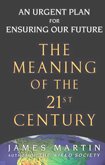 Author James Martin has published a new book, The Meaning of the 21st Century. The book's tagline reads, "An urgent plan for ensuring our future."
Be sure to read this scathing review by Bryan Appleyard in the Times Online. Appleyard writes:
In essence, as Martin rightly shows, the solutions - technical, social and political - to all our problems are quite clear and have been for at least 30 years. But they have not been implemented and that means that the real problem, the intractable problem, lies elsewhere. It is, in a nutshell, the plain fact that there is absolutely no prospect of people overcoming enough of their differences even to start to save the planet. We have known what harm is caused by the destruction of the rainforests but loggers still do it. We know burning fossil fuels will one day fry the planet, but we are burning more than ever. We know that religious fundamentalism can be twisted into murderous nihilism, now more than ever.Here's a description of the book from the publisher:
Martin, with his technophile, progressive, conventional mind, is not, therefore, a reliable anatomist of the future. In the most basic sense, he just doesn't understand the problem. Or perhaps, beyond all the "awesomes" and the "depth interviews", he does, and he knows that to understand is to despair. In that case, this book is, indeed, a press release, a document of consoling distraction to be read as we gallop into the flames..."
James Martin tells us that we are living in a turning point in human history. "We are traveling at breakneck speed into an era of extremes- extremes of wealth and poverty, extremes in technology, extremes of globalism. If we are to survive, we must learn how to manage them all." Although we now face huge challenges and conflicts, the scientific breakthroughs of the twenty-first century will provide new hope for our future. The best strategy, Martin believes, is to discover how to use our intelligence and technology to transform the world before we destroy the planet and ourselves along with it.
Drawing from his decades of experience as one of the world's most widely respected authorities on the impact of technology on society, James Martin- known as the "Guru of the Information Age"-proposes provocative, feasible solutions for some of the world's thorniest problems. Martin, convinced that our enormously complex plight is imminent, endowed the James Martin 21st Century School at Oxford University to help find real-life solutions.
The Meaning of the 21st Century is the culmination of years of research and extensive interviews with experts in a wide range of fields. A ringing call to arms and a pragmatic blueprint for change, it is a book that's essential reading for everyone.
Real people with real needs
This political ad featuring Michael J. Fox reminded me that when we talk about the development of medical biotechnologies, we're actually talking about helping real people with real needs.
Subscribe to:
Posts (Atom)