April 29, 2006

New audiocast: Simon Smith interview

I recently interviewed Simon Smith, the editor-in-chief of Betterhumans. Topics discussed include Betterhumans, transhumanist culture, cryonics, life extension, systems theory and emergence.

RSS.

Tags: , , , , , , , , .

April 27, 2006

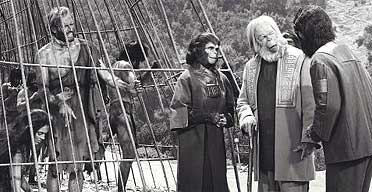
Spanish socialists want to give apes human rights

Holy, toldeo, now this is interesting and welcome news: Spanish socialists want to give apes human rights. The blurbage from the Spain Herald reads:
The Spanish Socialist Party will introduce a bill in the Congress of Deputies calling for "the immediate inclusion of (simians) in the category of persons, and that they be given the moral and legal protection that currently are only enjoyed by human beings." The PSOE's justification is that humans share 98.4% of our genes with chimpanzees, 97.7% with gorillas, and 96.4% with orangutans.

The party will announce its Great Ape Project at a press conference tomorrow. An organization with the same name is seeking a UN declaration on simian rights which would defend ape interests "the same as those of minors and the mentally handicapped of our species."

According to the Project, "Today only members of the species Homo sapiens are considered part of the community of equals. The chimpanzee, the gorilla, and the orangutan are our species's closest relatives. They possess sufficient mental faculties and emotional life to justify their inclusion in the community of equals."
I'm amazed and disappointed to see how many transhumanists and techprogressives have failed to grok the significance of such an import step forward. Much of the inhibition against such a development is is the misconception about what is meant by equality in this context.

No one is suggesting that humans and apes are equal in terms of cognitive, linguistic or physical proclivities. I don't think the Spanish politicians who are pushing for the bill believe that apes should qualify for the next vote, or that apes should be counted in Spain's next census.

Rather, where 'equality' comes into the picture is where legal protections are concerned.

Many people in our politically correct society cling to the myth that there is already cognitive and psychological equality among all humans. This is nonsense. Yes, there are disabled persons, but a broad spectrum of capabilities exist that diversifies all "normal functioning" humans and so-called neurotypicals from each other.

For example, there are things (like math) that I simply cannot do, there are people on this planet who do virtually everything that I can do but much better, and there are things that I do that many people simple cannot; most of these disparities are due to fixed and intrinsic biological traits. Environmental determinism was a passé idea that died in the socially naive post-Hippie 70s and replaced by a more tempered view of human physiology that takes genetic, social and environmental considerations into account.

Yet despite these differences, whether they be genetically, socially, or environmentally imposed, most liberal democracies have established a charter of rights and freedoms that protect people regardless of their abilities. At its core, that is the very essence of a democracy and an excellent foundation for a just society. Today, as the Great Ape Project attests, there's issue as to who we should include in our society -- much like there was an issue with allowing Blacks and women into society decades ago.

As far as apes are concerned, a strong argument can be made that they are cognitively and emotionally sophisticated enough as a species that we are morally bound to include them under the protective blanket of human rights. Obviously, the term “human rights” will not stand the test of time and will eventually have to be considered as “person rights.”

I find it profound to think that what we consider to be our sacred inalienable rights will soon be shared with other species. We will soon have a body of rights, freedoms and protections that will be applied and enforced across species boundaries. I hope to see other countries work to achieve similar bills and include other 'higher' mammals, including whales, dolphins, and elephants (among others).

This also bodes well as a precedent for transhumanism itself. The future of humanity may soon witness a kind of speciation, and it will be important for us to be in possession of an established set of laws that will protect different persons regardless of what might appear to be dramatic differences. It will also prove important when it comes time to acknowledge the personhood of machine minds.

For those in opposition to Spain's proposed bill, I offer this one last thought: when posthumans emerge, and should their advanced abilities cause them to be distanced from humanity to the degree that we are cognitively distanced from apes, that they will honour the laws we currently have in place that provide all persons with an inalienable set of rights.

Tags: , , , , .

April 25, 2006

The myth of our exalted human place

I'm still stewing about Spiked Online and their misguided mission to malign the animal rights movement. In particular, I'm upset at Chris Pile's assertion that animal rights activists are acting misanthropically by putting the welfare of animals on par with those of humans.

It's similar to Wesley Smith's argument that transhumanists, like animal rights advocates, are demeaning humans by ascribing personhood characteristics to non-humans (in the case of transhumanists, they're anticipating existence outside of the evolved human form and the rise of artificial intelligence and machine minds, whereas animal rights folks are acknowledging the personhood of gorillas, elephants, whales and dolphins. Ultimately, however, transhumanists and animal rights advocates are on the same wavelength in that they support the idea of non-anthropocentric personhood). In his article, “The Transhumanists: The Next Great Threat to Human Dignity,” Smith declares that humans “are not just another animal in the forest,” and that “human life has ultimate value simply and merely because it is human.”

Of course, the argument that humans have value because they're human is not really an argument at all. Rather, it's a rhetorical tautology devoid of any substance – except for what it reveals about the person making the argument.

Like Pile, Smith believes that humans occupy a special metaphysical or exalted space somewhere between the beasts and gods. Even when framed in secular language, the allusion to religious sensibilities is inescapable and one that informs an indelible part of this ideology. Along similar lines, the whole idea of 'dignity' arose during the time of aristocracy, a period when the nobility accredited their 'blue blood' as the essence which separated them from the lesser members of humanity.

Consequently, those arguments that bemoan the demise of human dignity are conspicuously promoted by those who steadfastly cling to these notions as they have been reconstituted and manifested by 21st century concerns. I'm speaking, of course, of inhibitions against ascribing personhood to non-humans. This speciesism, or what James Hughes refers to as human-racism, is one of the worst prejudices of our time.

Today, our gods and kings have been replaced by reason and liberal democracies. As a society, we have grown increasingly tolerant and accommodating to minority groups and those without power. We no longer enslave the 'other' and relegate our women to second class citizenry for fear of undermining human dignity. Similarly, as we are coming to recognize the psychological and emotional workings of non-human animals, we stand to take our morality and ethical commitments to the next level.

At the very core, though, what the speciests cannot bear is when an animal's life is 'put ahead' of a human's. More accurately, what they find repugnant is the thought of a human death when a cure could have been developed through animal experimentation -- the underlying assumption being that an animal's life does not have the same value as a human's. To the speciest, the animal's suffering is either not really happening (i.e. the misconception that animals don't really feel things the way people do), or that its suffering is a justifiable sacrifice in the name of science or in helping more 'worthy' human lives.

These rationalizations are the result of human arrogance and a mass hallucination among those who condone and perform the work; they operate in total denial, deliberately choosing to ignore the overwhelming evidence that animals get frightened and can experience pain the same way we do. There's also the 'blame the victim' mentality. In 2004, for example, PETA recorded the conversations of Covance technicians as they were restraining monkeys: "Goddamn...I'm gonna knock you out...you litte bitch...you little hateful ass, you."

There is no doubt that much scientific and medical advancement has occurred as a result of animal experimentation. But this is tainted knowledge, much like the tainted knowledge acquired by the Nazi doctors who tested on human subjects. Nazi doctors weren't so much sadistic as they felt their work was justified. Much like we have devalued the life and well-being of non-human animals, the Nazis de-valued an entire race of people.

Without a doubt many lives could be saved today if we allowed the inhumane testing of human subjects. But what a repulsive and abhorrent idea! It for this exact same sense of repulsion and abhorrence that we cannot continue to allow cruel experimentation on animals. Denying the individual psychological experience of each and every animal that is experimented upon is a gross breach of our reason and moral sensibilities.

And contrary to what Spiked Online, Chris Pile and Wesley Smith believe, animal rights activists are not misanthropic. In fact, they're quite the opposite. It's not just animals whose well-being they consider, it's a concern for all creatures capable of conscious experience and complex emotion.

Consequently, it is when we consider the well-being of both human and non-human animals that we become truly humane.

Tags: , , , .

Odds 'n Sods

It's ok to drink lots of coffee cuz it's probably not hurting you.
Gamma ray bursters are unlikely in the 'hood.
Our new Conservative government doesn't want Canadians to know that Canadian soldiers are getting killed in Afghanistan.
Susan Greenfield says that new technologies must be used to help each child, but not to mould pupils into a norm
I've seen 46 of these 101 culturally essential movies (via Ryan McReynolds)

Transcript of James Hughes interview, part 2

The transcript for part two of my recent interview of James Hughes is now available.

Check it.

April 22, 2006

The speciest Spike

Spiked Online clearly has an agenda in favour of promoting animal experimentation and they're masking it by using their "science section" as a guise for their pro animal torture propaganda.

The UK based Spiked claims to stand for "liberty, enlightenment, experimentation and excellence," but clearly they have no interest in ensuring animal liberty or promoting an enlightened sense of compassion. They are, however, excelling at promoting animal experimentation and de-legitimizing those who they refer to as animal rights "cranks."

Judge for yourself. Here is a sampling of recent articles they have listed in their "science" section:

- We need more drugs testing - on animals and humans: We mustn't let the disastrous trials at Northwick Park hospital blind us to the need for further medical innovation.
- Animal research protests: what next?: The demo to defend the half-built Oxford lab was a very good start, but there are bigger beasts to slay than a handful of animal rights cranks.
- The hard arguments about vivisection: Some scientists advocate experiments on animals while simultaneously apologising for them. Bad move.
- Animal testing: Qui vive? [which is really a link to the Times Online article, I'm on the side of medical science and that entails animal experiments]
- Pro-Test: supporting animal testing: A new campaign by Oxford students makes the case for scientific progress and medical research.
- Man is more than a beast: The primatologist Frans de Waal says we should get in touch with 'our inner ape'. Speak for yourself.
- Chimps and humans: what's in a name?: Whether we classify chimpanzees as pan or homo is a matter for evolutionary biology - not morality.

This last one by Chris Pile really got my back up. He asks, "Could a chimp ever be charged with murder?" referring to a Daily Mail article that pondered the issue of classifying some apes as human. Clearly, the terminology is skewed here and Pile's sensationalistic tone is deliberately meant to mislead; the issue is not whether an ape is human and subject to our social contract, but whether it is a person deserving of protection. Yet, Pile goes on to conclude that "we should be wary of attempting to draw moral conclusions from scientific findings."

What!? We should be wary of attempting to draw moral conclusions from scientific findings?

I'm incredulous. If scientific, rational, and empirical methodologies can't inform our morals or ethics, then what exactly should? The bible? Gut feelings? Come on, Chris! I'm sorry if science is ruining your speciest agenda by undermining all the falsehoods you carry around with you about what animals are capable of doing and feeling.

To my readers: please do me the favour of either deleting your Spiked Online bookmark (if you have one), and/or writing them to let them know your feelings about their lack of journalistic standards, how you resent journalism-as-lobbying, and their depraved indifference to animal welfare.

Tags: , , , .

Is Aubrey de Grey acting unscientifically and recklessly?

Looks like there's an interesting SENS related article in Science Magazine. The article, titled SENS and the Polarization of Aging-Related Research, is authored by Douglas A. Gray and Alexander Bürkle.

Only the abstract is available online:
The second Strategies for Engineered Negligible Senescence conference (SENS II) featured some very provocative ideas. The explicit objective of extending human life span indefinitely has opened a large rift between the meeting's organizer and those who believe he is acting unscientifically, perhaps recklessly. Two SENS conference participants present their views on the divisive nature of SENS.
Tags: , , , , , .

Audiocast: James Hughes interview, part 2 of 2

I recently interviewed Dr. James Hughes, executive director of the World Transhumanist Association and the Institute for Ethics and Emerging Technologies.

In part 2 of the interview, we discuss the prospects and reasons for world federalism, managing potential risks wrought by burgeoning technologies, the weaponization of space, and human gene patenting.

Feed: http://feeds.feedburner.com/PodcastSentDev

Tags: , , , , , , , , , .

April 21, 2006

Mark Walker's superlongevity talk for the TTA

Last night at the University of Toronto's Bahen Centre for Information Technology, Dr. Mark Walker delivered a presentation about the ethics of radical life extension, or as Walker refers to it, 'superlongevity.' The talk was organized by the Toronto Transhumanist Association.

The talk was party adapted from his recent paper, "Universal Superlongevity: Is it Inevitable and is it Good?"

Mark Walker Ph.D. is a research associate in philosophy at Trinity College, University of Toronto. He is founder and president of Permanent End International, a nonprofit organization devoted to ending hunger, illiteracy and environmental degradation. He serves on the editorial board of the Journal of Evolution and Technology and served on the Board of Directors of the World Transhumanist Association from 2002 to 2006.

Attendance for the event was good with about 20 people present. Walker spoke for about an hour discussing ethical issues surrounding life extension. He focused on two major objections or concerns to superlongevity, namely the potential boredom problem of radically extended lives and the issue of overpopulation. Walker presented a fair and balanced case in favour of life extension, noting that while overpopulation may be an issue in the future, it's not an untenable one. He offered a number of solutions, including the idea of individuals voluntarily choosing not to procreate, or as Walker dubbed it, a 'non-proliferation pact' for human reproduction.

After his presentation, Walker entertained questions for about 30 minutes, which was in turn followed by more informal person-to-person discussions.

I recorded the entire presentation and will be publishing it as an audiocast in a couple of weeks.

Thanks go out to Dr. Mark walker and all those who helped me organize this event.

Tags: , , , , .

Me on Changesurfer Radio

James Hughes interviewed me last Saturday for his Changesurfer Radio show. We talked about a number of things, including the Toronto Transhumanist Association, virtual worlds, postgenderism, animal rights, expanding personhood, and Battlestar Galactica.

Check it.

Tags: , , , , , , .

Transcript of part 1 of Hughes interview

Dustin Metzger was kind enough to transcribe my recent interview of James Hughes. The entire text of Part 1 can be found here. My thanks go out to Dustin.

Be sure to check out Metzger's excellent blog, Trending Towards FutureShock.

April 20, 2006

Lovelock's environmentalist sabotage

James Lovelock, the environmentalist and deep ecologist who popularized the Gaia Hypothesis, is as infuriating as he is fascinating. I’m still not quite sure what to make of this man, but my gut instinct tells me he's a bit off his rocker.

A few months ago he grabbed attention by announcing the beginning of the end for Earth and human civilization. In his Independent Online article, Lovelock argued that we recently passed the point of no return in regards to global warming and that the only thing to do now is to maximize the time we have left before extinction. "We have to keep in mind the awesome pace of change and realise how little time is left to act," he says, "and then each community and nation must find the best use of the resources they have to sustain civilisation for as long as they can. Civilisation is energy-intensive and we cannot turn it off without crashing, so we need the security of a powered descent."

I offered a rebuttal to this perspective, but I recently discovered another article of his that also has me shaking my head.

Back in 2001, Lovelock told the Telegraph that we need nuclear power. He also asked the British government to revive atomic energy as an alternative to burning fossil fuels. He went on to downplay the Chernobyl disaster, claiming that it was not the industrial catastrophe that so many people made it out to be. He claimed that only 45 people died at Chernobyl, a figure that was recently blown out of the water by Greenpeace who now claim that the total figure will eventually exceed 93,000.

Further, Lovelock noted his delight in the fact that diverse wildlife had once again returned to the 30km area immediately surrounding the Chernobyl nuclear facility. This is the area, of course, that remains off-limits due to radiation. “The wildlife of Chernobyl know nothing about radiation and do not fear it,” he says, “That they might live a little less long is of no great consequence to them.”

Inspired by this shining and radioactive example of passive environmental remediation, Lovelock argues that we should actually recreate similar situations elsewhere: “I have wondered if the small volumes of nuclear waste from power production should be stored in tropical forests and other habitats in need of a reliable guardian against their destruction by greedy developers.”

Now that’s a hardcore solution to the global warming problem if I ever heard one.

Spread radioactive material around to keep the pesky humans out.

I don’t know whether to laugh or cry. Clearly, Lovelock has no faith that the Establishment will ever acquire the resolve to deal with ongoing environmental problems. Rather than work to see certain areas declared off limits, or see that moratoriums and treaties are established and enforced, Lovelock instead promotes a curious call for coercive environmentalist sabotage.

As for nuclear energy itself, “The worst that could happen, if Chernobyls became endemic, is that we lived a little less long in a mildly radioactive world,” he says, “To me this is preferable to the loss of our hard-won civilisation in a greenhouse catastrophe.”

Although I could be wrong, I find his concern for our "hard-won" civilization to be disingenuous. The problem with many gaianists is their disregard for the individual, whether they be human or non-human. Lovelock's lack of interest for animal welfare in radioactive zones and his dangerous call for the spread of radioactive materials shows that his concern is for the abstract super-organism and not for the individual creatures themselves.

One could counter-argue that by looking out for the health of the entire planet he is expressing concern for the individual. If there's no habitable planet, after all, how can there be individuals?

At the same time, however, I cannot help but think that the road to an entire array of personal hells is paved by Lovelock's good intentions. Upholding concern over conceptual entities rather than tangible living creatures is a moral failing and a grave mistake. Sustaining life at the expense of an acceptable quality to that life is an end that is not justified by the means.

Tags: , , , , , , , .

April 19, 2006

Planning for disaster

With all this talk about potential catastrophes this century, it occured to me that we should hope for the best and plan for the worst. Consequently, I submitted a proposal to the IEET to that effect:
Recently, James and I were discussing specific policy stances the IEET may want to consider adopting in regards to pressing global issues such as the proliferation of dangerous weapons and technologies, environmental degradation, human rights, and so on.

Obviously, these issues are of paramount importance and there's lots to discuss, but I wanted to propose a supplementary policy domain that the IEET might want to consider adopting in anticipation of intractable problems and events beyond anybody's foresight or control.

As Nick Bostrom and others have cogently argued, humanity is increasingly coming into possession of technologies that are likely to result in terrible catastrophes -- if not human extinction itself. Underlying this grim warning is the fundamental fact that we are hopelessly stuck on Earth at this present time.

Thinkers like Steven Hawking, Anders Sandberg, and many others have argued that we run the risk of leaving all our eggs in one basket by remaining on Earth.

Consequently, I am proposing that the IEET adopt a set of policy issues aimed at promoting those scientific disciplines and technological endeavors that are focused on ensuring the ongoing existence of humanity and other valued aspects of Earth and its ecosystem should some kind of catastrophe occur.

Off the top of my head I can think of several areas worthy of IEET support:
- space colonization (and all the sub-disciplines this would entail, including the know-how to sustain life in space, the development of space vehicles and dwellings, etc.)
- the colonization of Mars
- gene banks and off-planet wildlife preserves
- biosphere projects
- alternative ideas (eg. deep underground biospheres)

Now, as I write this, I fear that such a policy might be considered outside the IEET's scope or mandate, or even a bit on the dramatic side. There's even the possibility that it might be construed as being too science-fictiony or ungrounded (I have images running through my mind of Dr. Strangelove's plan for post-nuclear war survival involving living underground with a 10:1 female-to-male ratio: Turgidson: "Doctor, you mentioned the ratio of ten women to each man. Now, wouldn't that necessitate the abandonment of the so-called monogamous sexual relationship, I mean, as far as men were concerned?" Dr. Strangelove: "Regrettably, yes. But it is, you know, a sacrifice required for the future of the human race. I hasten to add that since each man will be required to do prodigious... service along these lines, the women will have to be selected for their sexual characteristics which will have to be of a highly stimulating nature.")

Now, dark comedy aside, the IEET was intended to be a think tank, and I hope that this is a forum where such ideas -- no matter how grim or extreme -- can be considered. At this point I wouldn't mind some feedback.

Cheers,
George

April 18, 2006

Audiocast: James Hughes interview, part 1 of 2


I recently interviewed Dr. James Hughes, executive director of the World Transhumanist Association and the Institute for Ethics and Emerging Technologies.

In part 1 of the interview, we discuss Dr. J's ongoing projects, his future hopes and plans for the WTA and IEET, and current global issues facing techprogressives.

Look for part 2 of this interview to be made available in about a week's time.

Feed: http://feeds.feedburner.com/PodcastSentDev

Tags: , , , , , .

April 17, 2006

Radical life extension talk in Toronto this Thursday

For those in the Toronto area, the Toronto Transhumanist Association is hosting a talk on radical life extension this coming Thursday:

Title: Universal Superlongevity: Is It Inevitable And Is It Good?
Date: Thursday, April 20, 2006 @ 7:00PM

Description: The Toronto Transhumanist Association is hosting a talk by Mark Walker Ph.D. on the topic of radical life extension. Given the potential for dramatic medical interventions that could end the processes of aging within a few decades, Dr. Walker will explore the social and ethical implications of 'superlongevity' and a posthuman future.

Fee: no charge

Venue: Bahen Centre for Information Technology
40 St. George Street, Room 1200
Toronto, ON

Website: toronto.transhumanism.com

April 16, 2006

I’ve seen the future and the future is bald

Natalie Portman’s recent performance in V for Vendetta has me thinking about bald women on the silver screen, particularly in science fiction movies.

Traditional films are quite conservative in the way they portray women’s hairstyles. As an indelible part of their sexuality, filmmakers have been reluctant to mess around with such an integral female attribute. Moreover, until fairly recently, female roles in action movies have been secondary to those of males. Men are supposed to be masculinized on screen and women feminized.

Obviously, in today’s supposed equal opportunity action film industry we now have our super-sexualized action hero females like Charlie’s Angels and Uma Thurman in Kill Bill. But let’s face it -- they’re still sex symbols, big hair and all.

It would seem, then, that the only way to de-sexualize a female hero is to have her shave her head. And in this sense, science fiction has led the way.

Sci-fi is a particularly powerful genre in that it can afford to be more experimental in its treatment of virtually any aspect that appears on screen. In science fiction, the weirder the better. And it only makes sense. When you’re trying to portray the future or otherworldliness, it helps to cross traditional boundaries.

In sci-fi films, bald women have conveyed a number of things in addition to desexualization, including masculinity, sexual ambiguity, dehumanization, youthfulness, and innocence. And paradoxically, bald women have also been used to portray an enhanced sense of sexuality and control.

Sigourney Weaver, for example, went bald in Aliens in a blatant show of female masculinity. Like Demi Moore in G.I. Jane, Weaver was better able to portray Ripley as a physical and tormented action hero without having to carry the baggage of female sexuality. Consequently, a strong case can be made that Ripley is one of the most believable female action characters yet realized in science fiction film. Another recent example of this, of course, is Natalie Portman’s portrayal of Evey Hammond in V for Vendetta.

Along these lines, strong bald female characters tend to have an undeniable ‘butchy’ aspect to them. Put a bald actress on screen with a gun in her hand and suddenly you have a character whose sexual orientation is ambiguous at best.

Baldness can also represent something that has been taken away from us against our will, including our very humanity. In George Lucas’s THX 1138, for example, many of the main actors, including Maggie McOmie, were told to shave their heads in order to emphasize the dehumanizing nature of a future dystopian world.

Going back to 1927, the robot of Metropolis was sexually female, metallic, and bald. At least, that’s how we knew her to be on the inside; the robot is eventually given true human form and becomes an exotic dancer in the city's nightclubs, fomenting discord amongst the rich young men of Metropolis. But we, the viewer, know what bald malevolence lurks underneath.

As shown in Metropolis, baldness can represent sexual control in a non-intuitive way. David Lynch’s version of Dune portrayed the women of the Bene Gesserit order with shaved heads, perhaps to convey their eerie power and strength (including their sexual prowess), and even possibly their aloofness towards the male gender.

Similarly, in Star Trek: The Motion Picture, Persis Khambatta portrayed the Deltan Ilia, a bald species that can exude pheromones to arouse human males.

With the Bene Gesserit and Ilia, these female characters are at once desexualized by their baldness, but by consequence have their very sexuality brought to the fore and accentuated – elements that are reinforced even further by their actions and overt sexuality. In a real sense, these women have become more sexually frightening and threatening by virtue of their shaved heads.

And finally, in Steven Spielberg’s version of Minority Report, Samantha Morton played a Precog that was able to predict certain future events. These characters had a certain purity and innocence about them – elements that were emphasized by portraying them without hair. As a result, Spielberg was able to give them a sort of youthfulness and naiveté.

Truth, of course, can be stranger than fiction. Or rather, the future will be stranger than fiction. Given Donna Haraway’s call for female liberation through cyborg form, the desexualization of women may not just be an artistic device, but a true real world phenomenon.

For the time being, however, we’ll have to settle for Natalie Portman; but that's okay, because bald never looked so cute.

Tags: , , , , .

April 14, 2006

Latest SentDev Podcast Posted [14-Apr-06]


The latest Sentient Developments podcast is now available.

Feed: http://feeds.feedburner.com/PodcastSentDev

For those who are interested, I was experiencing some serious difficulties with OurMedia, which is where I've been uploading my MP3s. I wasn't able to get a link to my MP3 for over 2 days, so I switched to the Internet Archive front end and uploaded via FTP. It seems to be working well, so I'm still able to get free hosting for my MP3s. I've also been using Feedburner, which has been an excellent service.

Tags: , , , , , , , , , , , , , , , , , , , , , , , , , , , , , , , .

April 13, 2006

Things that should make cryonicists go "Hmmmm"

At the TTA's recent cryonics talk by Allan Randall, a couple of interesting issues cropped up -- some I had considered before and some I hadn't.

For example, in order to be able to afford a cryonics contract, most people put out a second life insurance policy and name their cryonics company as beneficiary. You die, and Alcor or the Cryonics Institute get the money.

Er, except for one small detail: you're really hoping that you're not actually dead, so one could make the case that you're engaging in some kind of fraud scheme. Just who exactly might contest this? Well, the insurance company for one.

Thinking about it, though, this may not be cause for concern. Perhaps the insurance company won't be around in your future Drexlerian cyborg world. Or, they may not even care so long after the fact. Moreover, insurance companies are aware of what they're getting into and what their client's intentions really are -- so there's no overt fraud being committed.

Another issue brought up at the meeting was the 'right to death' issue. While on the outside it might seem antithetical for a hopeful cryonaut to endorse voluntary euthanasia, it is in fact an issue that is very pertinent.

Suppose you come down with Alzheimer's. As someone who hopes to preserve their brain in the most pristine manner possible, the thought of undergoing an illness that rots away at your most precious resource should be frightening to say the least. Consequently, it could be argued that it should be within your rights to commit suicide prior to the point where Alzheimer's irrevocably starts to damage your brain.

So, as I've argued before, fight for your right to die.

Finally, if the idea of being a cyborg or an uploaded consciousness living in a fully immersive virtual reality seems unappealing to you, you should probably reconsider cryonics. At the very least, you may wish to note your inhibition in your cryonics contract and request a 'do not reanimate' condition if either of these types of existences are your only options. But IMO, the idea that you're going to wake up back in your old biological human body is laughable at best, so you'd best brace yourself for a posthuman future.

Tags: , , .

April 12, 2006

Pop Art Gets Proletarianized, or How Technology Will Enable Anyone to Play Guitar Like Eddie Van Halen

Technology changes how art is done and by whom. And it’s only going to get better. Not only will more and more people be able to afford the gadgetry of making art, but the intrinsic ability to create and perform art will be impacted as well.

Ever notice how jazz has suddenly become “high art?” Walk into any Starbucks and you’re likely to hear Miles Davis piped through the sound system as you guzzle your venti latte alongside your fellow sophisticates.

It wasn’t always this way, of course. Like all new art forms, jazz was once was dismissed by a snobbish wave of the hand as being the cacophonous, subversive music of the working class.

It’s funny how art works. At first it’s rejected and regarded as a threat or antithetical version of the established and “credible” art forms. Then, after it gains popularity and becomes profitable, it becomes broadly accepted, refined, and institutionalized (like Miles Davis CDs for sale at your local Starbucks).

Music in the 20th century has experienced a revolution of sorts, particularly Western pop music. Prior to Bob Dylan, vocalists were all virtuosic in ability; you had to sound like Nat King Cole to get noticed. Dylan, on the other hand, was the everyman singer. He mumbled into the microphone and sounded no better than the guy next door.

But that was the revolution. By showing that good and profound music could be performed by just about anyone, Dylan cast popular music in a new light and gave it a new sense of relevancy for the masses. Music didn’t have to be uber-refined and stuffy – it could be out of tune, off tempo, and a little bit off the cuff and still have strong aesthetic worth. Moreover, performance stars no longer had to be inaccessible and unrelateable prodigies – they could be regular folk just like you and me.

Soon after the Dylan phenomenon, garage bands and caterwauling vocalists started to come out of the woodwork, and the rest of 60s rock music is history. Music had finally become proletarianized. Or, at least it appeared that way; not everyone could become rock stars – but the illusion that anyone could become rock stars had certainly taken root.

Like anything, there was reaction to this turn of musical events. Prog rock tried to buck the trend for a little while (hey, the common man does not play in 5/8 time, nor does he want to, okay?) but the punk and grunge scenes pierced through this unbecoming upper-class pretentiousness. Consequently, the Nirvana phenomenon resulted in an entire generation of young artists who could barely move beyond three chord patterns.

Hence, your “music for the masses.”

And this is part of the problem when popular music, or any kind of art form, can be performed by anybody. Not everyone is a super-talent, nor can everyone afford expensive lessons. So, as a result, the art form gets dumbed down a little. Okay, sometimes a lot. Like the anti-intellectualism that runs rampant today in Western culture (smart people are geeks, right?), the ability to actually play an instrument with precision and grace is considered pompous and showy.

But a funny thing happened on the way to achieving true music for the performing masses: technology.

In a former life I wanted desperately to get into the music industry. I went to college for 3 years learning how to be a record producer and engineer. I even worked in a studio for a year. I once recorded tracks in a million dollar facility, full of all the bells and whistles you could desire.

Yet, thanks to modern technology and the increasing strength of purchasing power, I actually have a fairly decent home recording studio. There’s very little I can’t do in the confines of my own home that I could do at a multi-million dollar facility. And I think lots of people are getting a hint of this. I have many friends who perform and record music as hobbies – something that would have been, for cost reasons, completely prohibitive as little as 20 years ago. (on a related note, blogs are impacting on how people like myself are able to write and self-publish)

Technology changes how art is done and by whom. And it’s only going to get better. Not only will more and more people be able to afford the gadgetry of making art, but the intrinsic ability to create and perform art will be impacted as well.

Thanks to the pending genomic revolution and the advent of enhancement technologies, the future will have more in store for the aspiring artist. Using genetic technologies, parents will endow their children with a whole gamut of skills and proclivities, including perfect pitch and the physical co-ordination required for virtuosic playing. Like the growing accessibility of musical instruments and recording technologies, musical talent will one day soon become equally attainable.

Once, the masses were merely a passive audience to art as it was dictated to them. Today, they have taken control of art and given it relevance. Tomorrow, they will claim their own art forms and master them with all the tools at their disposal.

And that will truly be music by the masses for the masses.

Tags: , , , , , .

You'll know the Singularity is near when....

In Ray Kurzweil's latest book, The Singularity is Near, he quips that we'll know the Singularity is about to happen when we start getting a million emails a day. Crunched, that's 695 emails each minute, or 12 each second -- which, now that I think about it, doesn't seem to far off from my current spam flow ;-)

If I may add to Kurzweil's comment: Q: how will we know when the Singularity has come and gone? A: We'll be able to meaninfully reply to each and every one of them in the same day.